

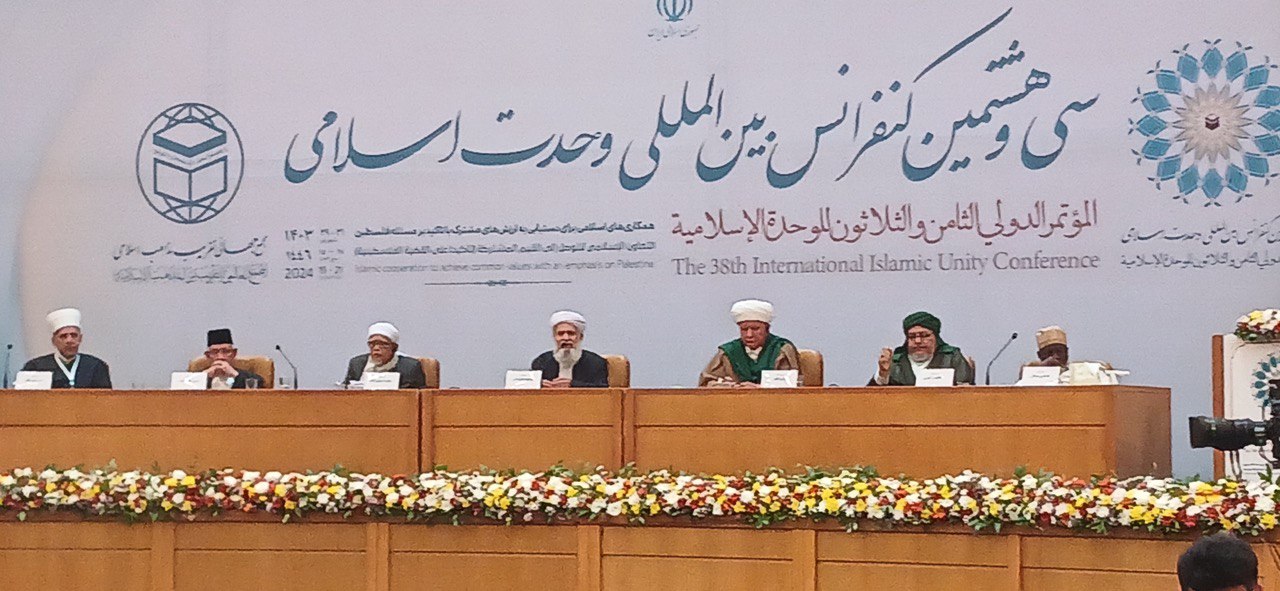
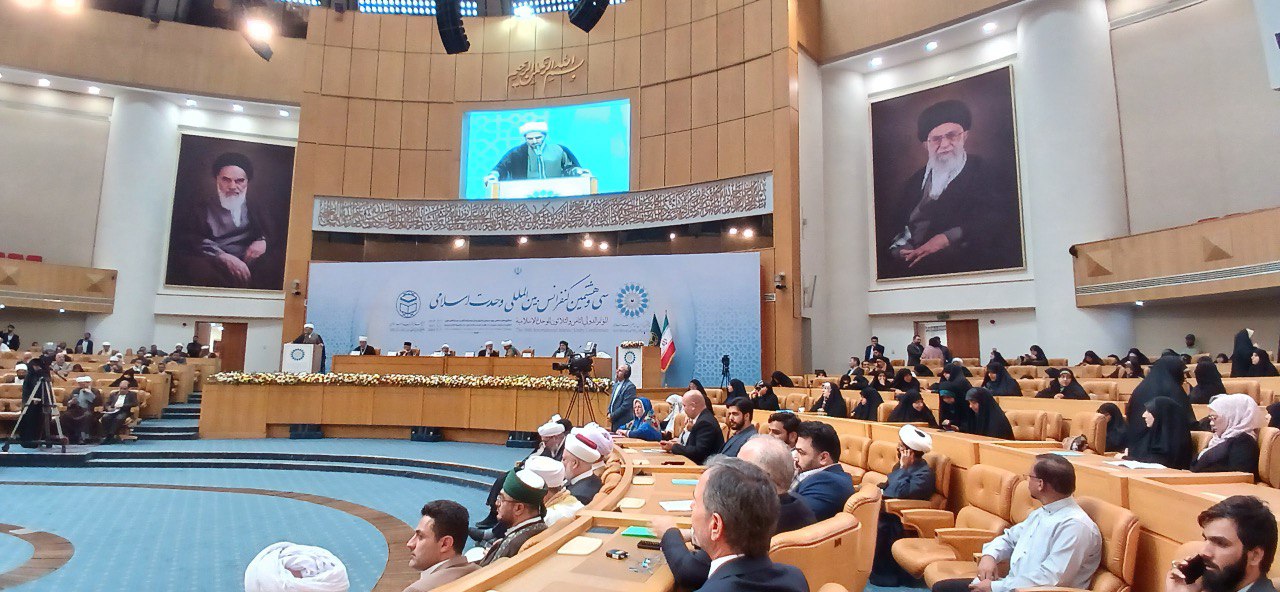
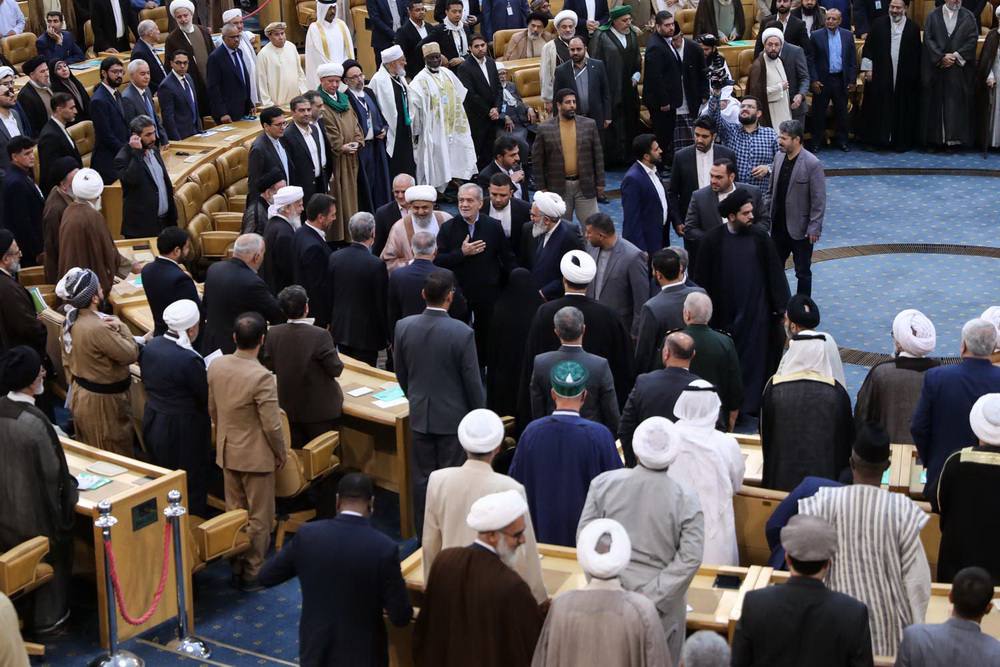
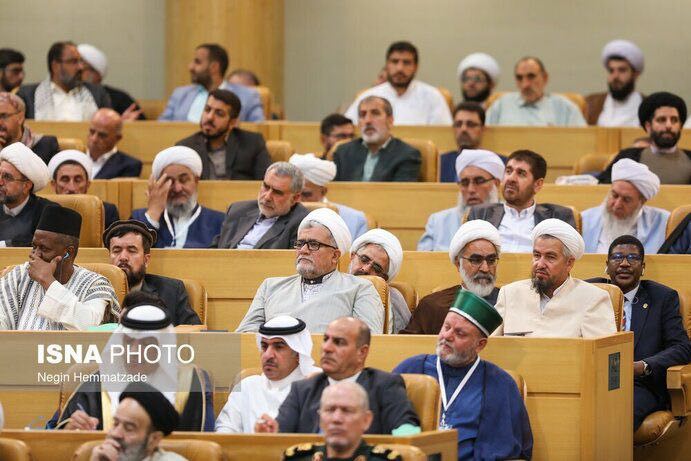
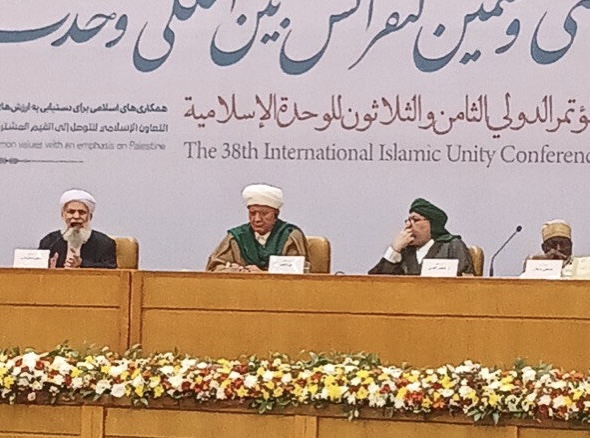
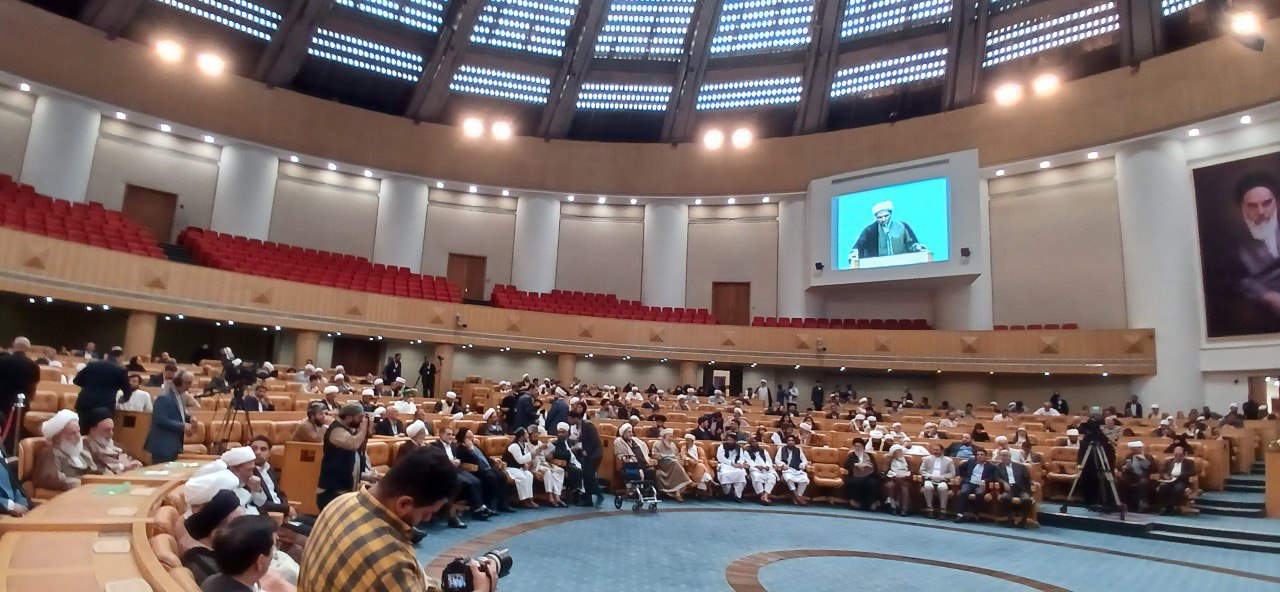
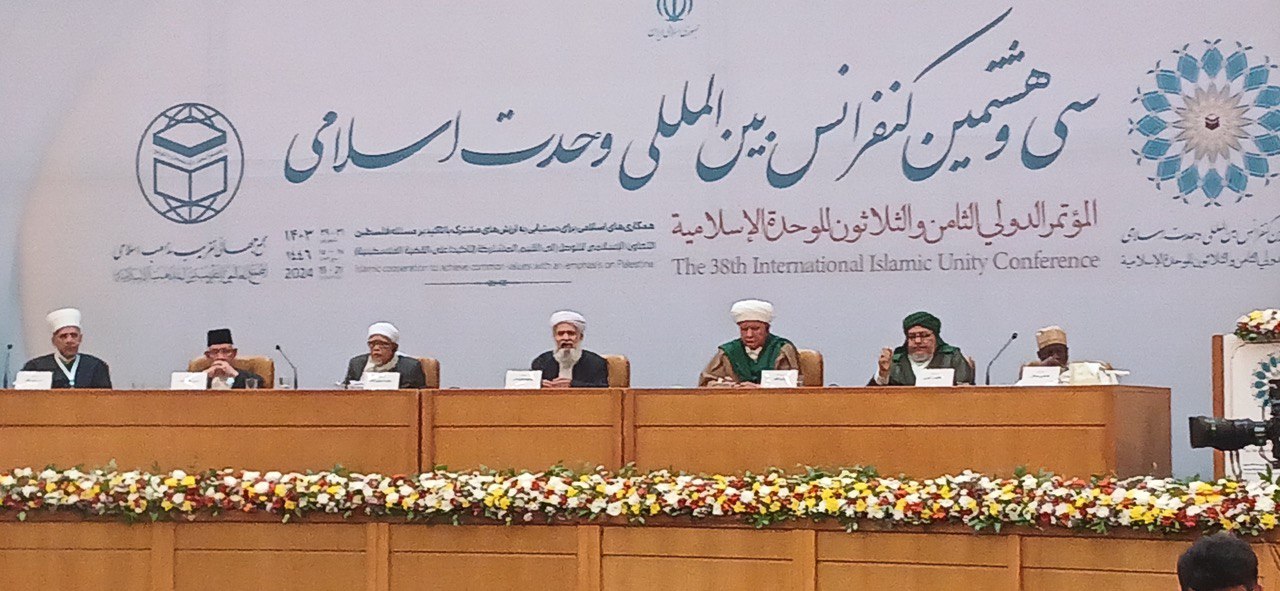
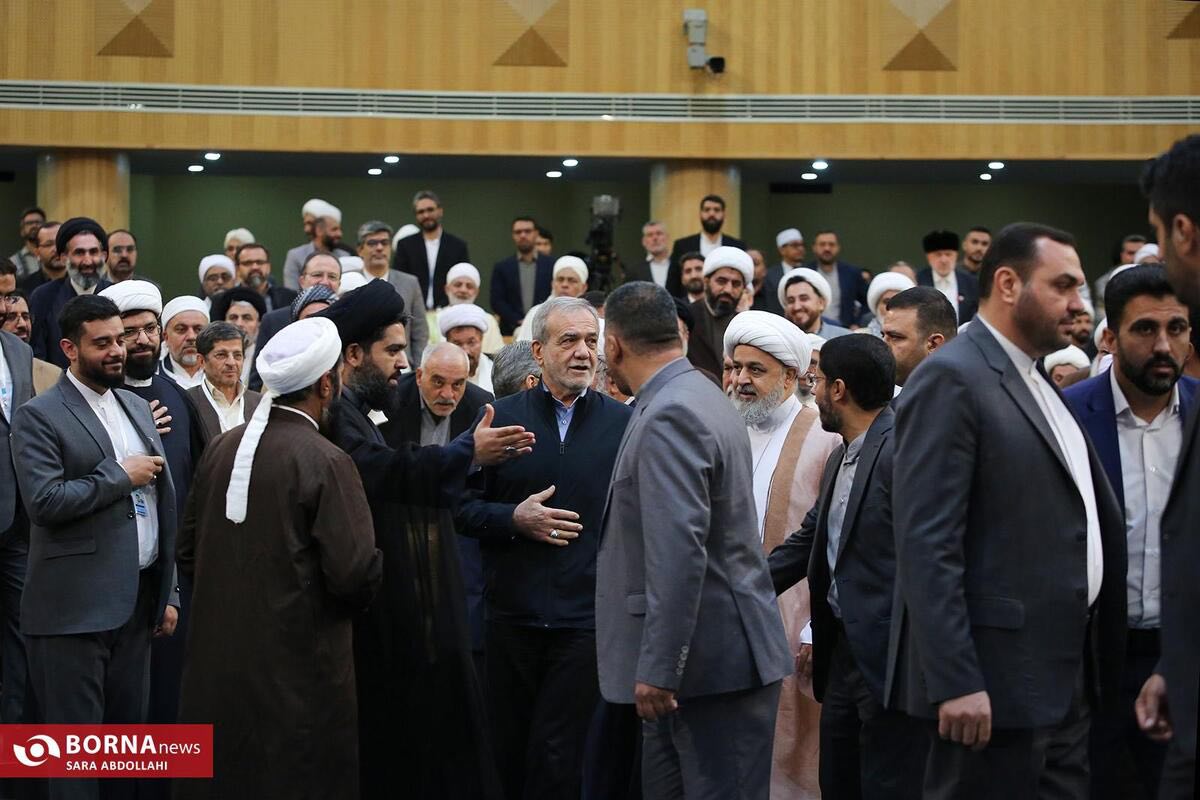
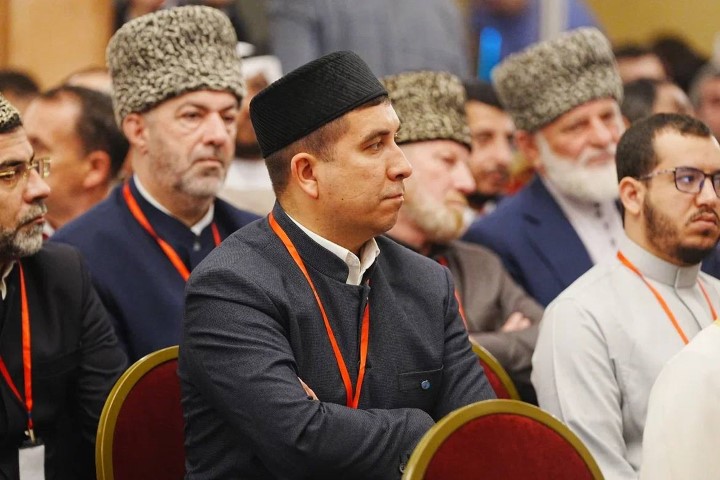
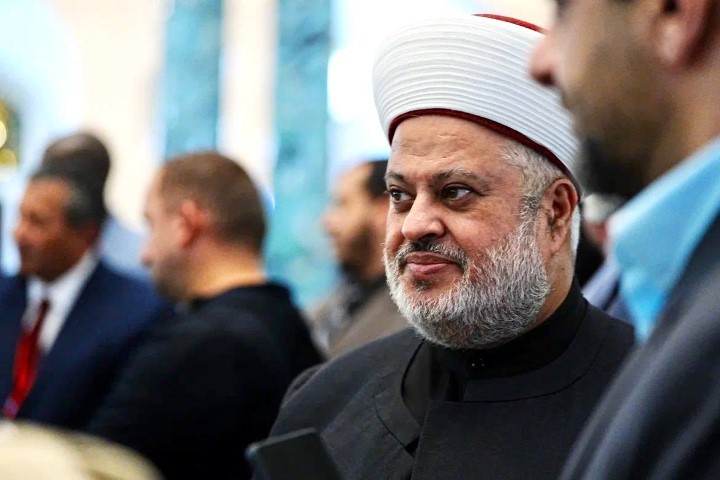
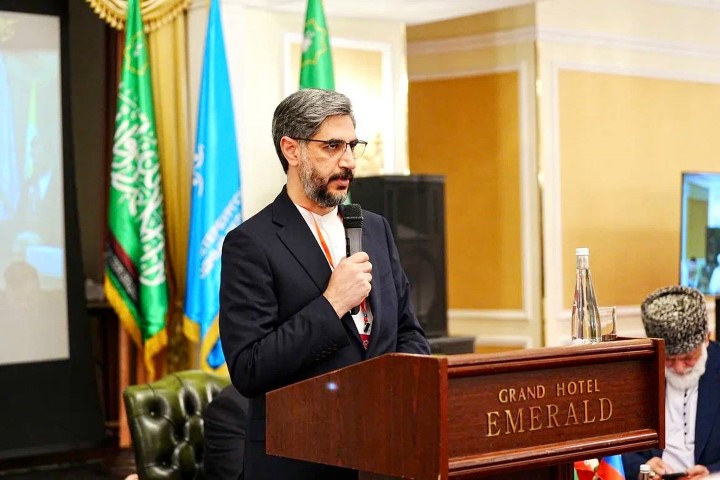
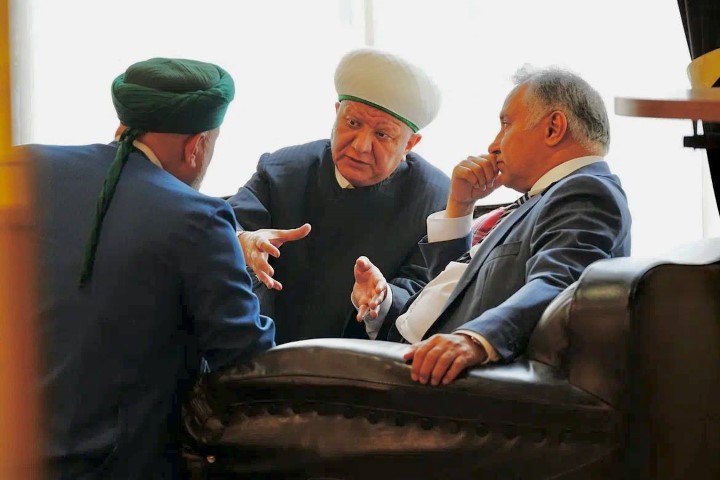
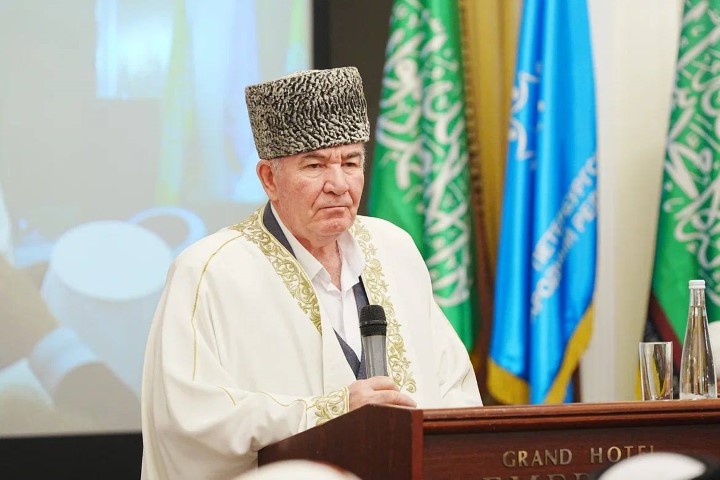
The grand opening of the conference took place in the capital of Iran with the participation of more than 300 famous religious and public figures from the countries of East and West Asia, Malaysia, Indonesia, and America. Together with the head of the Spiritual Assembly of Muslims of Russia, Mufti of Moscow Albir hazrat Krganov, Mufti of the Volgograd Region Bata Kifah Mohammad is also participating in a major international religious forum. It is no coincidence that the main theme of the conference was chosen “Islamic cooperation for the crystallization of common values with an emphasis on the topic of Palestine.”
Secretary General of the World Forum for the Rapprochement of Islamic Schools of Thought, Hojjat-ul-Islam Hamid Shahriari, emphasized that today the most important practical connection between the Muslim Ummah remains the Palestinian issue, so this year we had an addition called the Unity Conference, which particularly emphasizes the Palestinian issue.
Recall that in August 2023, the Russian delegation headed by Mufti Albir Hazrat Krganov paid a working visit to Tehran, during which religious organizations of Russia and Iran discussed the potential for joint cooperation. Earlier, Albir Hazrat discussed a number of important issues in the area of further interaction and cooperation with Hamid Khavali Shahriyari during the meeting of the Russia-Islamic World Strategic Vision Group and the World Organization for the Rapprochement of Madhhabs in Moscow.
The participants of the 38th session of the Conference of Islamic Unity noted that today Islam is the foundation of Islamic civilization and contains great canonical, social, spiritual, moral, mobilization and integrating potential for the development of the world ummah. In this regard, it is necessary to note the growing importance of the movement for the rapprochement of Islamic madhhabs, the positive role of the Supreme Advisory Council for the Rapprochement of Madhhabs and the International Society for the Rapprochement of Madhhabs, the World Assembly for the Rapprochement of Islamic Madhhabs. Solidarity, strengthening and further development of the Muslim world, continuation of the dialogue of world religions and civilizations, the general state of world relations largely depend on a true, correct understanding of the foundations of Islam.
In his speech, Albir Hazrat drew attention to the fact that at the present historical stage, the problem of the relationship between madhhabs has not only theoretical and cognitive, ideological, but also important socio-political significance for the ummah. Over the past decades, Islamic solidarity on the problem of Palestine's struggle for self-determination has grown and strengthened.
For Muslims around the world, solidarity with Palestine and the protection of the third holy site of Islam, Al-Aqsa, is unifying in nature and consolidates the world ummah. This is evidenced by the results of our meeting today, held under the motto Islamic cooperation for the crystallization of common values with an emphasis on the topic of Palestine.
We, Russian Muslims, believe that UN resolutions on Palestine must be implemented and Palestine must have its own state with its capital in East Jerusalem and this will bring long-awaited peace to the Middle East, the mufti said.
Press Service of the Spiritual Assembly of Muslims of Russia
https://dsmr.ru/en/#sigProIde788c46f6a
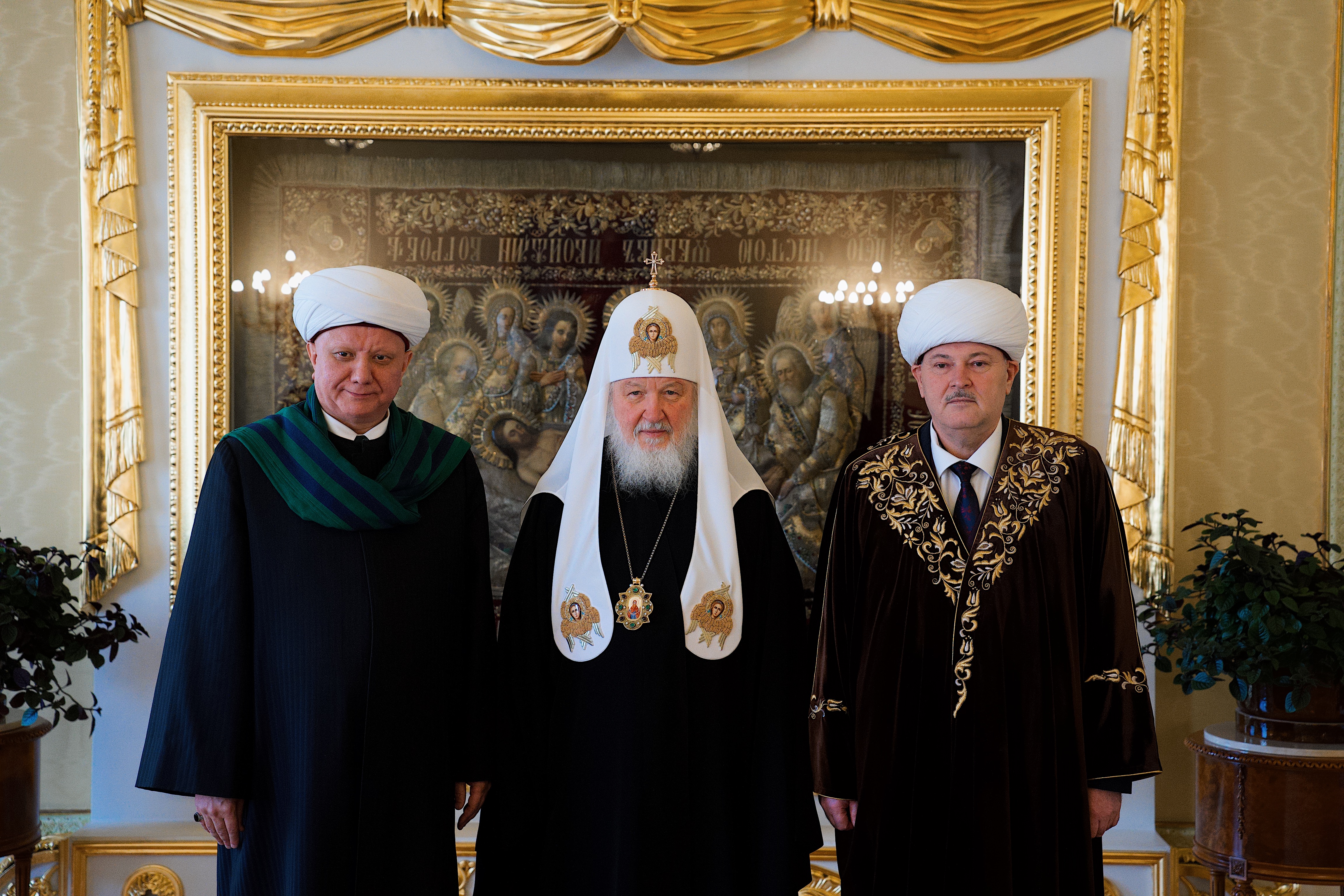
On March 14, 2024, His Holiness Patriarch Kirill of Moscow and All Russia met with a delegation of Muslim leaders headed by the head of the Spiritual Assembly of Muslims of Russia, Mufti of Moscow Albir Krganov, at the Patriarchal and Synodal Residence in the Danilov Monastery in Moscow.
The Department for External Church Relations of the Moscow Patriarchate was represented by Metropolitan Anthony of Volokolamsk, Chairperson of the DECR, and Priest Ilia Kashitsyn, Secretary of the DECR.
The Spiritual Assembly of Muslims of Russia (SAMR) was represented by: First Deputy Leader of SAMR, Mufti of St. Petersburg and North-West Region Ravil Pancheev, Head of the Department of Affairs of the Spiritual Administration of Muslims of Moscow and Central Region "Moscow Muftiyat" Imam-hatib D.D. Mustafin.
Addressing the guest, the Primate of the Russian Orthodox Church noted the many years of sincere and fruitful cooperation with the Spiritual Assembly of Muslims of Russia.
"We greatly appreciate the stance - both yours personally and that of the community you lead - aimed at strengthening inter-religious harmony in our country and good relations with Orthodoxy. I believe that the existing relations can serve as an example. First of all, they are sincere - it is always very simple and easy to talk to you, for when you feel the sincerity of a person, it is easy to understand each other, and we have good relations. Besides, we speak with one mind on different platforms. A very important factor for us is love for the Motherland, support of our many nations, patriotic stance. And, of course, loyalty to our traditions, sincere faith in God and the desire to live by God's law. And God's law requires love towards people," His Holiness Patriarch Kirill emphasized.
The meeting of religious pastors took more than an hour and a half and was marked by a cordial atmosphere, imbued with the spirit of mutual respect and unanimity.
His Holiness ascertained: "We appreciate all this and consider it a contribution to interreligious peace and harmony throughout our country, but also in a sense, if I may say so, an example for other communities, because sincere fraternal relations between Orthodox and Muslims, especially in Russia, are a guarantee, among other things, of peace and harmony between peoples".
For his part, Mufti Albir Krganov expressed his gratitude for the well-organized meeting with Patriarch Kirill, Primate of the Russian Orthodox Church. He mentioned the life trials that His Holiness the Patriarch had endured during the years of militant atheism, noting that the present time also brings serious challenges for believers.
"Historically, there have always been very good relations between Orthodox and Muslims, and we know many examples of how, for instance, in the hard years of atheism, bishops and imams supported each other," said the head of the Spiritual Assembly of Muslims of Russia. - For the last 30 years various sectarian organizations have been trying to split us, to discord us. But, thank God Almighty, the immunity developed over the millennium, the wisdom of our peoples, the balanced policy of our country's leadership, especially in recent decades, helped to preserve and strengthen these relations. And today, amidst a special military operation, we see unity, cohesion and understanding of not only religions, but also unity of the people around the leadership of our country.
In particular, the Mufti cited as an example the situation in Chuvashia, where women weave camouflage nets for fighters at both churches and mosques and help each other in this work.
He also dwelt on His Holiness Patriarch Kirill's speech in 2023 at the meeting of the Strategic Vision Group "Russia - Islamic World" in Kazan, emphasizing its program significance: "It outlines the position regarding different historical moments and states how we look at the future". In addition, Mufti Albir Krganov emphasized the Patriarch's words about the importance of protecting traditional spiritual values and the role of Orthodox and Muslims in this endeavor.
The Mufti also talked about the activities of the Spiritual Assembly of Muslims of Russia, which operates in 27 Russian regions, and about the constructive contacts with local dioceses: "We find mutual understanding in all places, people are open and ready to cooperate for the benefit of our Motherland".
He also emphasized the importance of the work of the Russian Orthodox Church in protecting the spiritual sovereignty of the people, stressing that the tendencies observed in the world to replace and substitute fundamental values cause serious concern.
The meeting also discussed issues related to the escalation of tension and xenophobia, activation of various unfriendly elements seeking to destabilize peaceful coexistence in Russia. The need to strengthen the interaction of traditional religions to prevent any attempts to undermine the foundations of the unity of the Russian people and shake the traditional Russian spiritual and moral values that unite all confessions was emphasized.
His Holiness and Mufti Albir Krganov, underscored the effectiveness of friendly relations between Orthodoxy and Islam, which serve as an example of interfaith interaction. Both sides recognized the effective multilevel support of authorities in strengthening inter-ethnic harmony and developing effective inter-religious dialogue. One of the unique initiatives of such dialog is the creation of the Interreligious Spiritual-Educational Cultural Center in the settlement of Kommunarka in New Moscow, supported by the President of Russia in late 2023.
Special attention was paid to Russia's role in international relations. Ways to counteract the spread of the ideology of permissiveness and denial of God were discussed. Against the background of these challenges, the need to revive and affirm the traditional spiritual and moral values that serve as a basis for building a harmonious society was emphasized. Today, there is an increasing demand for this throughout the world. In this context, the religious leaders were unanimous in the opinion that Russia, with its unique historical experience of interreligious and interethnic harmony, can make a significant contribution to the formation of such an ideology.
The prospects for realization of many initiatives aimed at promoting traditional values both inside the country and in the international arena were noted as the most important factor in strengthening the authority of Russia as a country where harmony and friendship between different religions contribute to the creation of a unique model of a multinational society.
SAMR Press Office
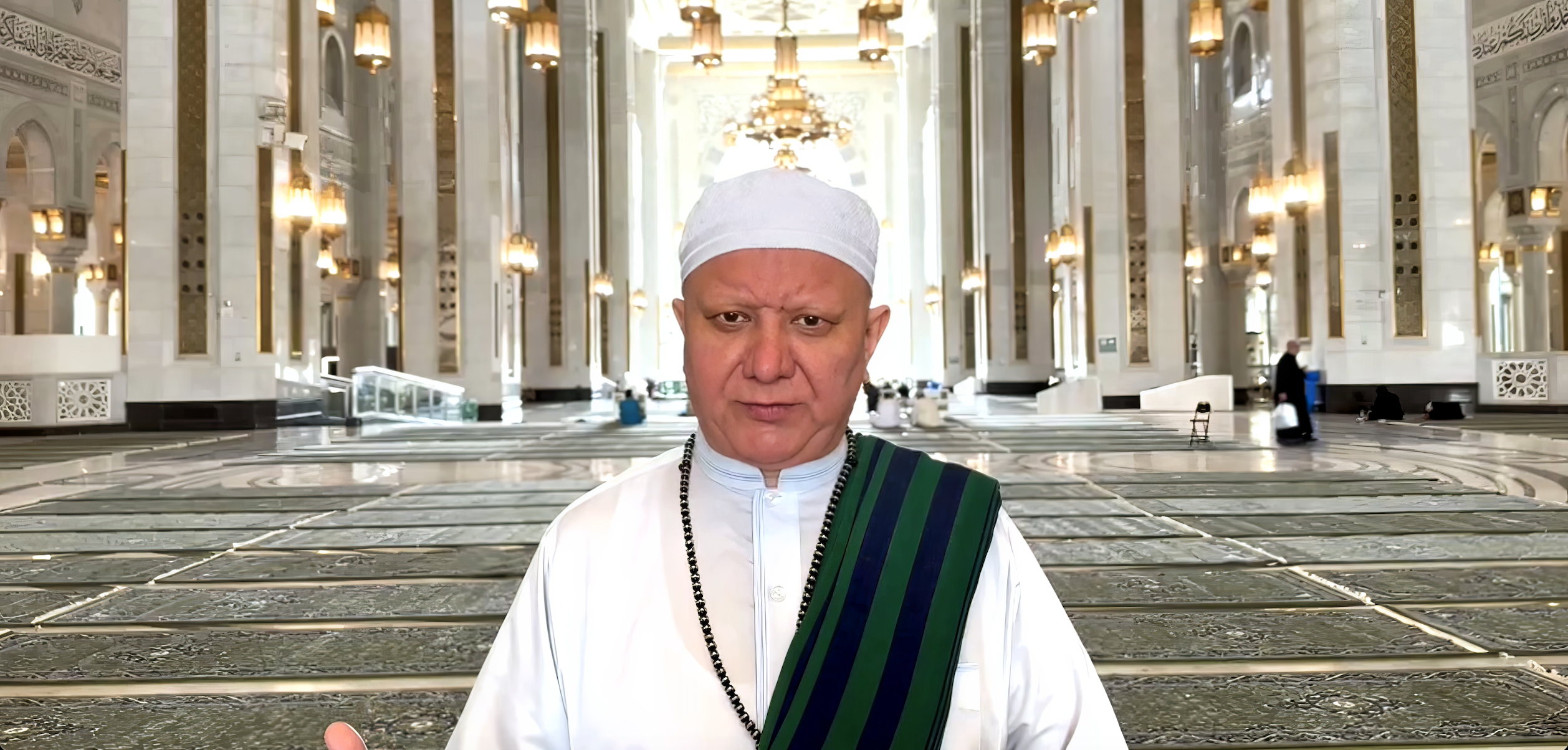
Bismillah ir-rahman ir-rahim!
In the name of Allah, the Merciful and Compassionate!
On behalf of the Spiritual Assembly of Muslims of Russia and myself, I sincerely express my deepest and warmest congratulations to all Muslims of our vast country on the occasion of the Holy Month of Ramadan!
With the setting of the sun, we greet the blessed month of Ramadan, a time of the Almighty's enduring mercy and boundless forgiveness. In these days, the month of great bestowal and blessing, the doors of Paradise are opened, the gates of Hell are sealed and the shaitans are shackled, leaving our hearts open to the light of faith and sincere repentance.
Ramadan is the time when Allah Almighty sent down to us the Holy Qur'an, the source of immutable wisdom and faithful guidance for all Muslims. This month offers us the opportunity to grow closer to the Qur'an, to reflect on its meanings, and to incorporate them into our lives so that they may be a protection and support on the Day of Judgment.
In every moment of Ramadan, we remind ourselves of the wisdom and forgiveness of the Creator, who has ordered us to fast like our predecessors, so that we may reach the depths of humbleness and see the greatness and justice of the Creator. This holy month is a unique opportunity for each of us to show sincerity in repentance, to be more determined in good deeds, prayer and self-purification.
This is a special time when we immerse ourselves in peace and tranquility and actively show mercy and benevolence. Ramadan becomes a period for spiritual growth, becoming established on the path of faith, sharing joy and generous forgiveness, and multiplying our good deeds.
From ancient times fasting and the Qur'an have been the protectors of the Ahirat believers. May they be your protectors on these holy days, interceding before the mercy of Allah, granting forgiveness and eternal salvation.
During this month, we strive to become ever more devoted in our prayers and show even more care and attention to our brothers and sisters. We stand ready to offer support to anyone who needs it, especially those who are facing serious trials in life.
Today we live in a world full of challenges. So this Ramadan, let us redouble our prayers and duas for world peace, for the healing of those who are suffering, for our brothers and sisters in every corner of the earth suffering today from injustice and aggression, and for the consolation of their sorrows and troubles. May our faith, fasting and dua be a source of strength for those who are now in trouble or experiencing loss.
I am convinced that all believers will celebrate this Holy Month with honor and dignity, benefiting themselves and their surroundings.
May the Almighty grant us good health, unshakable strength and patience to overcome any obstacles. May He bless our labors and endeavors and may our hearts overflow with enduring faith, joy and harmony.
We pray to Almighty Allah that this Ramadan brings you and your families peace, prosperity, mutual understanding and fills your home with the light of faith and the joy of noble deeds. May every moment of this month be filled with blessings, bring you closer to Allah and bring mercy, forgiveness and deliverance from the wrath of the Almighty. We wish that every new day of the holy Ramadan will be illuminated with the light of mercy and blessings of the Almighty!
With respect and kind prayers,
Mufti of Moscow,
Head of the Spiritual Assembly of Muslims of Russia,
Member of the Public Chamber of the Russian Federation
Albir Hazrat Krganov
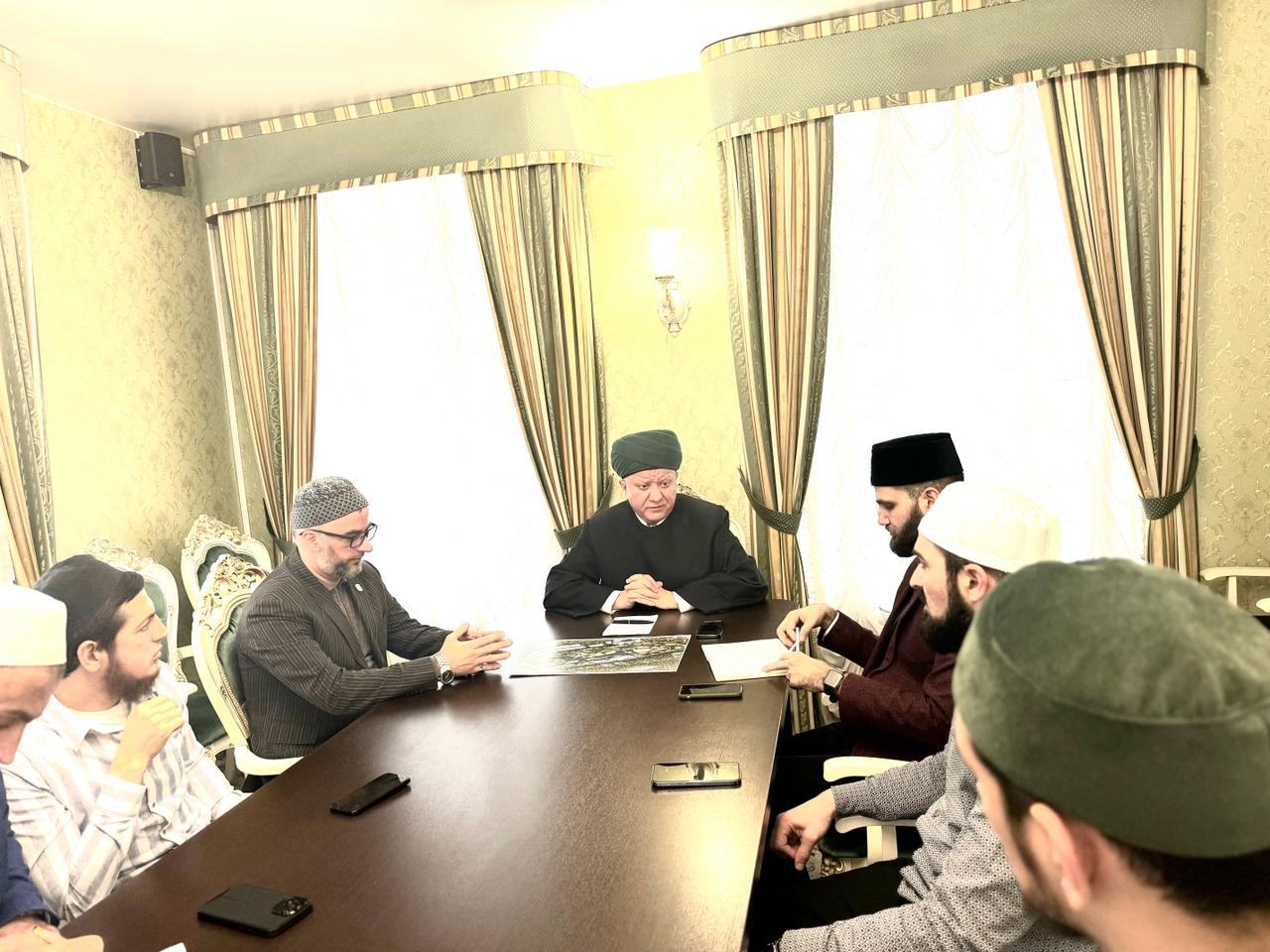
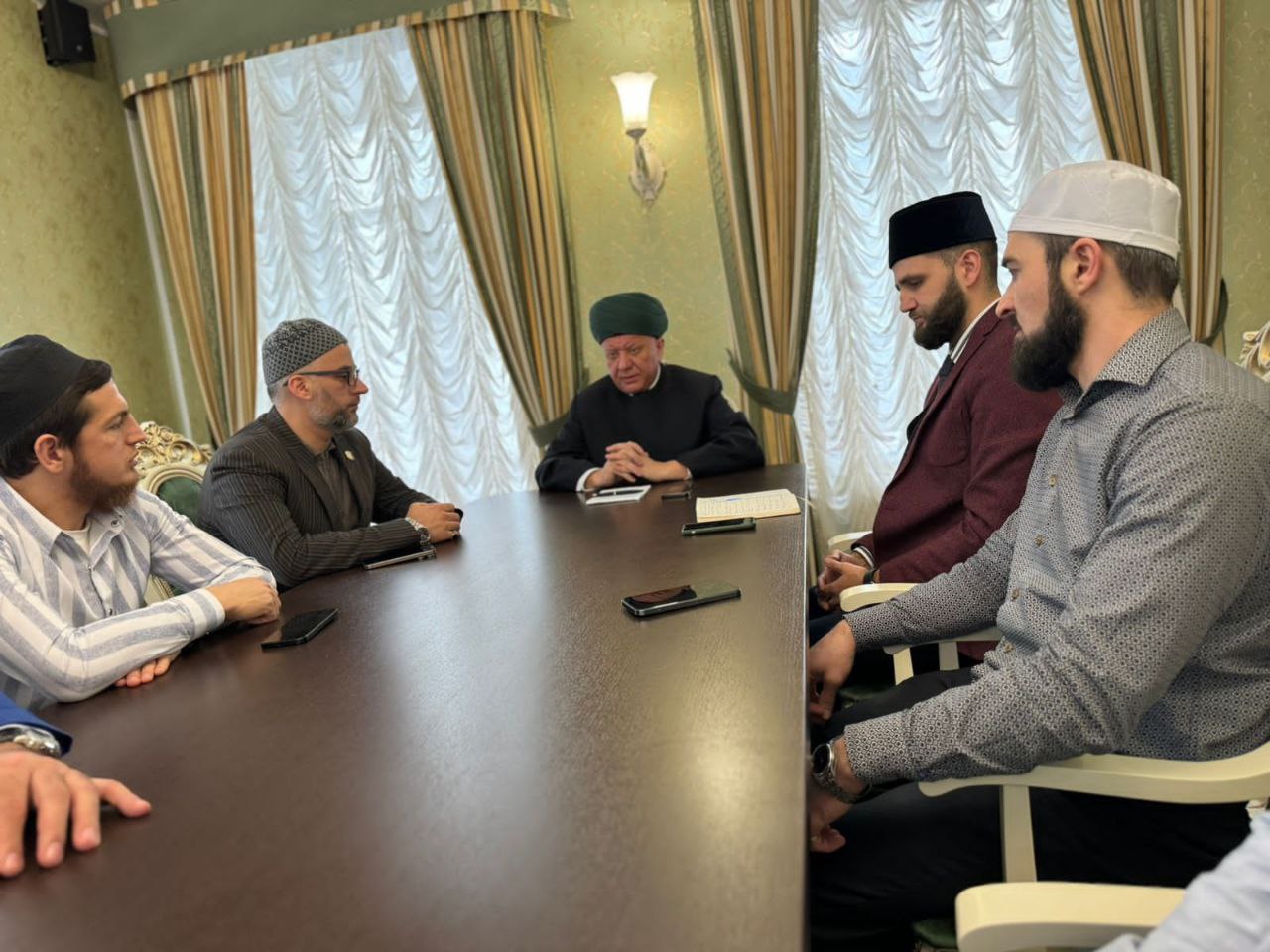
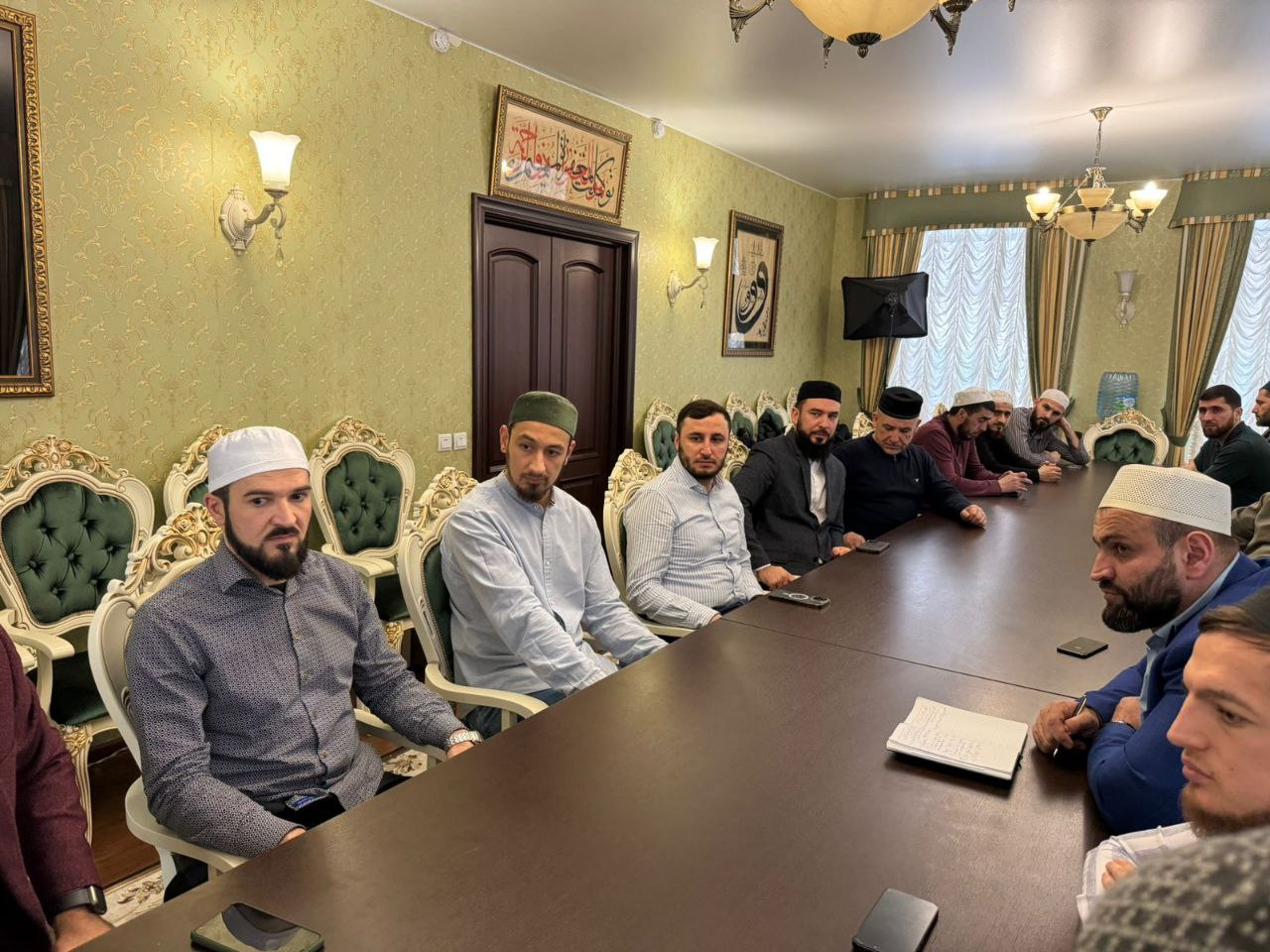
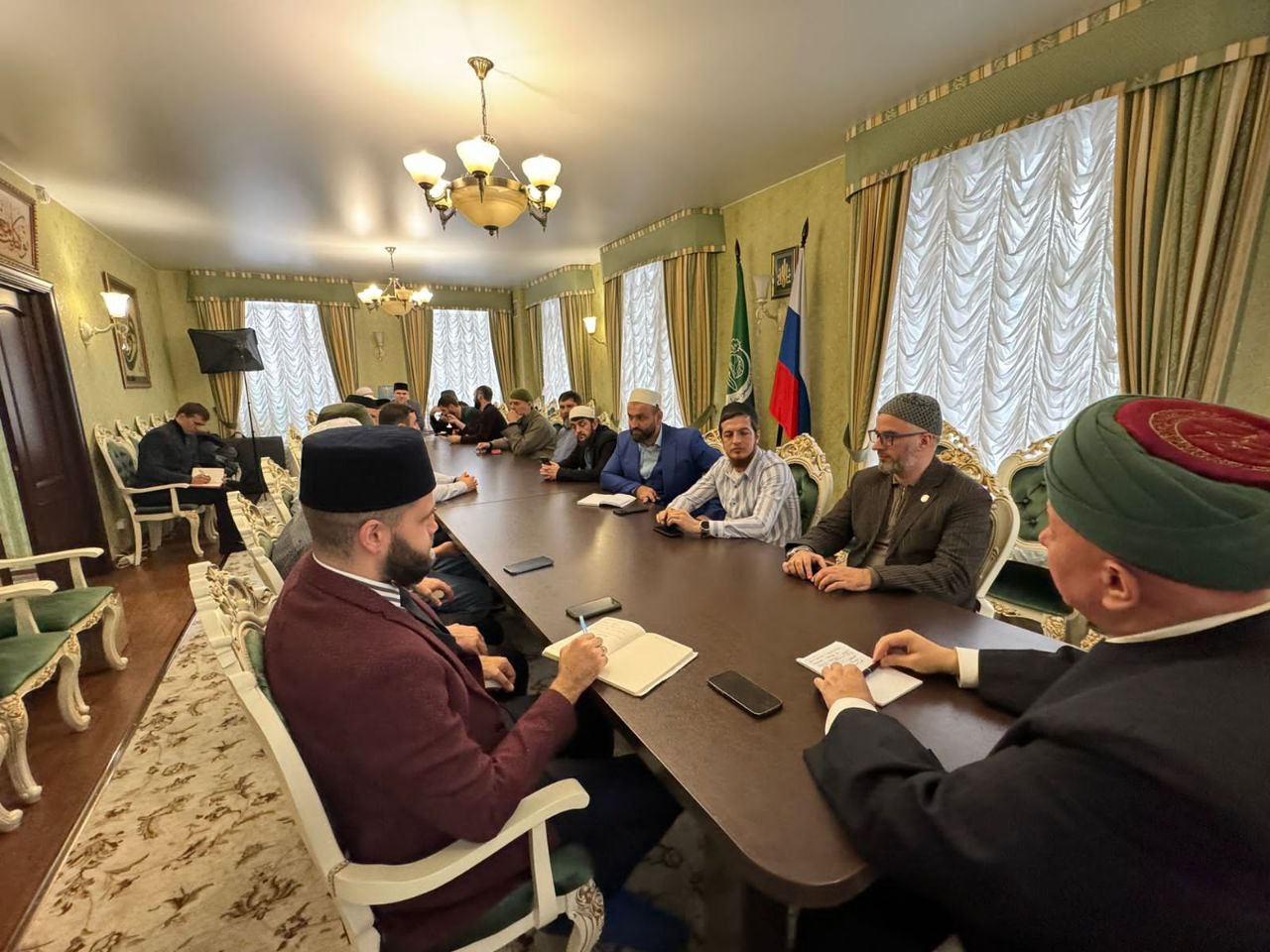
A meeting of the Spiritual Assembly of Muslims of the Moscow region was held at the residence of the SAMR. The meeting was chaired by the Head of the Spiritual Assembly of Muslims of Russia, member of the Public Chamber of the Russian Federation, Mufti Albir Hazrat Krganov. The meeting summarised the results of the past 2023 year and discussed plans for 2024 in the parishes of the Moscow region. The head of the SAMR issued recommendations to religious figures on how to strengthen good-neighbourly relations, harmonise ethno-confessional relations, build respect for the history, culture, national and religious peculiarities of the peoples of our country. He particularly focused on the patriotic education of young people and ideological counteraction to extremism, terrorism and neo-Nazism. Another item of the meeting was to discuss preparations for the holy month of Ramadan, holding festive and collective religious services, as well as providing spiritual support to the SMO fighters and their families. 2024 will also see the continued visits to military hospitals to meet with the heroes of the SMO. The participants of the meeting - religious figures and imams declared their support for the policy of the President of the Russian Federation Vladimir Putin and their commitment to further implement educational work for the benefit of society and the Motherland. In conclusion of the event, the participants recited a common dua prayer.
https://dsmr.ru/en/#sigProId946834ecb3
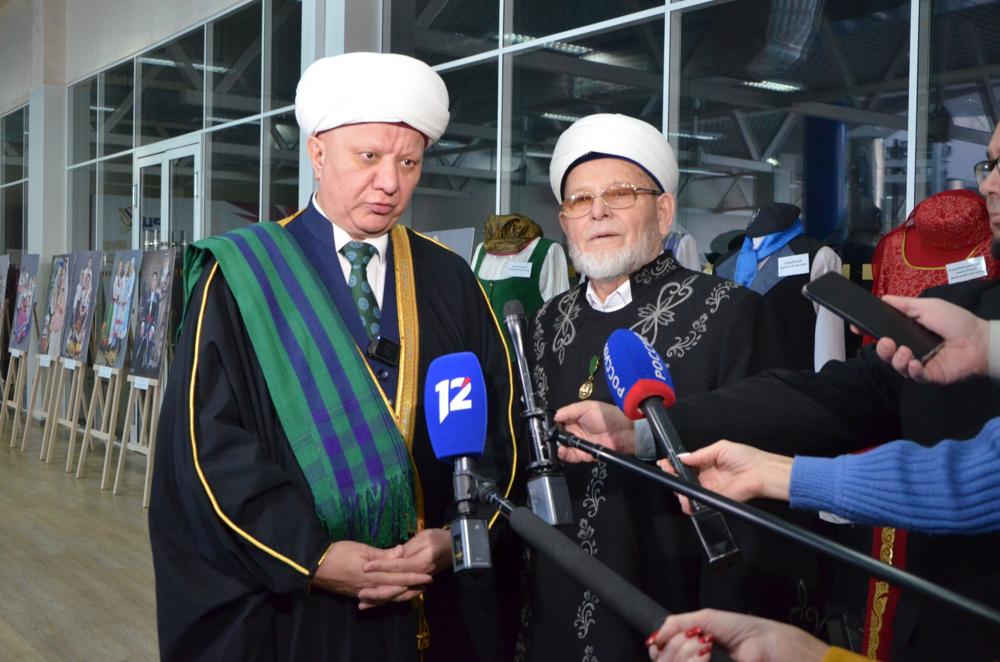
The international interconfessional conference "Siberia - Territory of Dialogue: Interethnic and Interfaith Harmony - the Foundation of Russian Statehood" continues in Omsk. It is held on the initiative of the Spiritual Administration of Muslims of Siberia and with the support of the Omsk region government.
The conference brings together representatives of the Muslim clergy and scientific community from Russia, Kazakhstan, Tajikistan, Uzbekistan and Kyrgyzstan, employees of consular and diplomatic missions in the Russian Federation of Middle Eastern countries, as well as national communities and religious organisations of the Omsk region and regions of Russia, teachers and university and other students. The conference gathered about 500 participants.
A large delegation of regional muftis of the Spiritual Assembly of Muslims of Russia are also taking part in the events.
"We are very pleased to be on the hospitable Siberian land, in the Omsk region. In the framework of the conference we are addressing important issues of inter-confessional, inter-religious dialogue, issues of statehood," said the head of the Spiritual Assembly of Muslims of Russia, Mufti of Moscow Albir Hazrat Krganov, "as today Russia is facing great challenges and threats. Our country is under numerous sanctions. This is unconscionable. No international law should support this. A new doctrine of life is being imposed on us esentially, and there is no God, nor conscience. Here we have representatives of different confessions, people of different ages, many young people. Our task now is to unite around the leader of the country, around our values, to protect and preserve them."
According to Zulkarnay Shakirzyanov, Mufti of the Spiritual Administration of Muslims of Siberia, the Omsk region is a land of more than 120 nationalities living in peace and good neighbourliness. And now the main thing is to preserve unity and cohesion. "Our Omsk region is an example of how people of different nationalities, faiths, religious denominations interact with each other. And in the future, we will not give up our positions," said Zulkarnay Shakirzyanov.
Tatyana Smirnova, Doctor of Historical Sciences, member of the Public Chamber of the Omsk Region, believes that inter-ethnic harmony and peace between confessions are extremely important. Especially now, when our country is facing enormous challenges, being under the heavy pressure of sanctions. "Today's conference is a great platform for dialogue, communication. We hear serious scientific reports delivered here. And most importantly, people talk to each other, they establish new contacts," Tatyana Smirnova added.
Following the plenary session, the participants worked in thematic sections. The discussion topics included: "Siberia as a Crossroads of Religions and Cultures", "Interfaith Harmony as a Strategy for Strengthening Russian Statehood", "Russia's Turn to the East and Problems of Interethnic and Interfaith Interaction", "The Role of Religious Organisations in the Spiritual, Moral and Patriotic Education of Youth", and "National Security of Russia: Challenges of the Time".
Press office of the Spiritual Assembly of Muslims of Russia
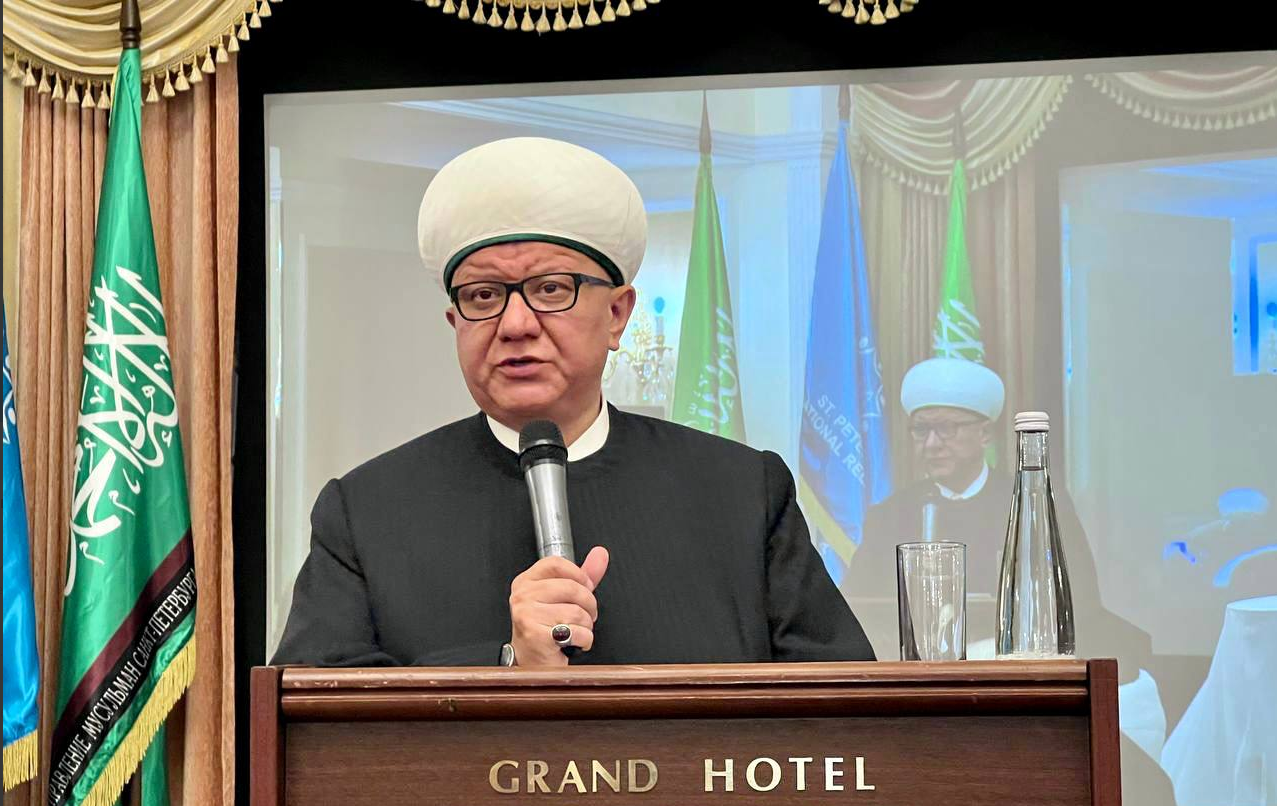
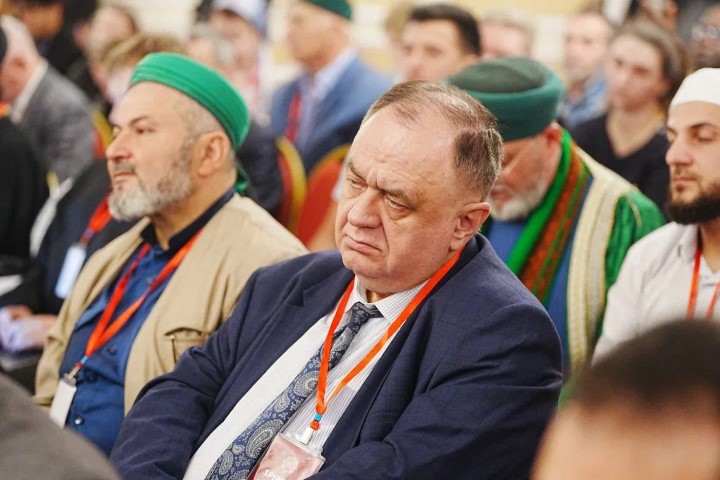
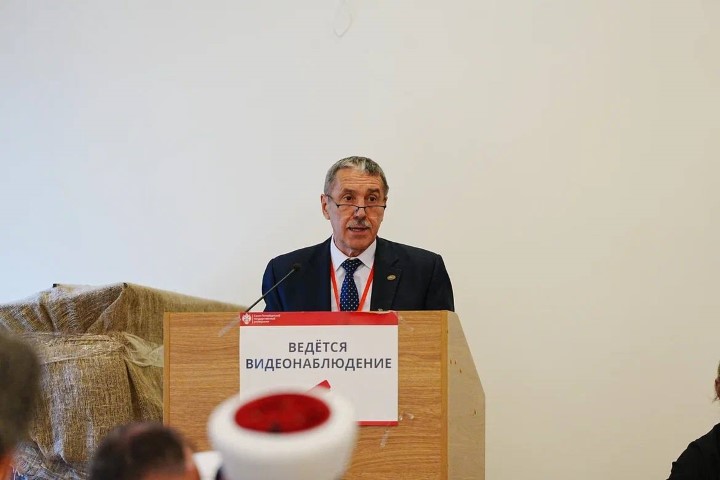
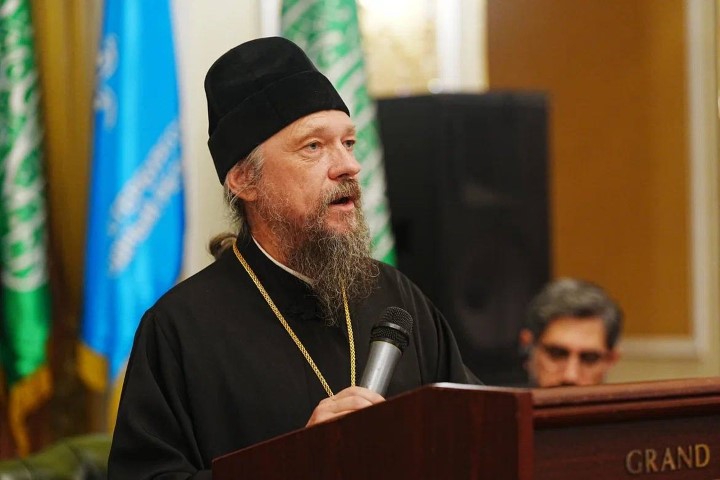
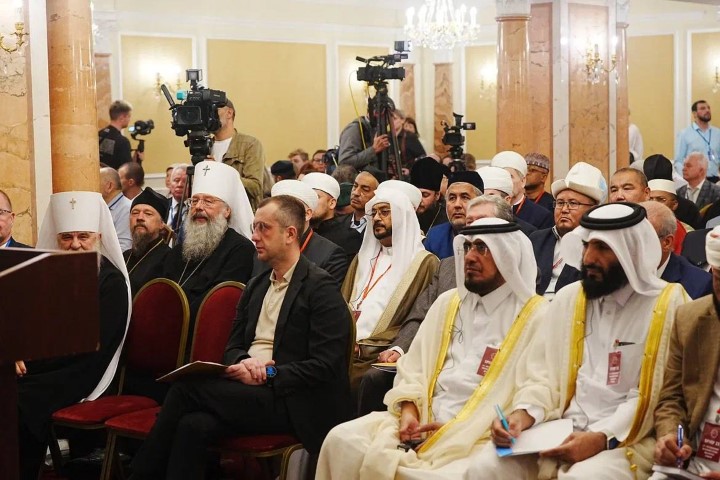
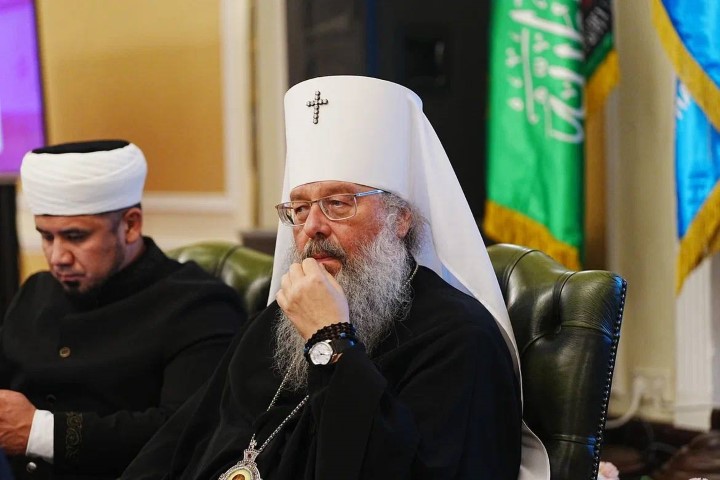
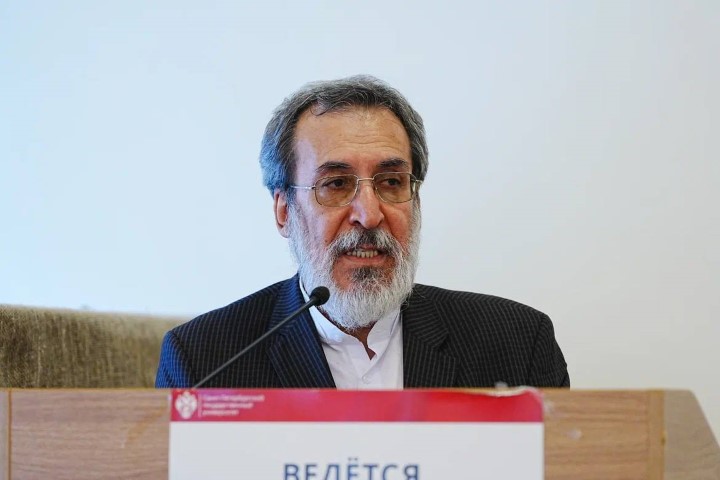
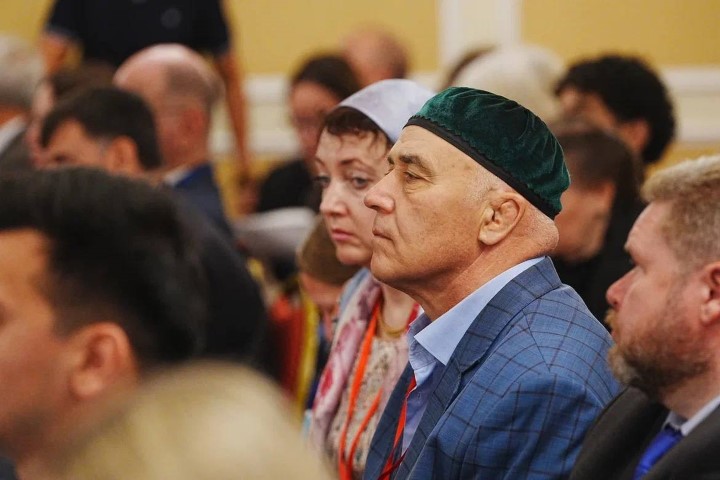
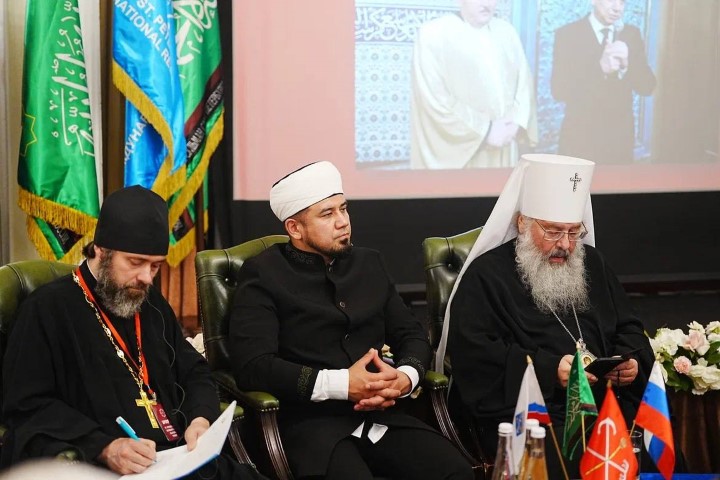
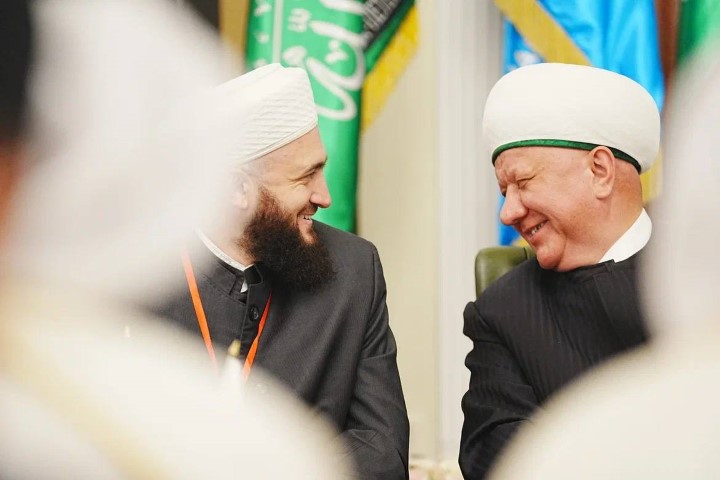
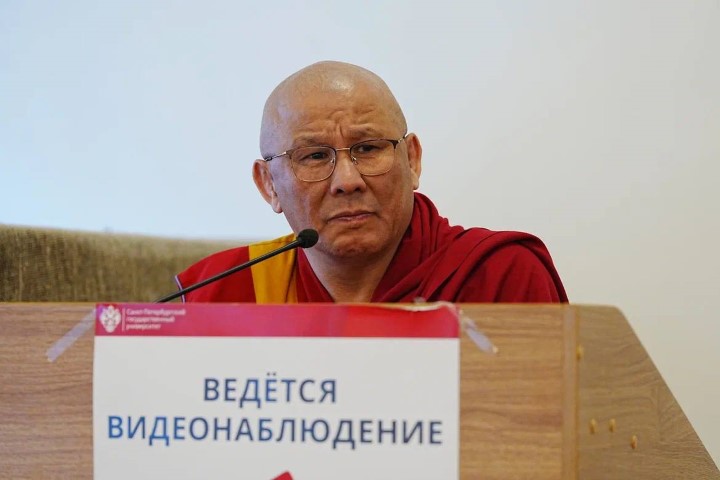
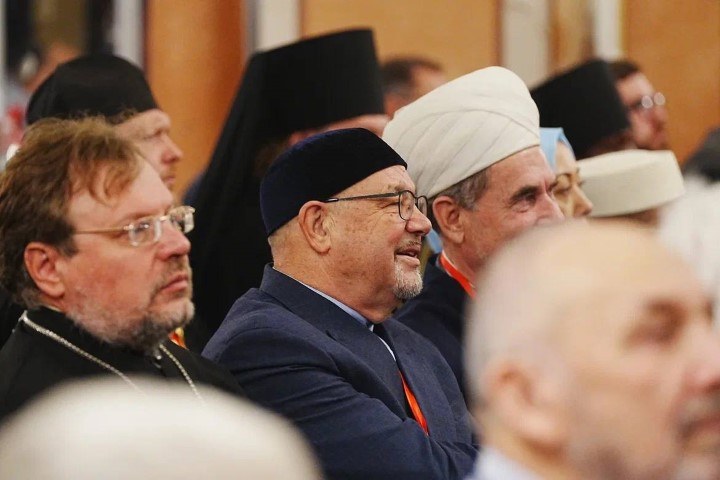
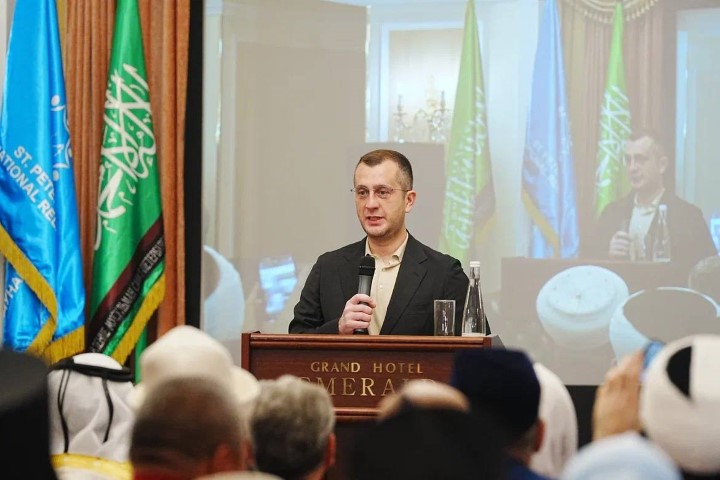
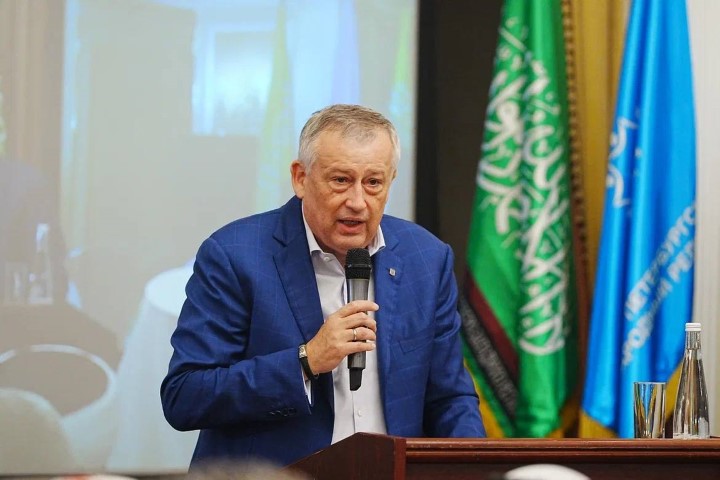
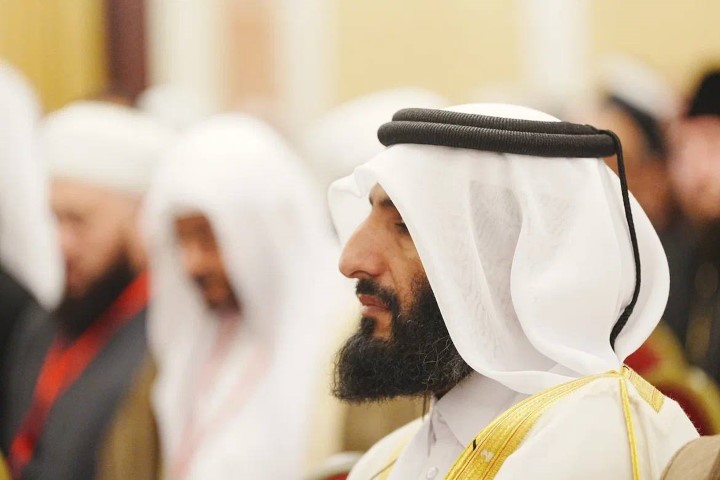
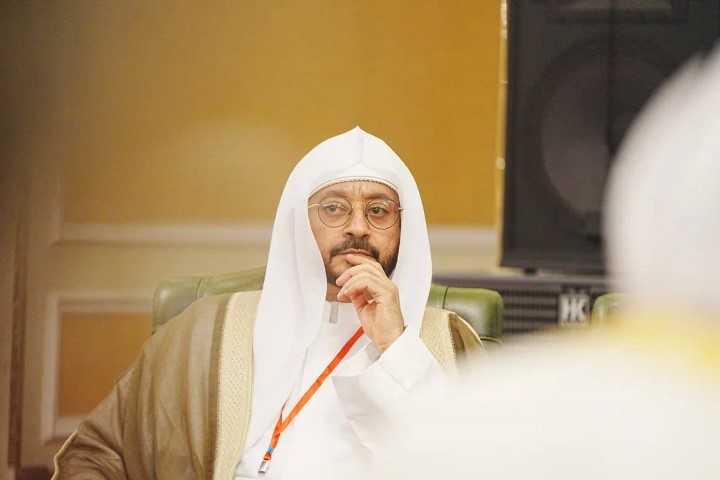
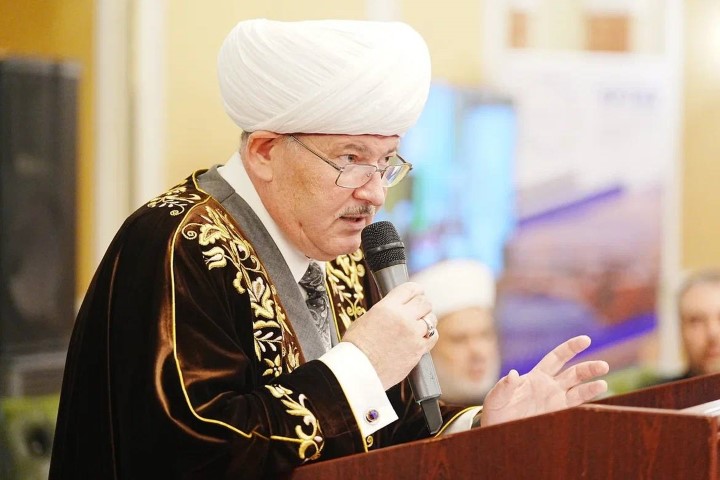
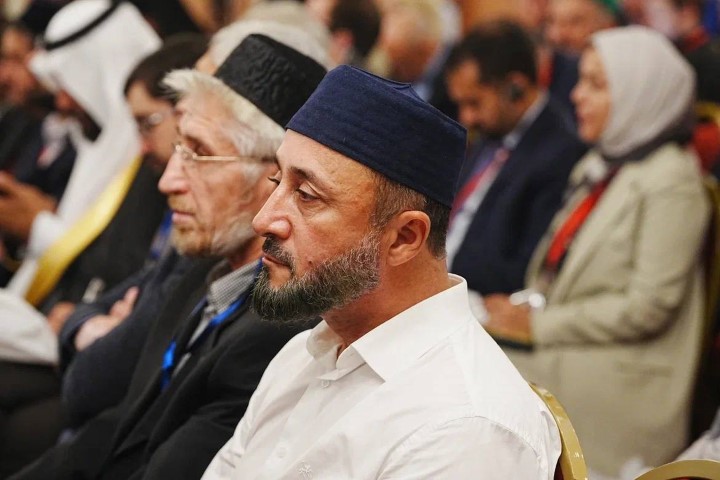
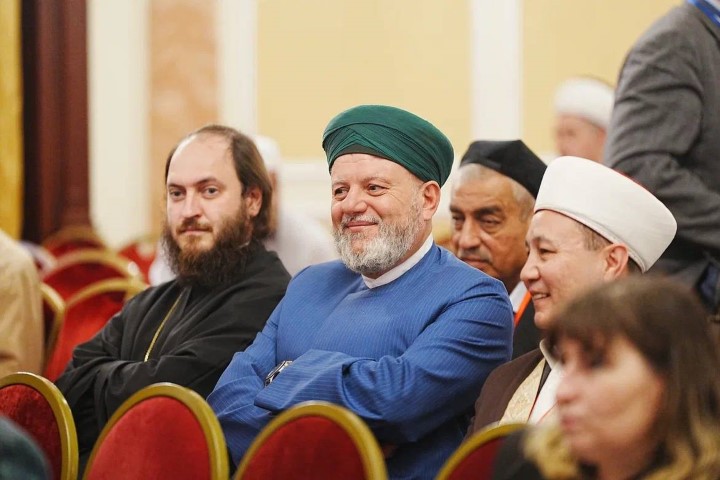
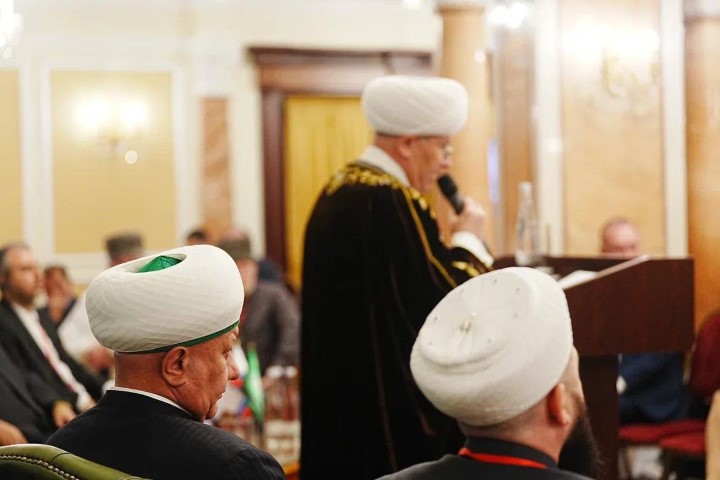
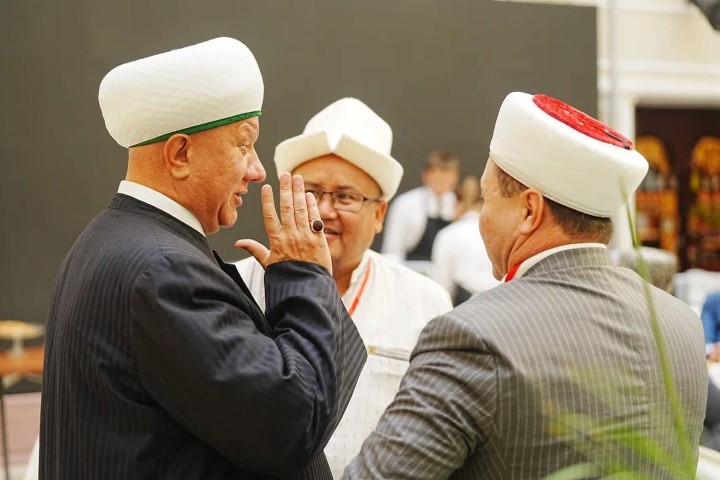
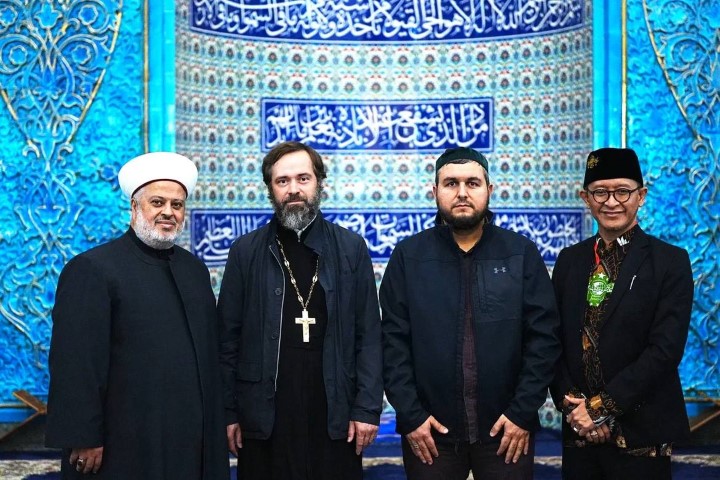
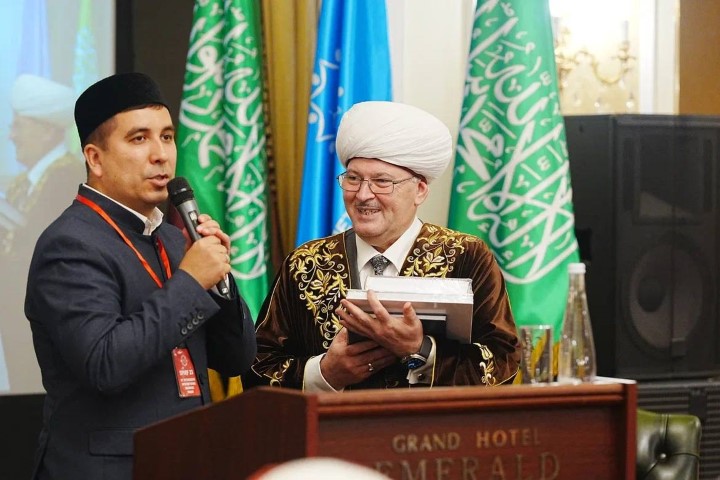
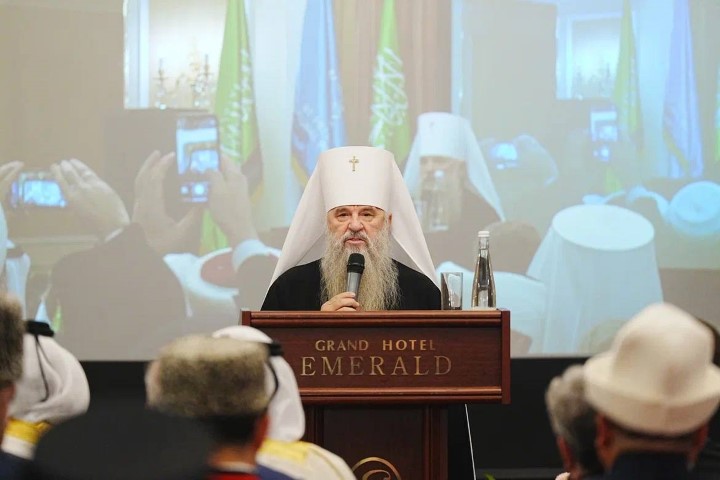
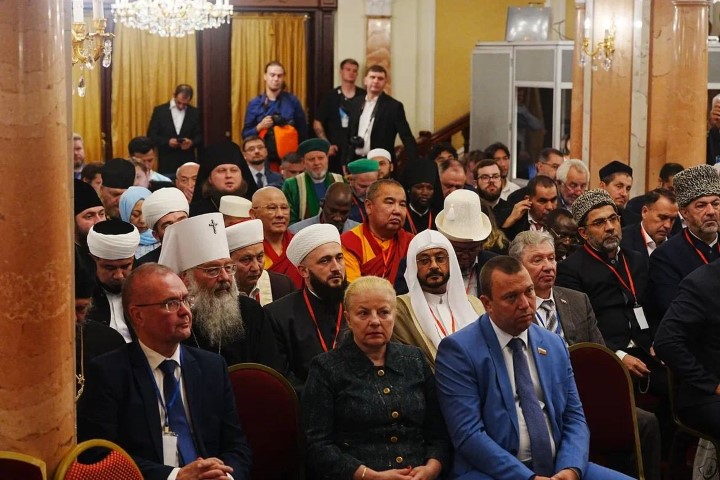
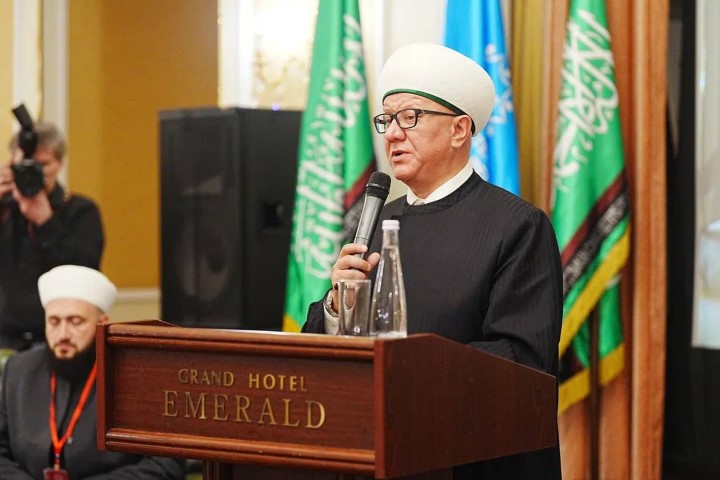
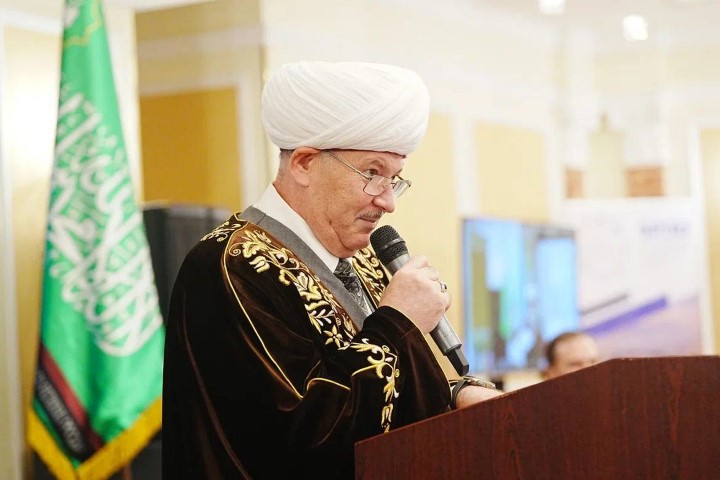
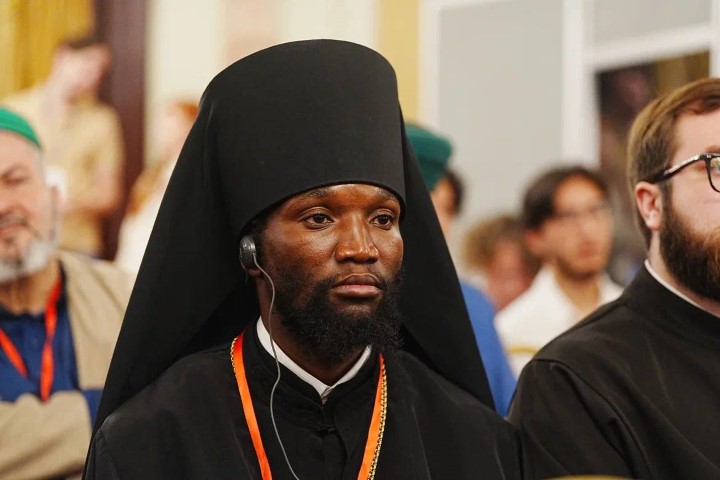
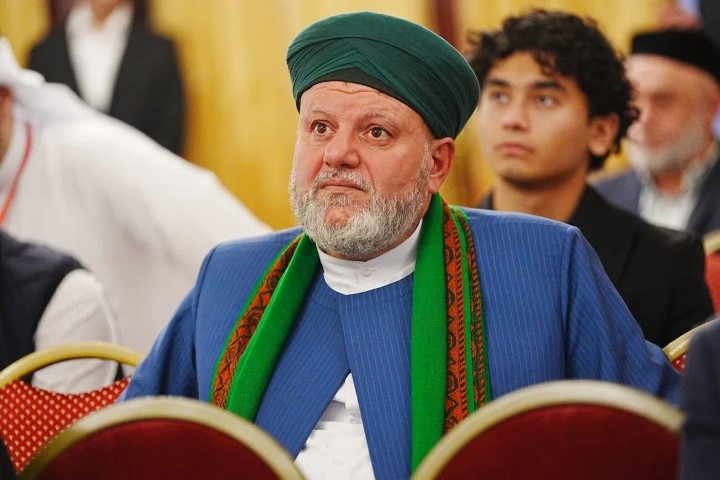
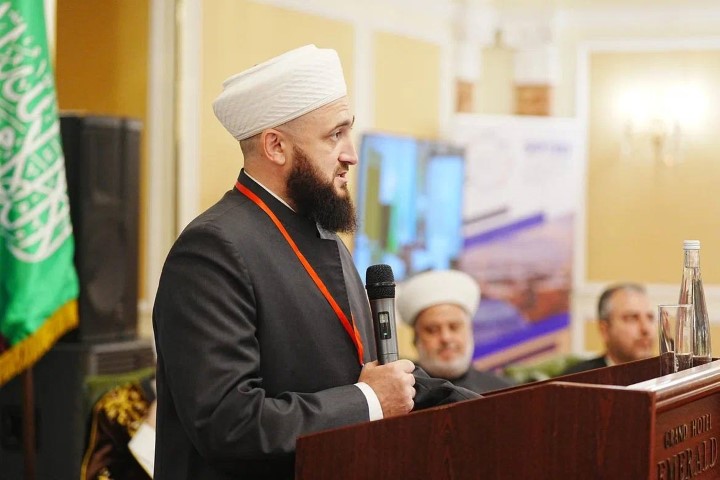
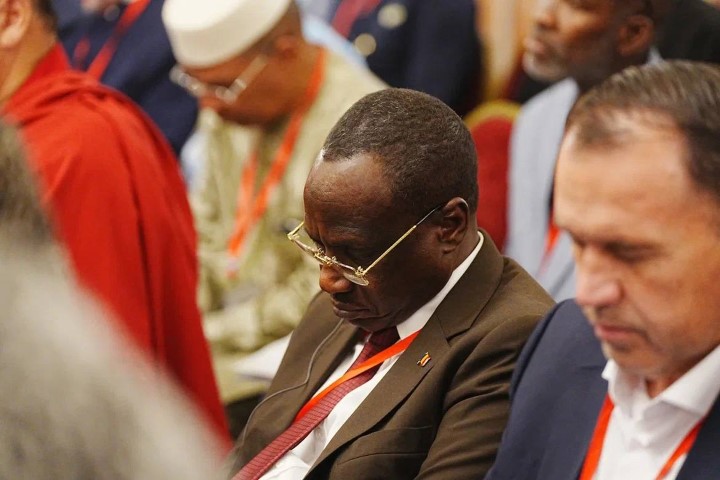
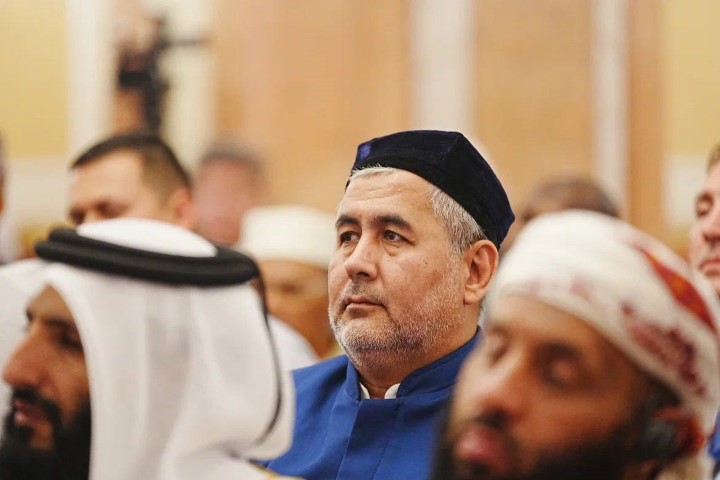
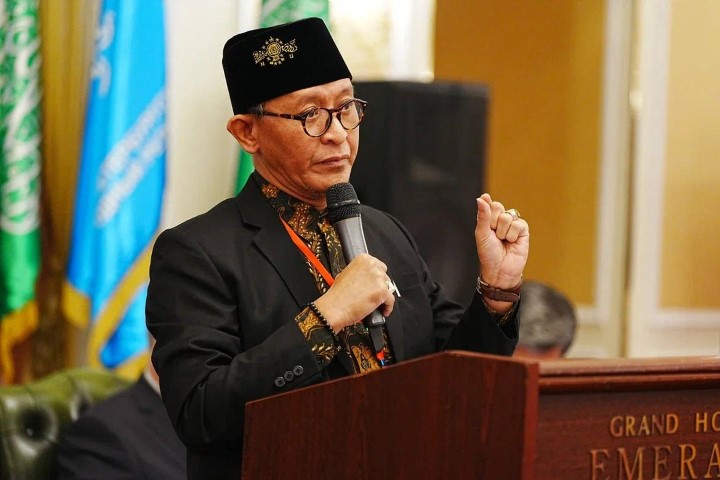
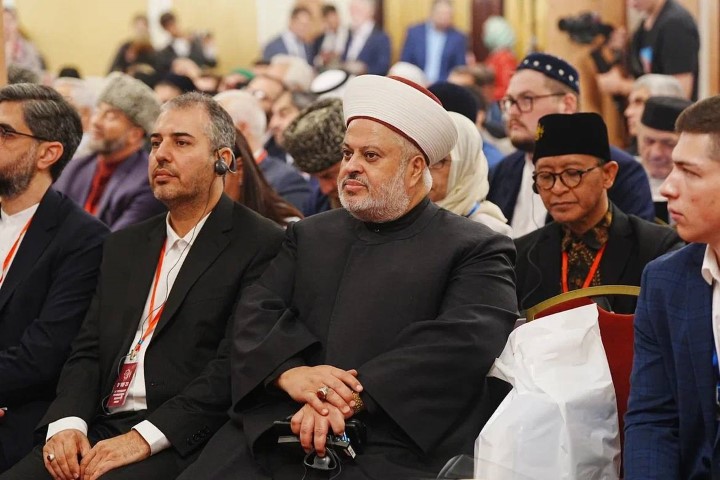
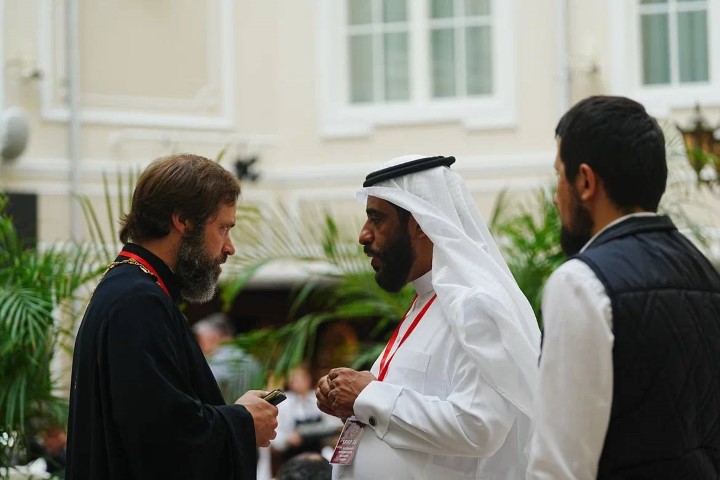
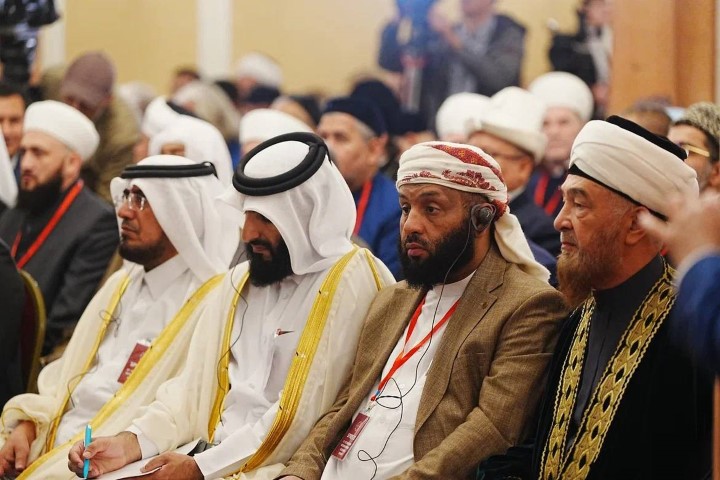
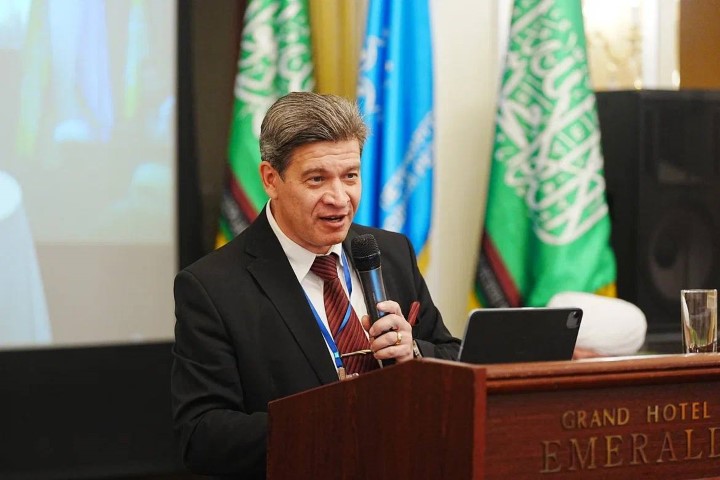
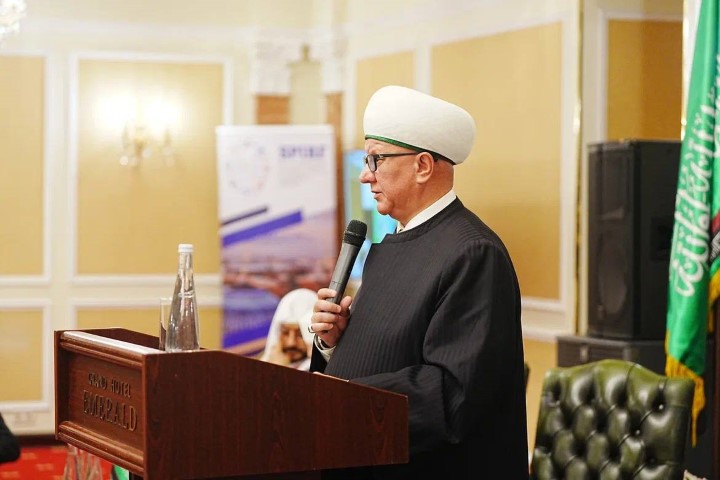
Welcome address by Albir hazrat Krganov, Mufti of Moscow, head of the Spiritual Assembly of Muslims of Russia (DSMR), at the opening of the Second St. Petersburg International Religious Forum “Religious Values in the Modern World”, September 13-14, 2023.
Dear Drozdenko Alexander Yurievich, dear Mufti Ravil hazrat Pancheev, High Dignity Muftis, Your Eminences, ladies and gentlemen, participants of the forum.
Assalam ealaykum wa rahmat allahi wa barakatuh! Peace be upon you, mercy of the Most High and His blessing.
I would like to start my address by remembering the victims of the devastating earthquake in Morocco and the disaster in Libya. I extend my most sincere condolences to the people of these beautiful countries. Today our prayers and thoughts are with our brothers and sisters, we share their grief and sorrow. This tragedy reminds us of the words of the Almighty we find in the Quran: مَا أَصَابَ مِن مُّصِيبَةٍ إِلَّا بِإِذْنِ اللَّهِ وَمَن يُؤْمِن بِاللَّهِ يَهْدِ قَلْبَهُ وَاللَّهُ بِكُلِّ شَيْءٍ عَلِيمٌ “No disaster strikes except by permission of Allah. And whoever believes in Allah, He will guide his heart along the Right Path. Allah is Knowing of all things” (Quran, al-Taghabun:11). We should be patient and rely on the mercy of the Almighty even in hard times, for He knows best what is good for us.
Dear friends,
Today this hall of hospitable St. Petersburg has gathered the leading theologians, reputable clergy and public figures: in short, all those who daily carry the great mission of ministry to the Most High on their shoulders; who feel a unique spiritual calling to serve on the pastoral path; who need to seek and find answers to the most difficult questions from ordinary people, their parishioners, no matter how challenging from the religious or moral point of view the questions may be, to speak words of encouragement, consolation and support to each and every one. The true beauty of the human soul is revealed only through service to God and neighbors. Prophet Muhammad (peace and blessings of Allah be upon him) said: “The best among you are those who are most beneficial to people.” It is our common duty to bring the light of faith and love into this challenging world.
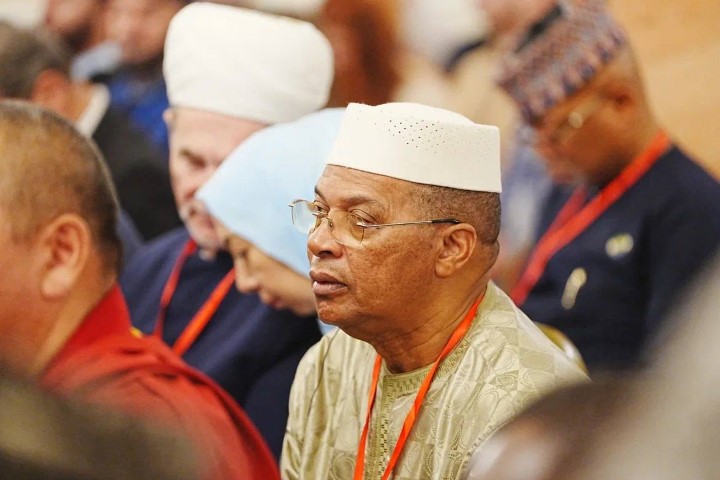
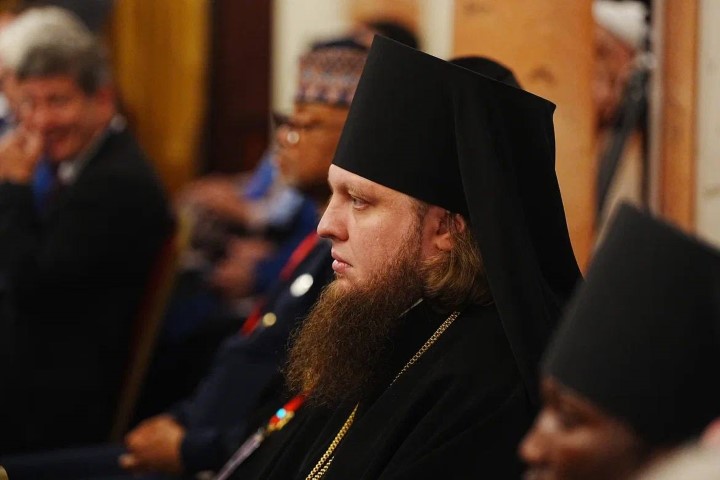
All this has a direct bearing upon the theme of our conference. A very impressive composition of the respected participants of the forum – and we have representatives of more than forty countries of the world – will allow us to fully and comprehensively discuss theoretical and practical issues related to the role of religious values in the modern world, exchange opinions and accumulated experience.
I am confident that religious values in today's world are still extremely important, fundamental and have the same great moral guidance as they did for generations of our grandfathers and great-grandfathers, whose heirs and descendants we all are.
Over the past two decades alone, humanity has gone through a stage of enormous transformation – the explosion in new technologies, unprecedented opportunities for communication and cooperation, strengthening friendship, good-neighborly relations and strong mutually beneficial ties between countries and peoples, which have become an undoubted blessing on the one hand, have exacerbated conflicts on the other. The traditional institutions of humanity – the family, notions of good and evil and, as a consequence, religion – have been exposed to the most severe attack. It is our common duty as shepherds and mentors in the face of all these challenges to give a clear moral assessment, to form a positive, forward-looking agenda, to inspire faith and hope for the best in our people. As Prophet Muhammad (peace and blessings of Allah be upon him) said: “A believer to another believer is like a building whose different parts enforce each other.” Religious values, especially the Islamic teaching of mercy, tolerance and brotherhood, are our beacon in the era of uncertainty.
I would like to highlight a historic event that took place this year in the Islamic world. The re-establishment of diplomatic relations between Iran and Saudi Arabia has been a significant event for the entire Middle East. Russia welcomes this rapprochement of the two key states of the Islamic world. We hope that it will serve to a stronger stability and co-operation in the region.
Russia’s Muslim organizations are ready to provide comprehensive support to the settlement of relations between Sunni and Shia brothers. Our scholarly and theological community can offer its venues for dialogue and the development of joint approaches.
We are sure that overcoming differences for the sake of common interests will serve to consolidate peace and unity among the entire Ummah. We are ready to contribute to this noble cause and provide necessary resources.
Now, permit me a few words about the most pressing issues. Throughout this year, we have repeatedly witnessed blasphemous acts in a number of European countries against the Quran, which have caused a storm of fair protests and outrage throughout the Muslim world. The flames of burning Quran in Europe not only burned the souls of believers, but also spotlighted the falsity of pseudo-values and the ambiguity of the points of law! Such actions have a very specific purpose, namely to increase the onslaught on Islam as a world religion and tradition, to cause rift and further division between countries and peoples. As the eminent Muslim thinker Ibn Rushd (Averroes) said, “Truth does not contradict truth, it only contradicts lies”. Let us look for concepts that all religions have in common, not for things that divide them.
Obviously, all these actions had paymasters, patrons and support.
Strongly condemning such excesses, we should draw clear lines between those who advocate dialogue among people of different cultures and civilizations and those who, as Russian President Vladimir Putin has repeatedly said, seek to hold on to their neo-colonial practices at all costs in order to preserve their status of a privileged minority.
Globalization through information and communication technologies, and now by means of artificial intelligence (AI) is another undoubted challenge. Naturally, we cannot ignore the openness of the new digital world which offers new opportunities for the Muslim world. New channels for dialogue and mutual understanding with representatives of other cultures and religions are emerging. Muslim communities are actively integrating into global processes while preserving their identity and values.
Prayer apps, online broadcasts of worship services, religious education courses, all this allows us to practice religion in new ways. However, it is important to remember that technology is only a tool that should not replace traditional practices and distract us from the true essence of faith. The wise words of Prophet Muhammad (peace and blessings of Allah be upon him) should guide us: “Actions are judged according to their intentions, and every person will get the reward according to what he has intended.”
However, with all the opportunities of modern times, we must remember the main thing, the simple truth, tested by centuries: reliance on our cultural and civilizational foundation, basic spiritual and moral values, traditional religion and lifestyle determines our spiritual sovereignty, guarantees the stability, continuity and dynamics of sovereign social and national development. Religion with its high mission of serving society is assigned one of the key roles.
In this regard, the focus should be on the younger generation, the youth. Let us remember ourselves. It is when we look at the world with young eyes, we all tend to question figures of authority and willy-nilly become non-resistant to those who take advantage of the callowness and gullibility of young people and prompt them to go down the crooked path of destruction of centuries-long traditions and values. This problem is not a rare phenomenon. It is no coincidence that prominent Muslim theologians say, “If we fail not teach young people to value religion, they will value everything else”. Our sacred duty is not to judge, but to understand young people and go towards them with an open heart. We must be fully aware that young people, their spiritual, moral, cultural and intellectual state is our future.
In this regard, it is extremely important for all of us to join our efforts and develop a shared strategy of the state, religious organizations and civil society institutions. This strategy should be aimed at resolving current acute problems of social development, preserving and strengthening religious, spiritual, and moral values. Successful projects in this area and best practices should be made available to the public. I hope that all these tasks will be a subject matter of constructive and interesting discussion among the delegates of the forum.
I emphasize that the universal traditional religions contain accumulated powerful spiritual and moral potential for strengthening peace, consolidating the spiritual foundations, traditions of people’s lifestyle, and the unity of society. We resonate with the words of Patriarch Kirill of Moscow and All Russia that “the Church has always attested to the importance of following the traditional, God-given moral ideals, for it is these ideals that ensure spiritual immunity, resilience and vitality for the entire society.” In this regard, dear friends, I would like to draw your attention to the conceptual papers presented by Patriarch on May 19th and 20th in Kazan and in Bulgari, which are included in the handouts.
The mission of Islam today is in the promotion of education and enlightenment of believers on the basis of long-standing traditional values of Russian Muslims, in the formation of motivation base on spiritual values for a comprehensive development of believers and the Muslim community under modern conditions, in strengthening the unity and cohesion of Russian society.
The Holy Quran says: فَأَقِمْ وَجْهَكَ لِلدِّينِ حَنِيفًا فِطْرَتَ اللَّهِ الَّتِي فَطَرَ النَّاسَ عَلَيْهَا “So direct your face toward the religion, inclining to truth. Adhere to the fiṭrah [upright nature] of Allah upon which He has created all people.” (Quran. ar-Rum: 30). This is very important because the man of pure faith, following the canons and values of Islam, treats a person of other faith or ethnicity with respect. Islam forms the spiritual world, world outlook, behavior and lifestyle of a Muslim incompatible with xenophobia, extremism and discrimination of people.
A national institute of religious journalism which is to play a vital role, must be formed within a short period of time, for it is to promote and strengthen religious values and religious culture in the public realm. There is a need for journalists who are able to cover with quality and responsibility the problems of religious life of society, promote religious values and religious culture in the public space. And this is a common task for the authorities and religious organizations.
It is gratifying to note that the country's higher education institutions have begun teaching a course on the Fundamentals of Russian Statehood since September 1. We hope that the role of religious values in spiritual and moral development, in consolidating Russian statehood, in strengthening the unity and cohesion of society will also be covered in the relevant section of this course.
We, Russian Muslims, are deeply convinced that we should strengthen faith and our values, affirm humanity, justice and compassion for people through dialogue and cooperation backed by our canonical, social, educational and cultural activities. We are confident that it is necessary to protect human dignity absolutely everywhere without discrimination on the basis of religion or nationality, to promote peace and harmonize interreligious and interfaith relations, and to consolidate society. Almighty Allah urges in the Quran: وَتَعَاوَنُوا عَلَى الْبِرِّ وَالتَّقْوَىٰ ۖ وَلَا تَعَاوَنُوا عَلَى الْإِثْمِ وَالْعُدْوَانِ “And cooperate in righteousness and piety, but do not cooperate in sin and enmity.” (Quran, al-Ma'idah:2 ayat)
Dear brothers and sisters!
I believe that by relying on religious wisdom embedded in the holy scriptures, mankind is able to overcome any trials and build an equitable world order. A hadith said: “Verily, Allah sustains this community (ummah) because of the weak among them; because of their prayers, their submission and their supplications!”
Dear brothers and sisters! Let us remember that Islam calls us to peace, justice and good neighborly relations. Prophet Muhammad (peace and blessings of Allah be upon him) said, “O Allah! Make religion easy for me, and make the world a beloved and desirable place for me.” Let us strive to make this world a little better with our good deeds and thoughts.
May Allah Almighty bless us and lead us to success in all good endeavors!
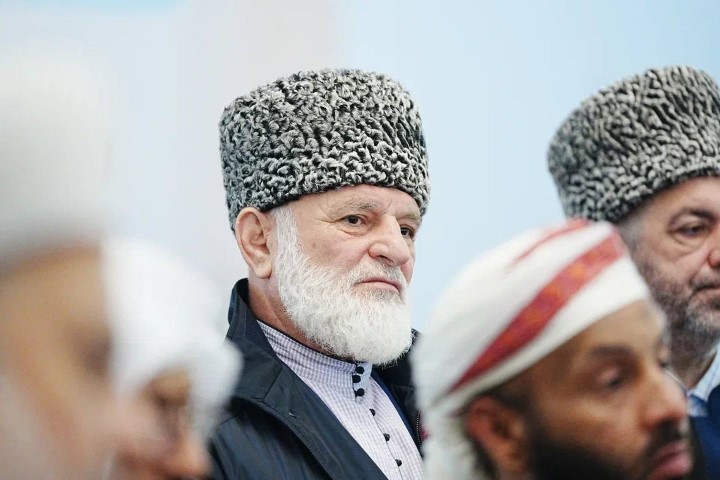
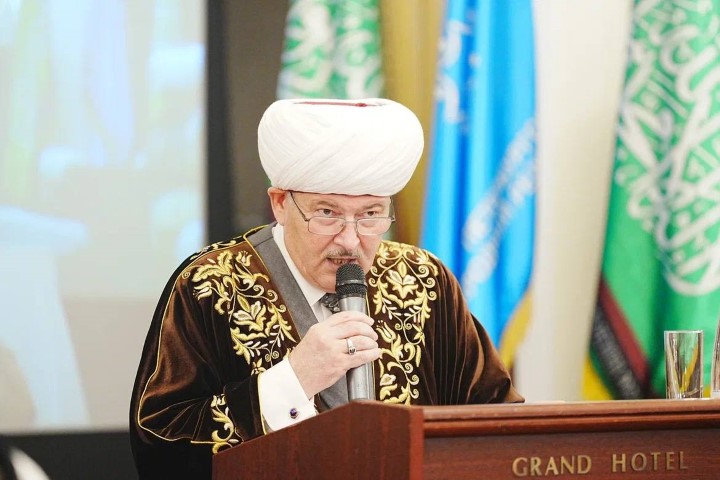
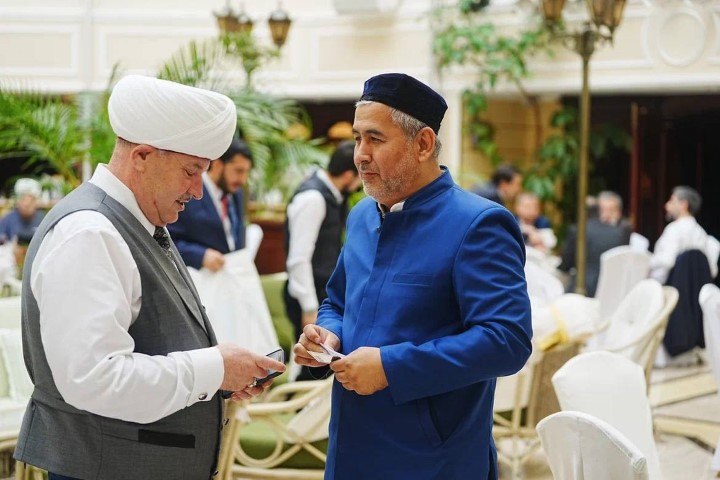
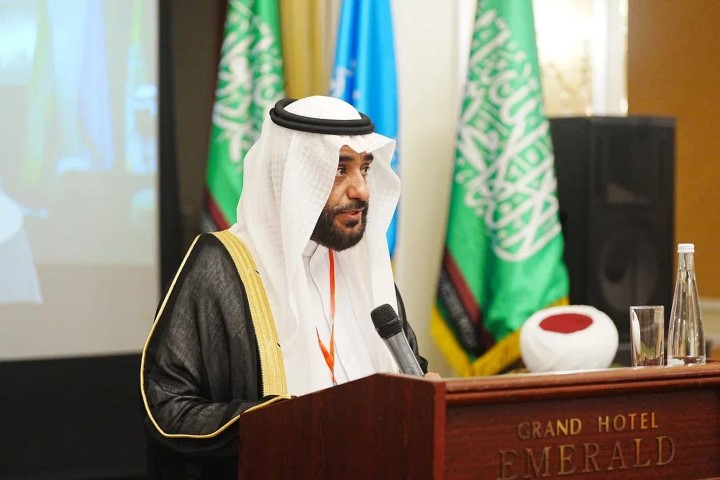
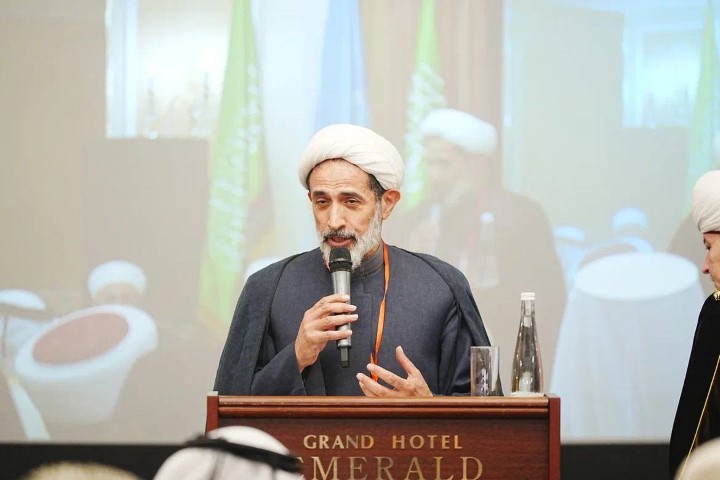
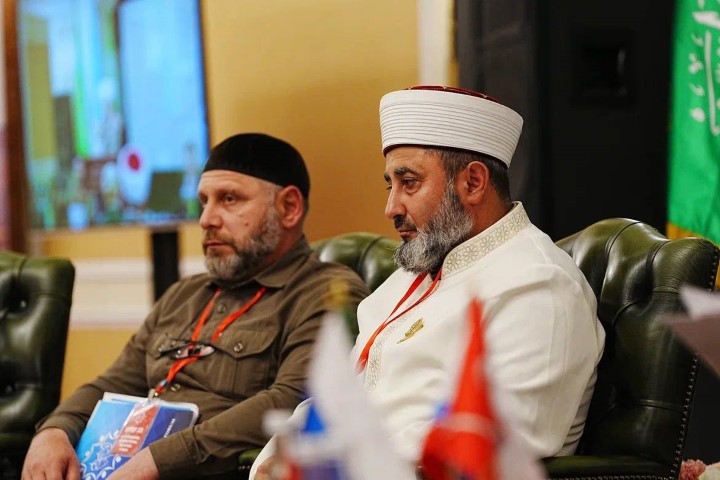
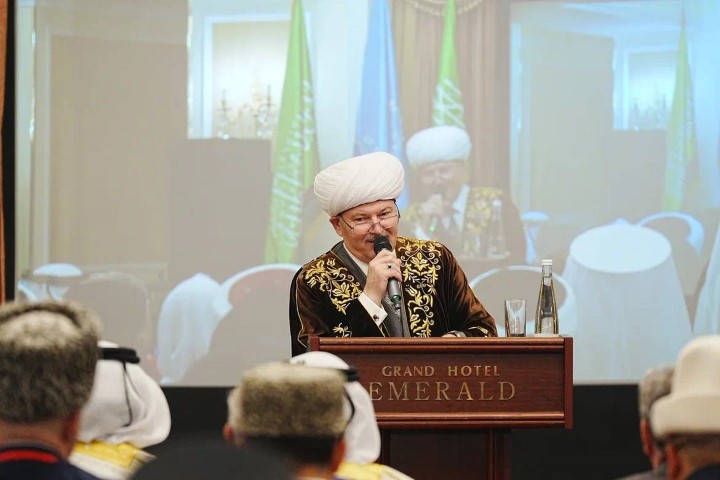
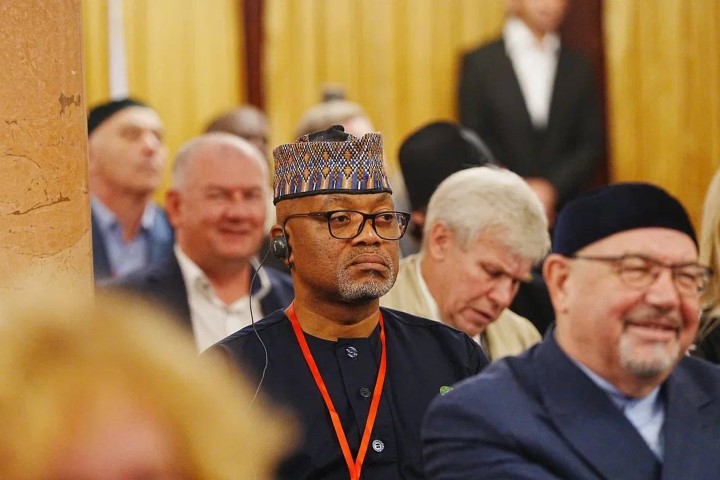
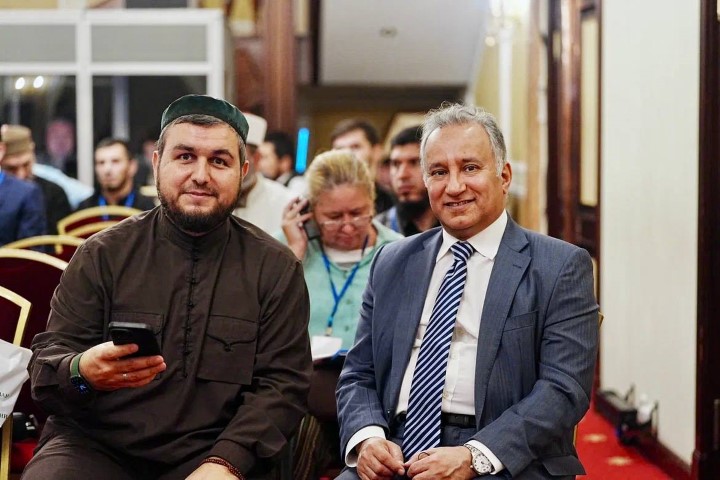
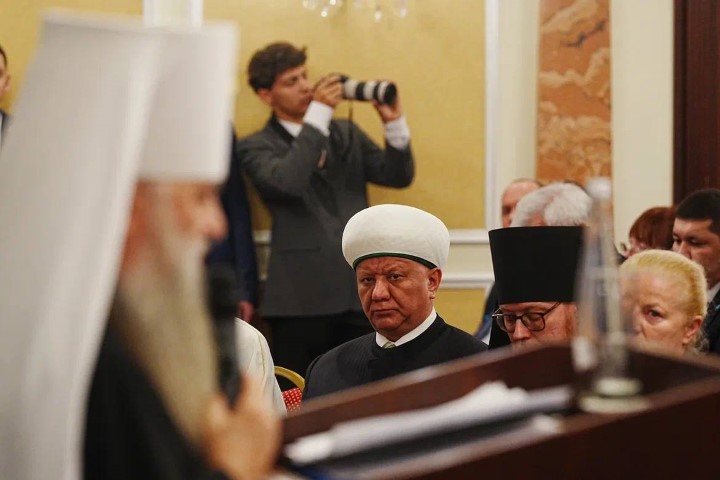
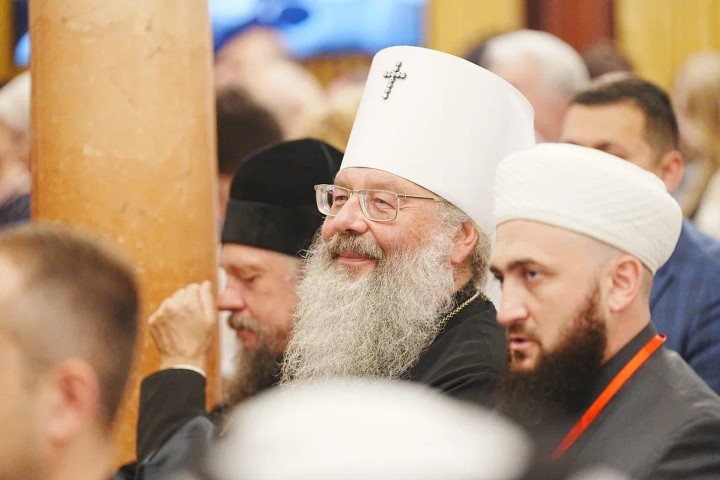
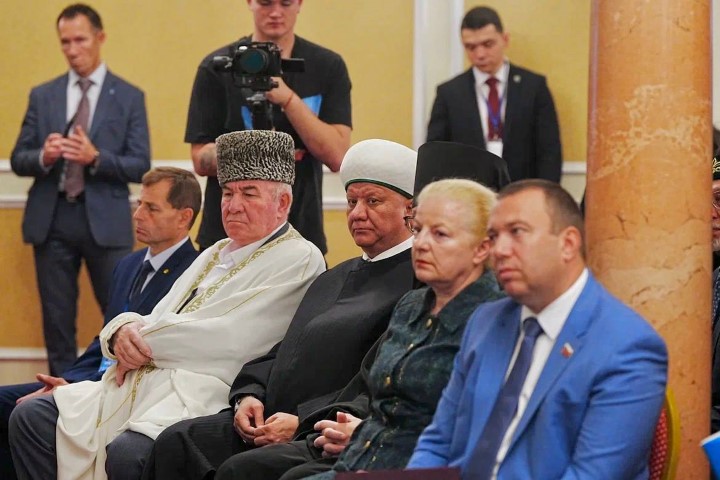
https://dsmr.ru/en/#sigProId3992aa7e00
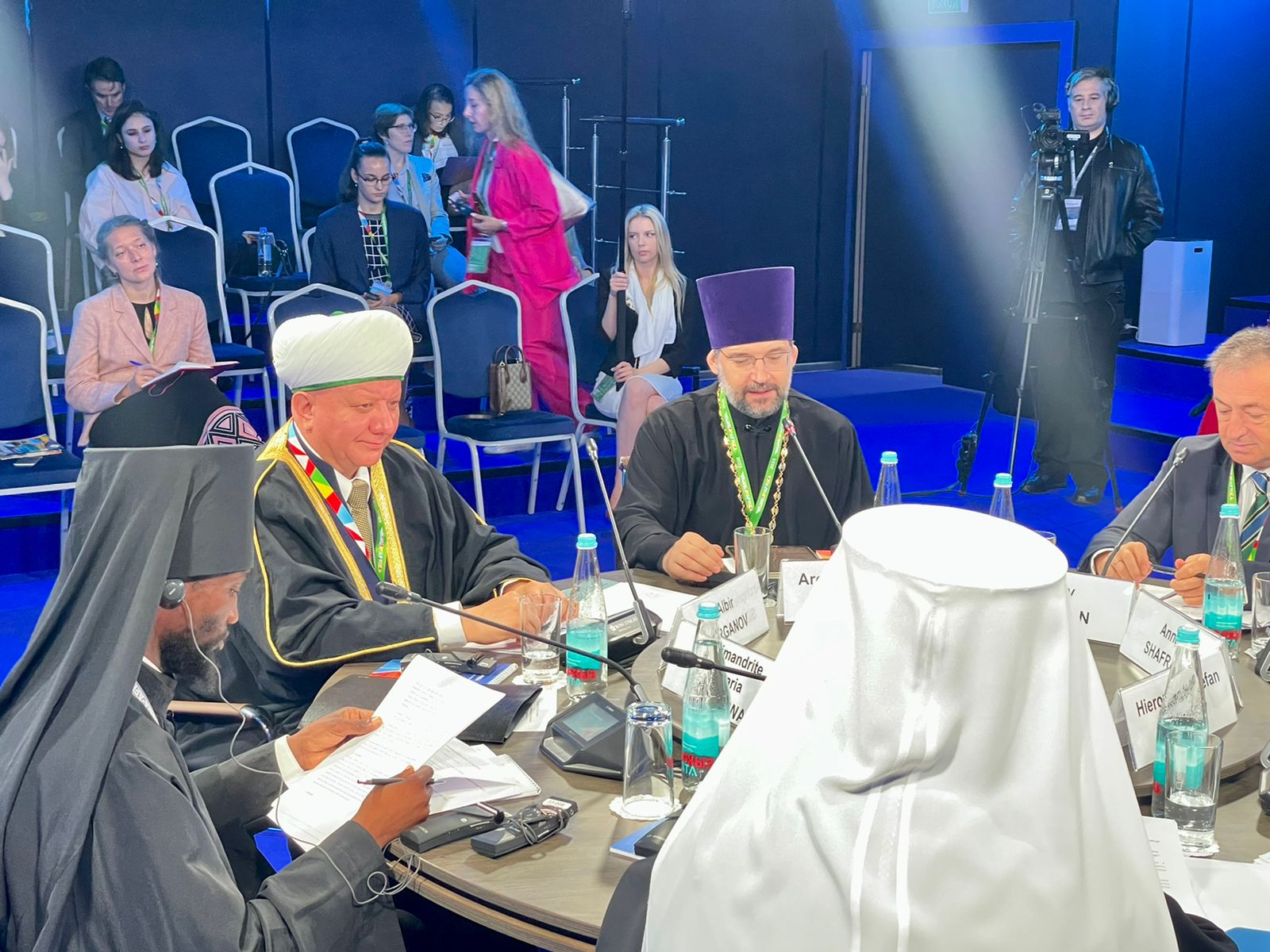
Dear participants, Your Eminence, Honorable brothers and sisters!
Bismillah al-Rahman al-Rahim! In the name of Allah, the Most Gracious, the Most Merciful!
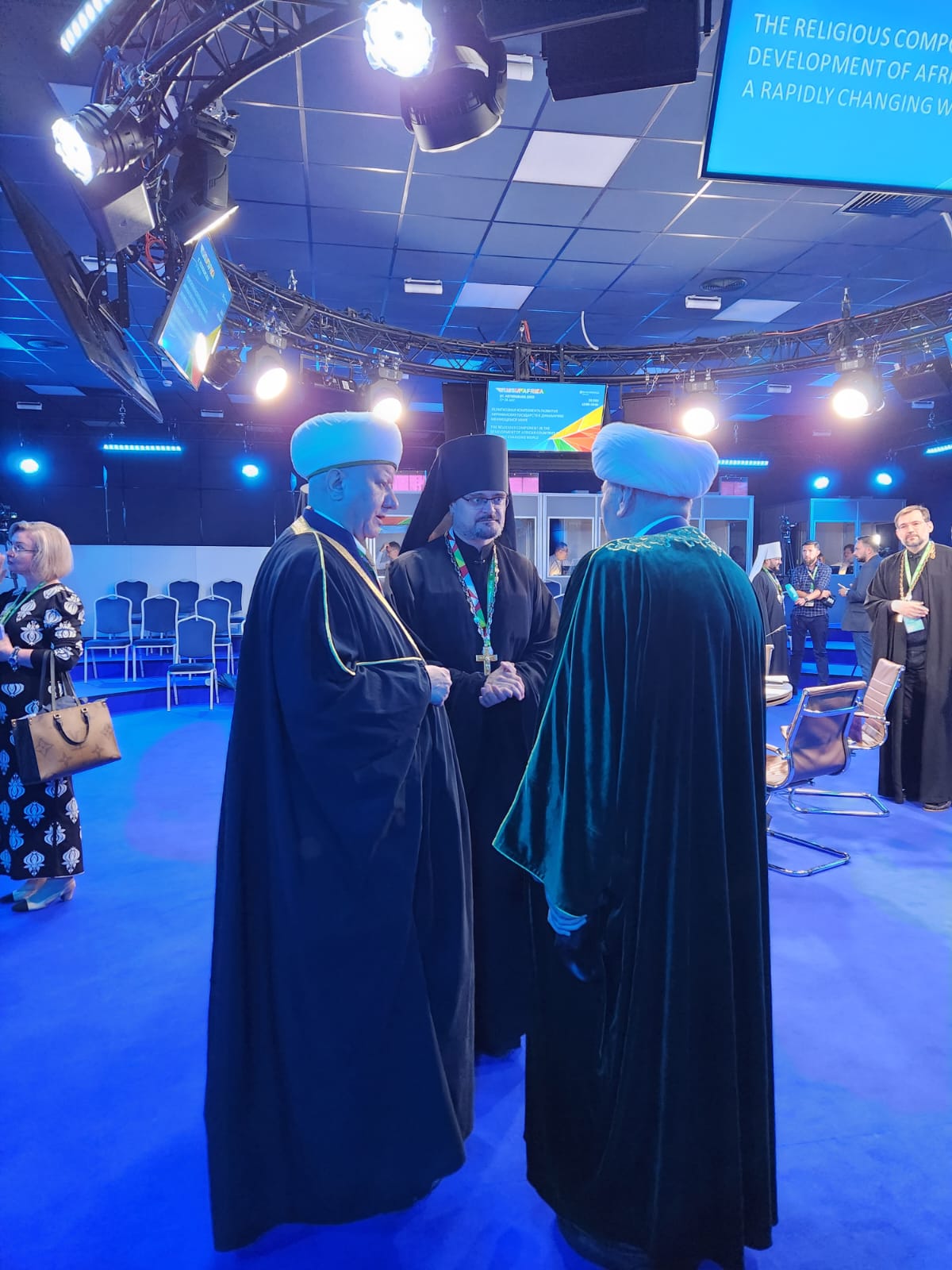
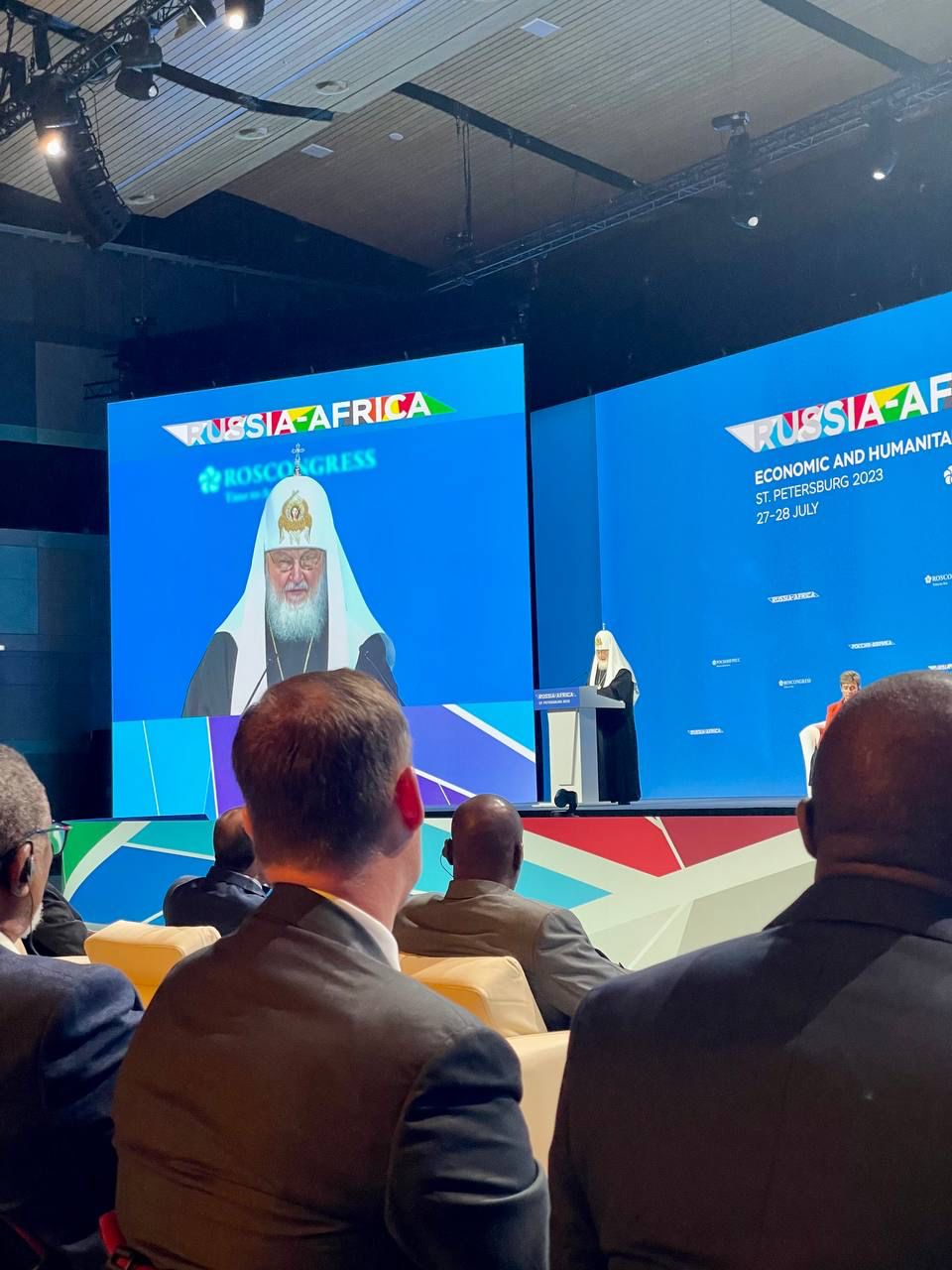
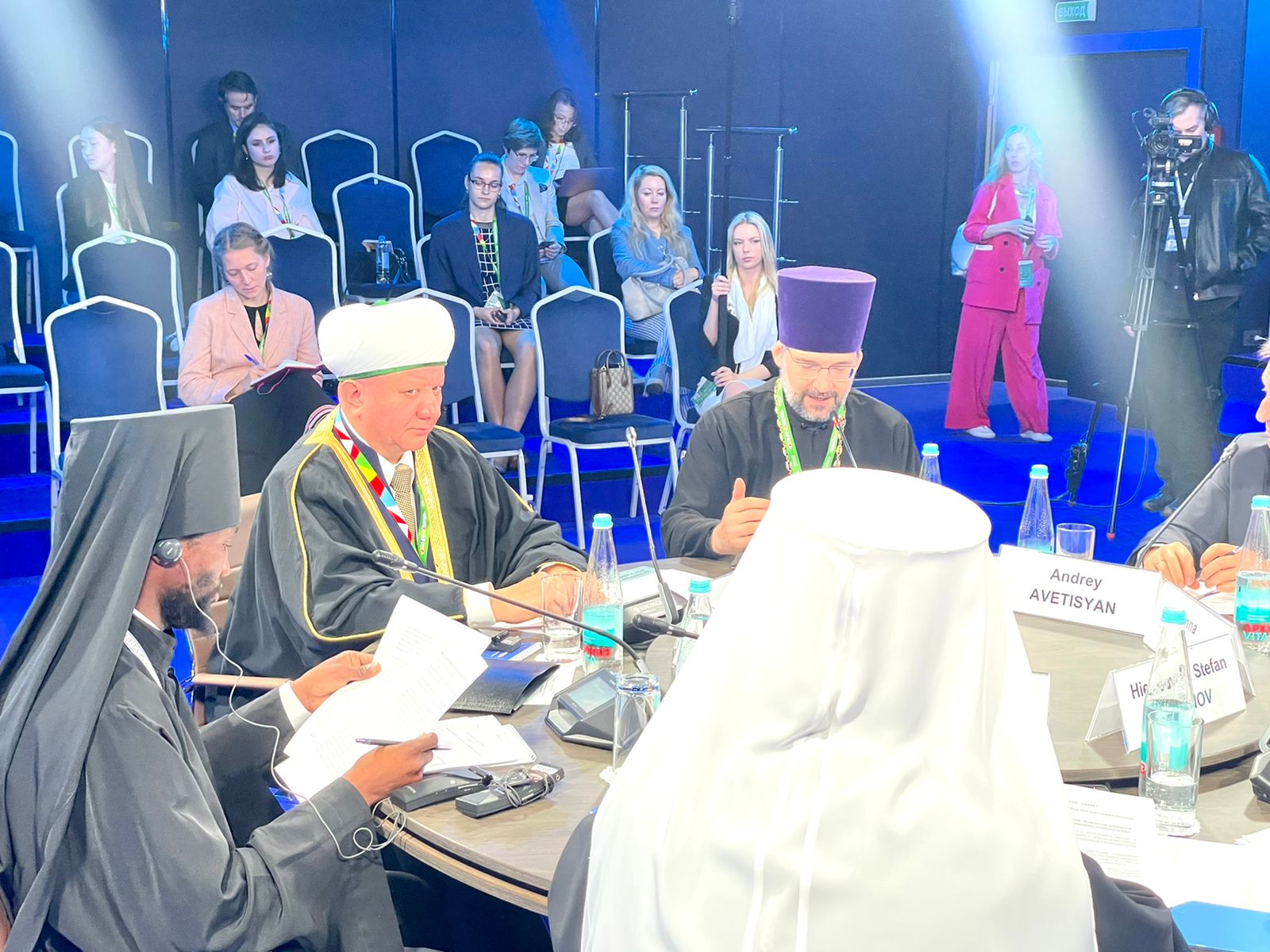
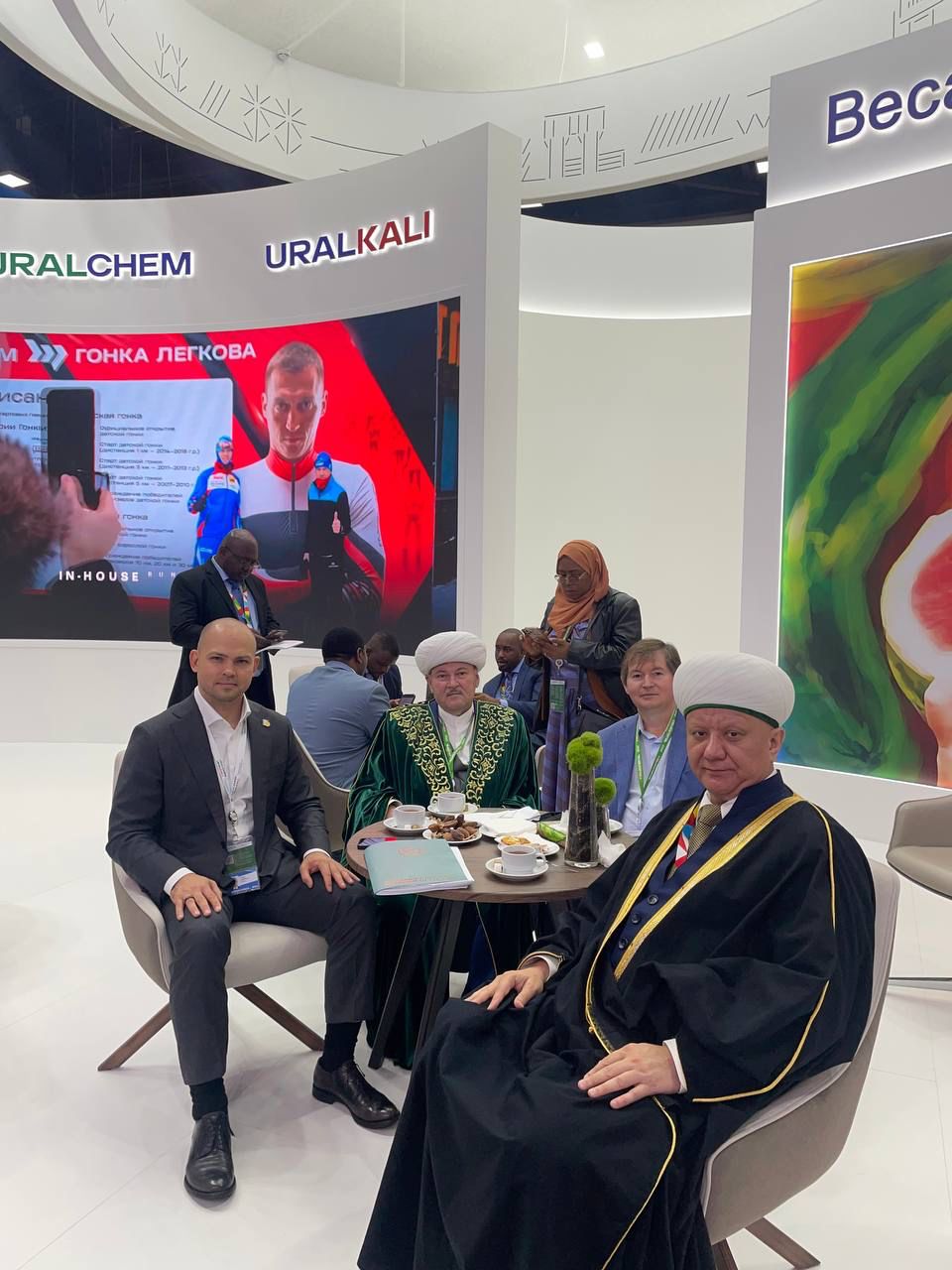
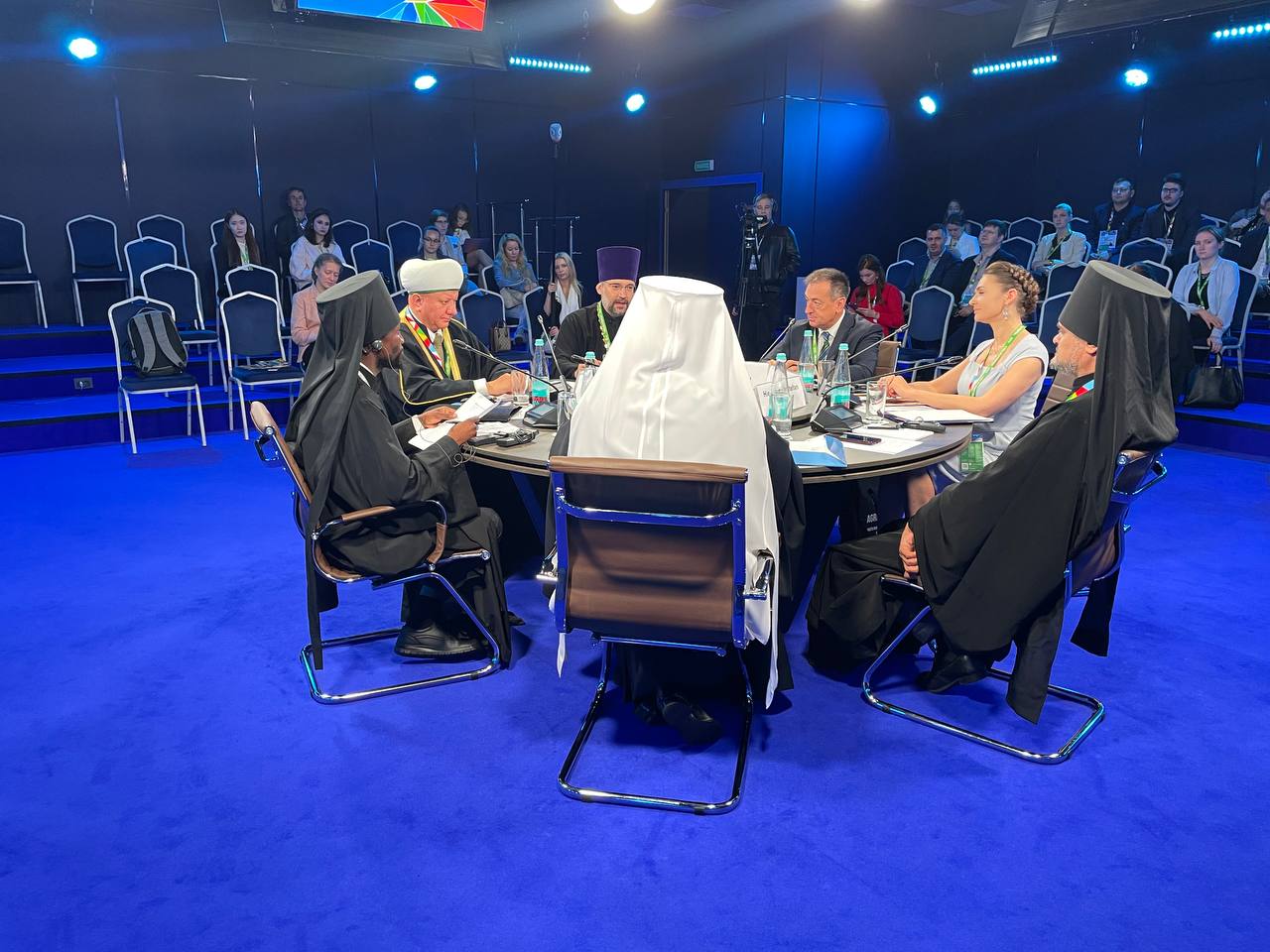
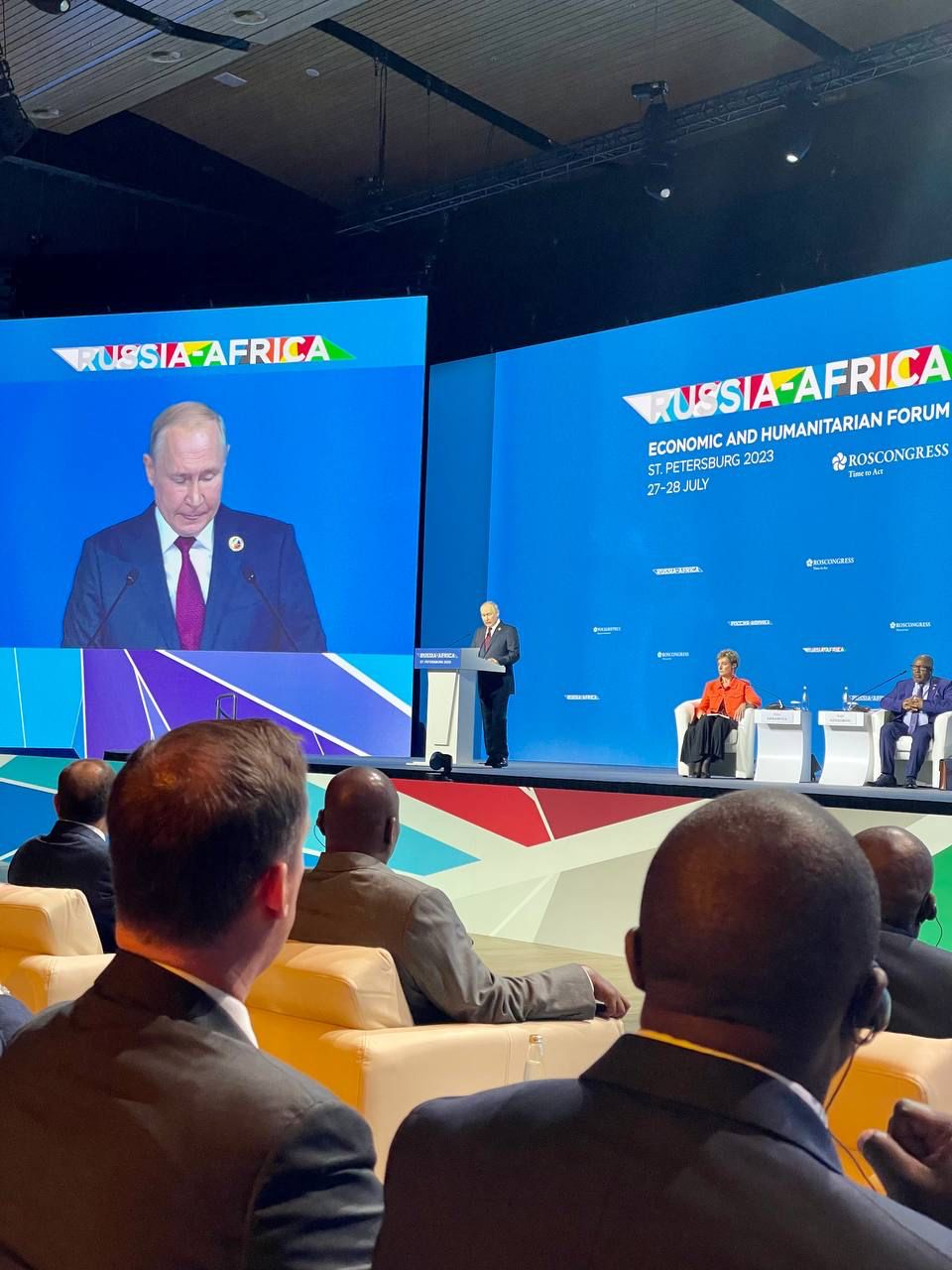
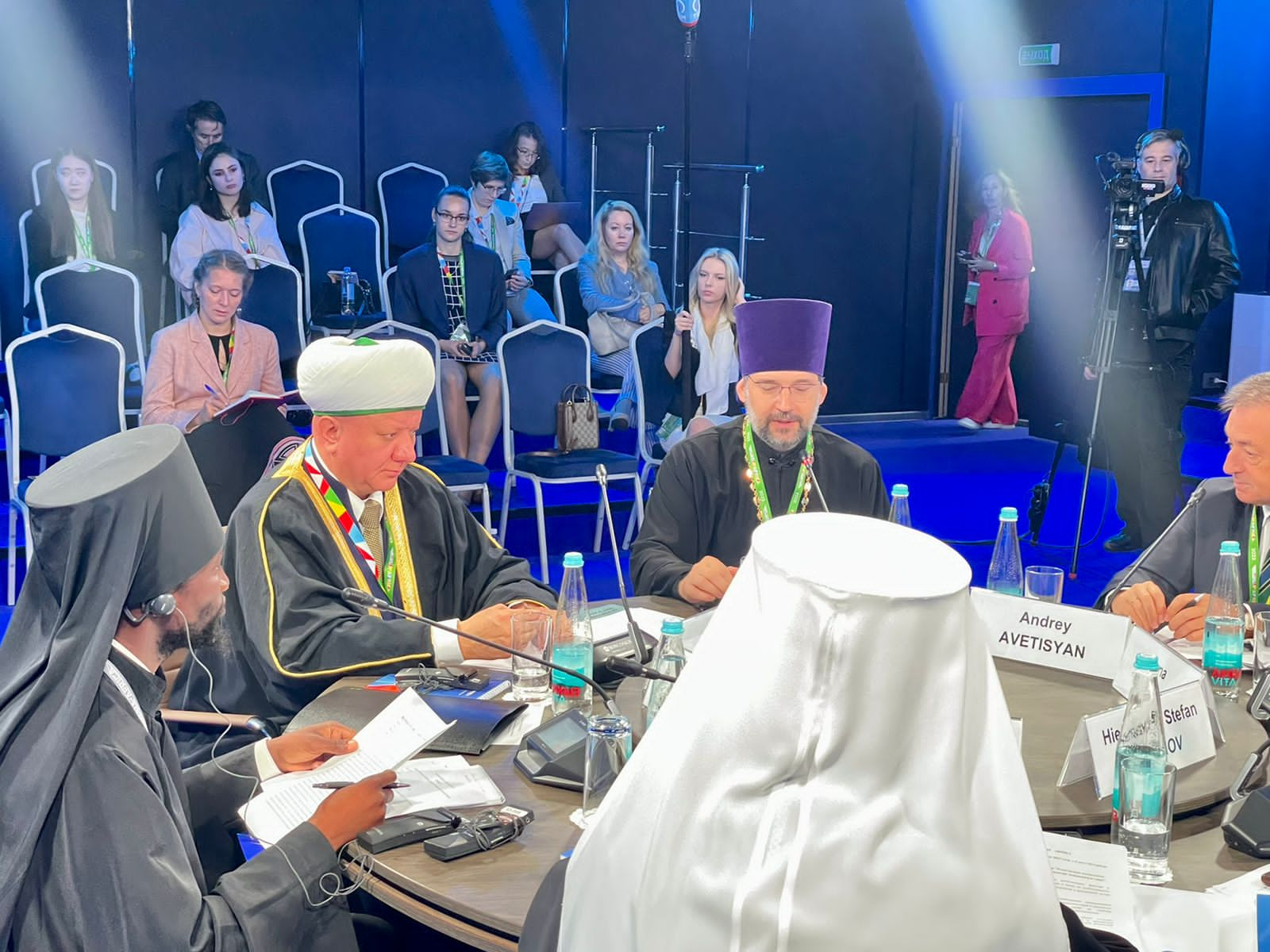
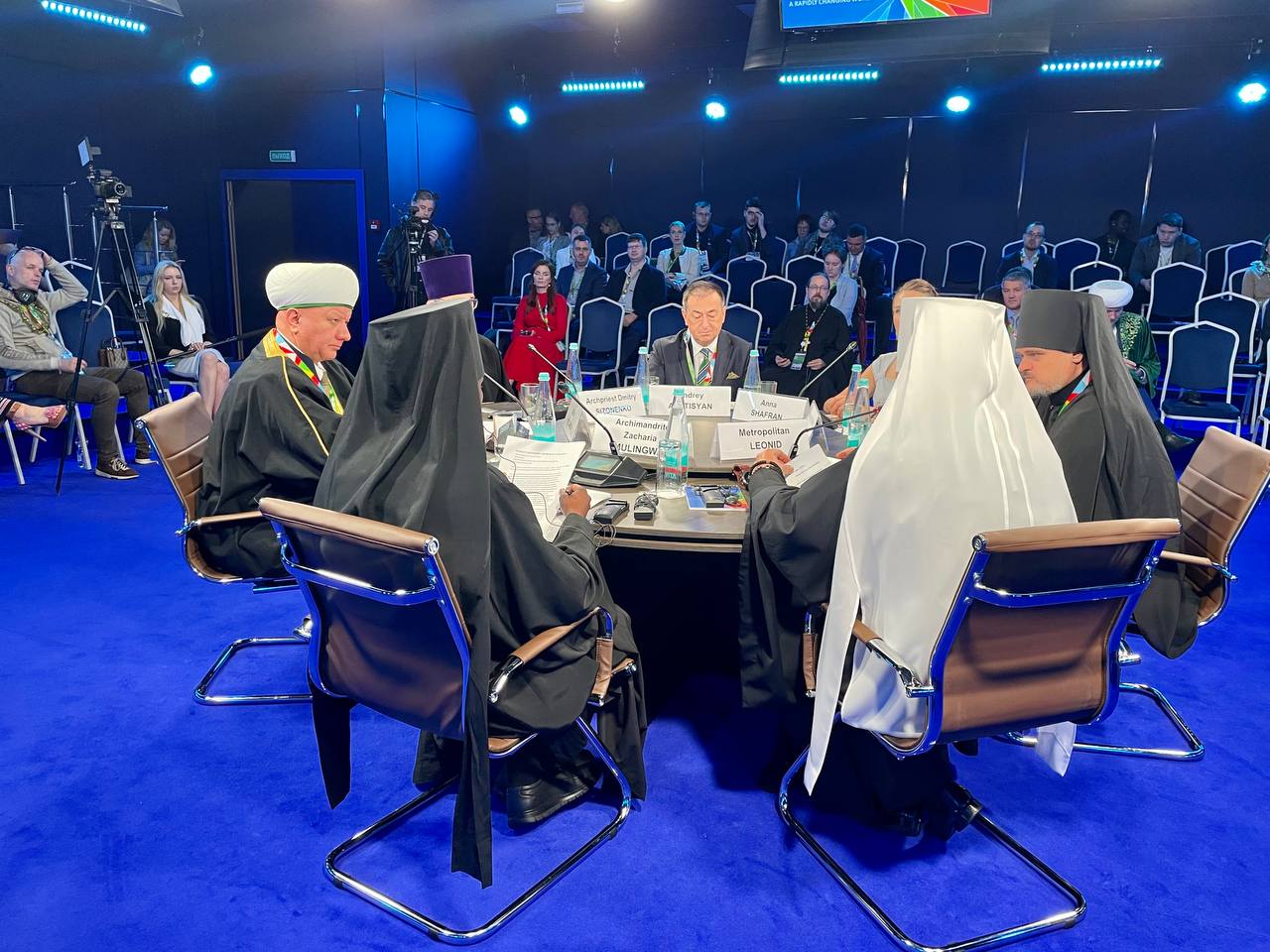
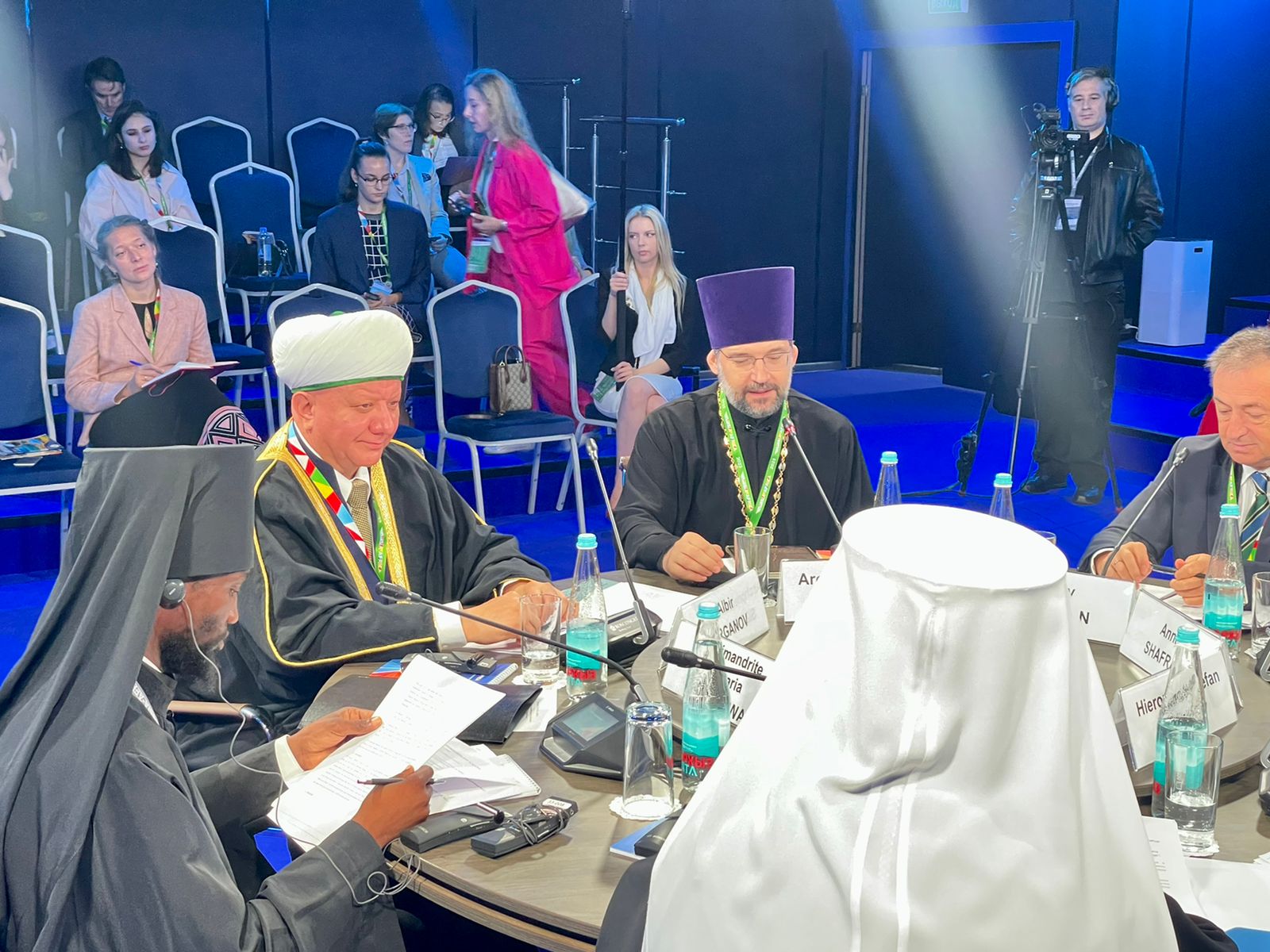
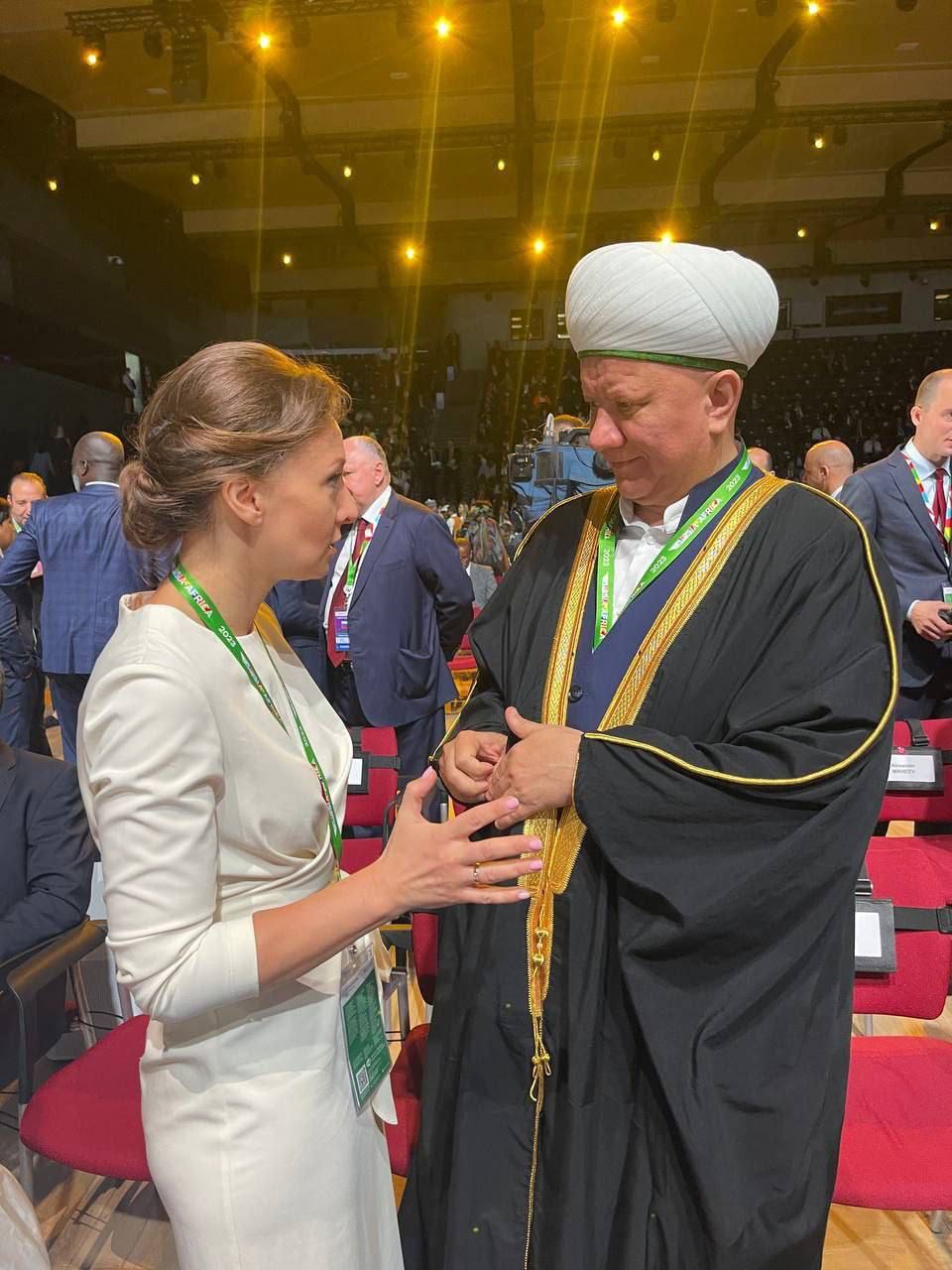
First of all, on behalf of the Spiritual Assembly of Muslims of Russia and Russian Muslims, I would like to thank the organizers for inviting me to participate in the Humanitarian Forum within the Second Russia-Africa Summit. Today, Northern Palmyra has turned into the heart of friendship and center of building bridges between states, nations and continents. People of different countries, cultures, languages and religions are gathering here at one table to discuss how to make our world, our planet, our common home safer, more stable and prosperous. As our prophet said, “...Be merciful to those who are on the earth, and the One Who is in the heavens will have mercy upon you“.
Naturally, such a thorough dialog is impossible without a frank conversation about our spiritual life, our faith, and our desire to do good and create, to make the world a better place. That is why I believe that the topic of our today's meeting – The Religious Component in the development of African Countries in a Rapidly Changing World – is in demand more than ever. There is no and cannot be any alternative to interreligious harmony, whereas the importance of this kind of harmony is obvious to anyone, regardless of religious beliefs. I am confident that our continents – Africa and Eurasia – with their rich diversity of cultures and religions, experience of cooperation and settlement of contradictions, hold the keys to stability on the whole planet. I thank the organizers of this forum for choosing such a relevant agenda.
It is symbolic that we have gathered here on the Day of Ashura which is an important religious date for Muslims all over the world. It is the day when each of us should reread the pages of ancient wisdom, do something good to our relatives, friends, children, and give time to ourselves, to stay in dialog with our own soul, cleansing it from doubts and concerns. All this is especially important now, when the world is rushing forward, and changes take on us whether we want them or not. We have all recently witnessed a series of planetary changes that have affected all walks of life and all religions. I will not be too wrong to say that there is a universal struggle against the Absolute Evil, Iblis and his satellites, to build an equitable and truly multipolar world order where all communities have an opportunity to thrive and live in harmony, without dictatorship and subjugation. “O people! Indeed, We have created you from a male and a female, and made you into nations and tribes so that you might get to know one another. Verily, the most honorable of you in the sight of Allah is the most righteous of you. Verily, Allah is All- Knowing, All-Aware” (Quran, 49:13). These words from the Quran emphasize that there is no room in Islam for hatred or discrimination based on race or ethnicity. The traditional Abrahamic religions are challenged today with an unprecedented level of threats. By undermining traditional values Iblis is trying to corrupt, turn all people into an animal herd, and then destroy, exterminate the human race. Our common task is to fight back united!
These days, the Muslim community makes up a quarter of the world's population – 1.9 billion people. Muslims live in every region, from Indonesia, where they are over 230 million, to the United States, where our co-religionists make up only about 1 percent of the total population (3.5 million). We live under different circumstances: some of us are in prosperous communities, while others face incredible hardship. But regardless of our circumstances, we all remain part of one big family, united by our faith in Allah and following the teachings of the Prophet Muhammad, peace be upon him.
/ Let me share our vision of the situation in Africa. As you may know, currently the continent has more than 1.3 billion inhabitants, which number is expected to double by 2050. Africa is a vast continent of more than 30 million square kilometers, without the Sahara; and it is home to many different cultures, religions and beliefs. Despite the differences, Africa enjoys unity through shared values, identity and historical heritage. This creates a special bond between our continents. The African continent is of great importance to Al-umma Al-Islamiyya and its role cannot be overemphasized. Today, Africa ranks second after Asia as the most Muslim continent. Meanwhile, North Africa is one of the oldest historical areas of the Islamic world, whereas Tropical Africa is the region where Islam is spreading the fastest. The early 20th century saw not more than 10 million Muslims living in this region, while now there are hundreds of millions. As a reminder, Africa is home to significant centers of Islamic culture, such as Rabat and Fez in Morocco, Sokoto in Nigeria, Masina in Mali, and the Mahdist center of Omdurman in Sudan, to name but a few.
The struggle for resources and territories on the African continent has been on for centuries. I ask the Almighty to forgive me, because I do not want to sound cynical, but unfortunately the situation is not new. Even back in the early colonial period (the 16th to mid-19th century), Western European colonizers instigated conflicts between Christians and Muslims. The famous Senegalese historian of Islam Lamina Sanneh wrote, where “Muslim leaders resisted the colonial penetration of the Western imperialists, their efforts were undermined by non-Muslim leaders who went over to the side of the colonizers”. We see similar processes nowadays.
The imperialists of Kaiser's Germany and their Turkish allies tried to use the spirit of Islam oppositional to the colonizers, as well as Arab nationalism, for their own purposes during the First World War, and the Italian fascists and German Nazis did the same before the Second World War. For example, not long before the Second World War, Mussolini declared himself a patron of Muslims: he sought to use the national liberation movements of Arabs and other Muslim peoples of Tunisia, Egypt, Sudan, Chad, as well as the dissatisfaction of Ethiopian Muslims with the domination of Christian Amharic landowners in Ethiopia, for the purposes of Italian fascism. Having occupied Ethiopia in 1936, the fascists tried to set the Muslims, to whom they granted certain privileges, against the Orthodox Christians, who constituted the majority of Ethiopian citizens. Back then, the first ‘methodological guidelines’ were created to incite enmity, fuel nationalist sentiments, and instigate fratricidal wars. But despite all these political moves, Islam continued to play a key role in the anti-colonial struggle of the peoples of Africa. It became a means of religious and ideological protest against the ‘spiritual colonization’ of African peoples imposed by Western Europeans.
We have witnessed lately the aggravation of a number of conflicts based on religion and the deepening of inter-faith contradictions. This is a matter of deep concern. The crises we are witnessing in the Sudan, Ethiopia, Nigeria, Mali, the Central African Republic, Cameroon and other countries are no doubted historically rooted, but it becomes clear that the intervention of extra-regional forces is exacerbating these tensions, intensifying the crisis and causing thousands of casualties. Last June, the ISIS (outlawed in Russia) advised its supporters who had not previously emigrated to Iraq or Syria to seek resettlement in “the land of their brothers in Africa, as it is now the land of hijra and jihad”. Earlier this May, they also hailed the “jihad of Muslims in Mozambique”. Other Western-inspired terrorist organizations such as Boko Haram, Al Qaeda, guided by the false slogans of “true Islam and jihad”, are waging wars against the five states of the region – Niger, Nigeria, Mali, Cote d'Ivoire, and Burkina Faso. The fact that organized crime often uses the banner of jihad to cover its criminal interests, including trafficking in drugs, weapons and human beings generates particular concern.
Along the same lines, in 2017, Sheikh Abdullah bin Zayed (of the United Arab Emirates) expressed his concern: “The day will come when we see Europe breed a significant number of radical extremists and terrorists because of a lack of political will, a desire to assert political correctness, or a belief that they know the Middle East, Islam and etc. better than we do.” Today, Europe is facing the devastating consequences of its own neo-colonial policy. French President Emmanuel Macron took steps from the outset that he believed were meant to combat ‘separatism’. In practice, however, this has led to the infringement of the rights of Muslims, deepening the gap in society, numerous protests, clashes and, unfortunately, loss of life. At the same time, the stigmatization of Muslims, primarily peace-loving people seeking peaceful interfaith coexistence, continues around the world. We are challenged with repeated attempts to set the Islamic faith equal to extremist ideology.
I am confident that the work with youth is extremely important today for all our countries and for all religions. They are our future. We live in an era of unprecedented changes. Dissemination of information, technological progress, improvement of living standards – all these are undoubted benefits of our time. However, we also face the challenges that these changes bring. We see how the traditional spiritual and moral guidelines that have been with us for centuries are being removed and replaced with values of a different kind. This is especially noticeable among young people, who are the future of our society and our religion. We see the prevalence of aspirations among young people that are alien to our Islamic values, for instance, the strive for enrichment at any cost, the willingness to sacrifice the interests of family and society for short-term whims. We, as Muslims, must resist these trends. Our faith teaches us to cherish family, society and spiritual values above material goods. It teaches us to be just, merciful and generous. Russia's policy towards other states, including countries of the Islamic world, has always been based on the principles of friendship. Recently, we – Russian Muslims – have felt a new impetus to establish even warmer and closer ties with our brothers in faith in other parts of the world, especially given the importance of supporting the new decentralized world order.
Relations between Orthodox Christians and Muslims in Russia have historically been friendly and full of mutual respect. There may be churches and mosques, bells ringing and calls to prayer in the same city, on the same street. Priests and imams communicate without formalities. The whole history of Russia is imbued with respect for religious traditions, and the experience accumulated over centuries calls for preserving and strengthening the values of civic spirit and mutual respect between peoples and religions. Orthodox Christianity and Islam arrived to Russia through a voluntary choice and continue to go hand in hand.
The year 2022 saw a federal level celebration of the 1100th anniversary of the adoption of Islam in the Volga Bulgaria. This summer we plan to convene an inter-faith conference to discuss the topic of preserving spiritual and moral values, which is relevant in the modern context.
The State Duma adopted a law on Islamic banking. The law reads that the experiment will last two years from September 1, 2023 to September 1, 2025 in Bashkortostan, Tatarstan, Chechnya and Dagestan.
There are mosques and madrassas in all regions of Russia. Although Islam is not the dominant religion in Russia, its spread is not inhibited in any way. Moreover, the interaction between religious institutions and government bodies has recently strengthened, resulting in a number of laws protecting the right to worship, the holy Quran, and the beliefs and conscience of believers.
We support and help our brothers in faith, whose republics have recently become part of Russia. Many of our brothers live in the Crimea. Ethnically, they are the Crimean Tatars. We have built good brotherly and trusting relations with them. They experienced a very difficult time after the 1990s. Now the whole country is actively supporting them. The last eight years alone have given us more than 400 mosques and madrassas restored and opened in the Crimea. We see attempts made by a number of countries that oppose Russia to trigger confusion in the internal ethnic harmony in our country. Among other things, we cannot ignore their attempts to embitter the international community with regard to the rights of Muslims in the region. Taking this opportunity, we do not only deny their allegations, but even want to invite everyone on behalf of our dear brother Emirali Ablaev, the Mufti of the Crimea, to visit the republic and see for themselves what is real and what is fake; to eyewitness the progress that has been achieved in the life of Muslims on the peninsula. We are also willing to share our experience of ensuring harmony in a multi-ethnic society. I reiterate that we will gladly welcome all interested guests in Russia.
Dear participants of the conference! In conclusion, addressing more words of gratitude to the organizers for such a high level of preparation of our forum, I remind you about the importance of a joint response to Islamophobic challenges and any forms of other religious discrimination, and propose several initiatives:
- From September 12th to 15th we plan to hold the Second St. Petersburg International Religious Forum. We believe that this platform will contribute to finding solutions to the complex problems challenging us all.
- Next year we have plans to hold an international youth forum in Russia. I propose to jointly think over a format for communication of young religious leaders of our countries. We are ready to provide a platform for this.
The great African theologian, Usman dan Fodio, said: “Harmony is the basis of any society, and there is nothing more important for society than harmony and unity”.
We are sure Allah the Almighty will help us in this righteous work!
https://dsmr.ru/en/#sigProId423cef4d75
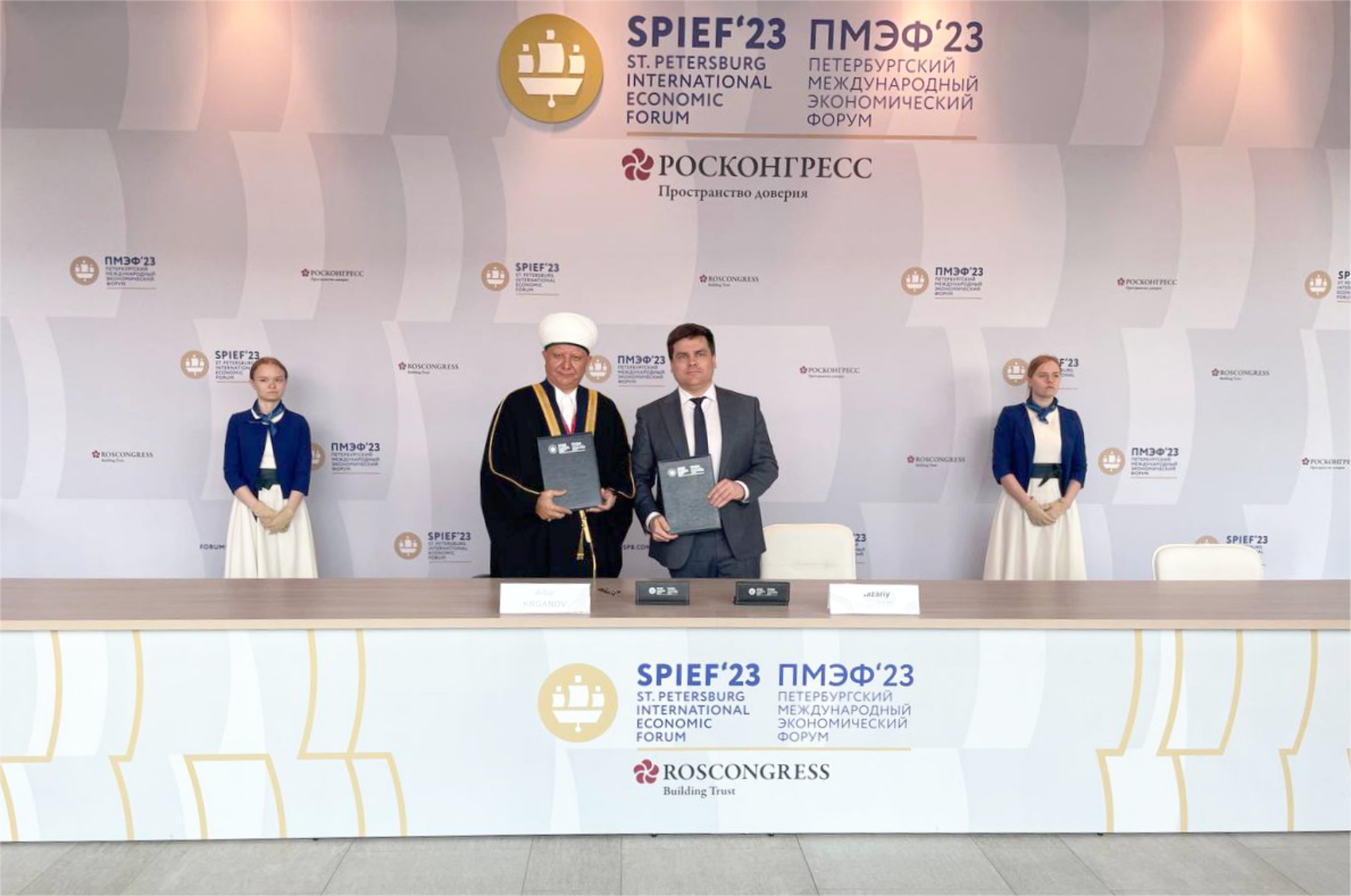
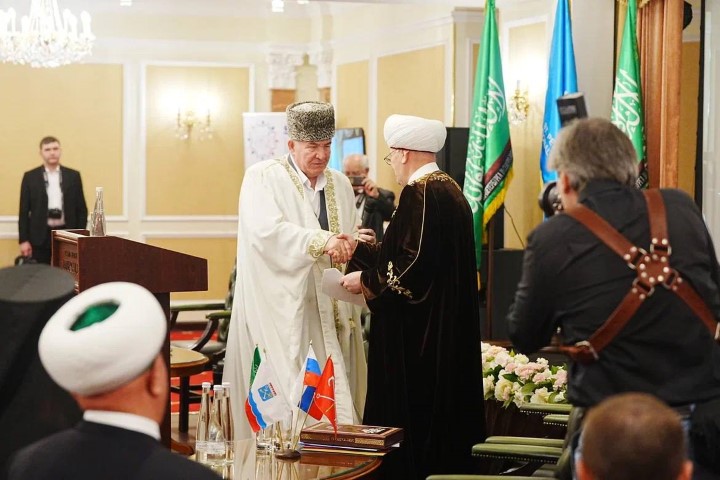
The Head of the Federal Accreditation Service, Nazary Skrypnik, and the Head of the Spiritual Assembly of Muslims of Russia, Mufti Albir Hazrat Krganov, signed an agreement on cooperation in the development of the halal products and services market in Russia as part of the St. Petersburg International Economic Forum (SPIEF-2023).
Nazariy Skrypnyk noted that the signing of the document marks the beginning of active cooperation in the production and sale of Halal products. Growing domestic demand and the high export potential of halal products have driven the introduction of the new accreditation scheme into the national system in 2023, hence promoting the interests of consumers and producers in this sector is one of the main priorities of Rosakkreditatsiya and SAMR. He also highlighted that the roster of technical experts of Rosakkreditatsiya includes 10 experts specialising in Islamic affairs and Halal certification. “It is extremely important for us to form our own expert community, and cooperation with Islamic organisations will increase trust from the Arab world," Skrypnik said. For his part, the Head of the Spiritual Assembly of Muslims of Russia, Mufti Albir Hazrat Krganov stressed that the production and export of Russian halal products is extremely relevant at a time when Russia's economy is shifting ever more attention to Asian and Middle Eastern countries. "Support and coordination from government agencies such as the Federal Accreditation Service is of particular need. This would also greatly affect Russia's international standing in this area," the Mufti added.
Since 2016, Rosakkreditatsiya has been a full member of the International Halal Accreditation Forum IHAF. The Protocol of Cooperation between the Service and the Halal Accreditation Agency of the Republic of Turkey (HAK) was signed in 2022.
April 2023 marked the signing of an Annex on Accreditation Cooperation to the Memorandum of Understanding with the Gulf Cooperation Council Countries Accreditation Centre (GAC), whose Director General emphasised the high expectations of cooperation with Rosakkreditatsiya.
SAMR Press Office
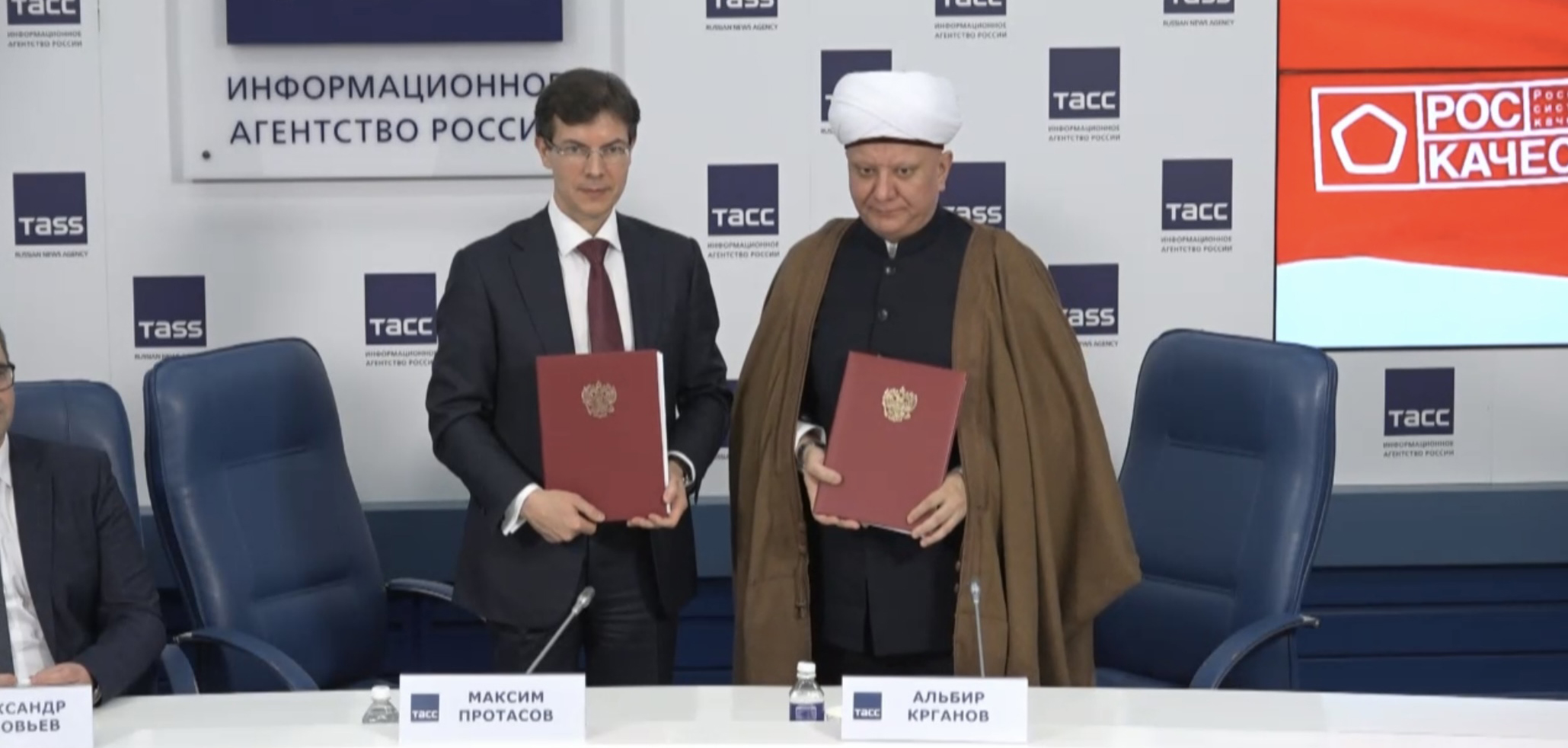
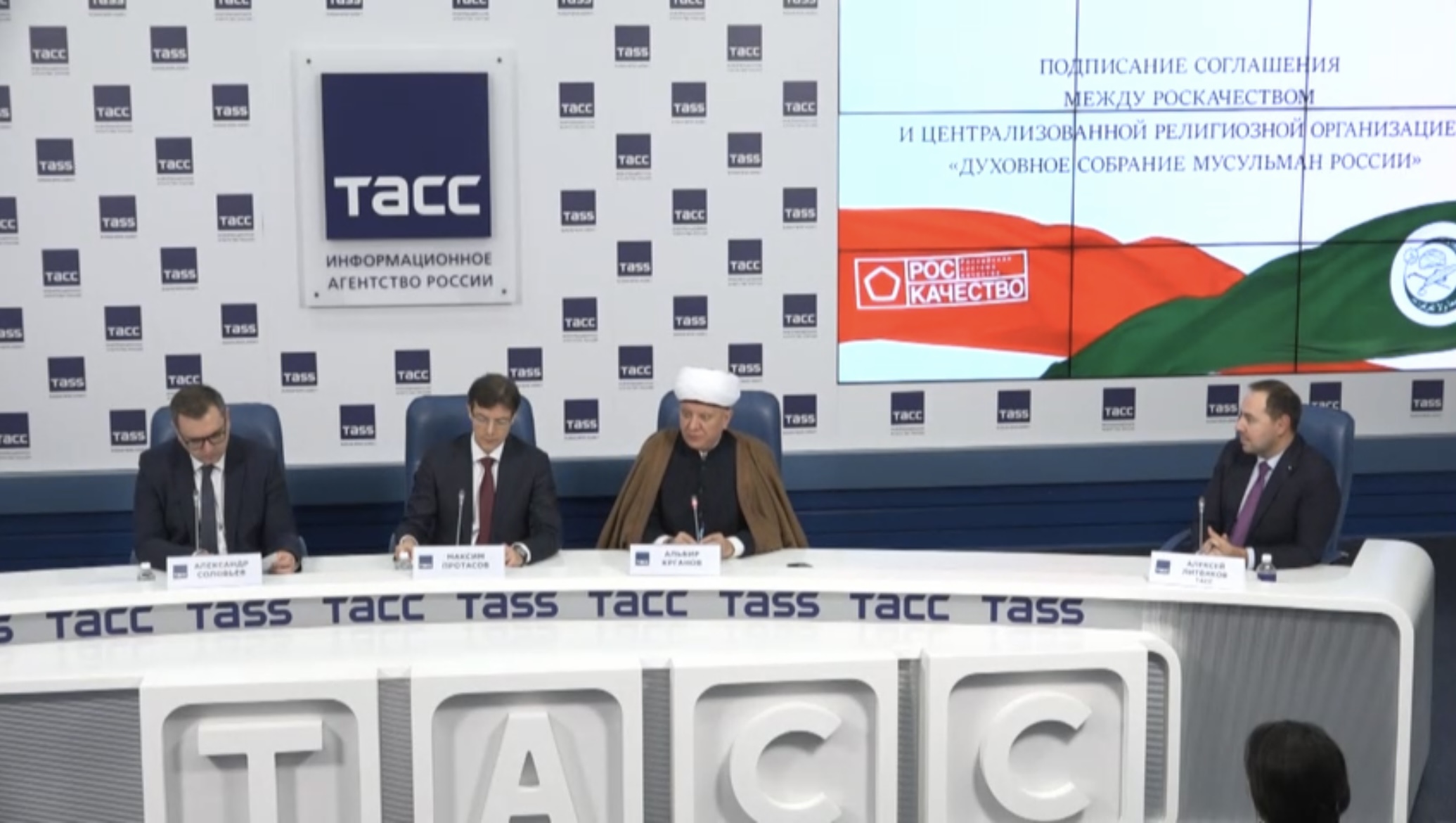
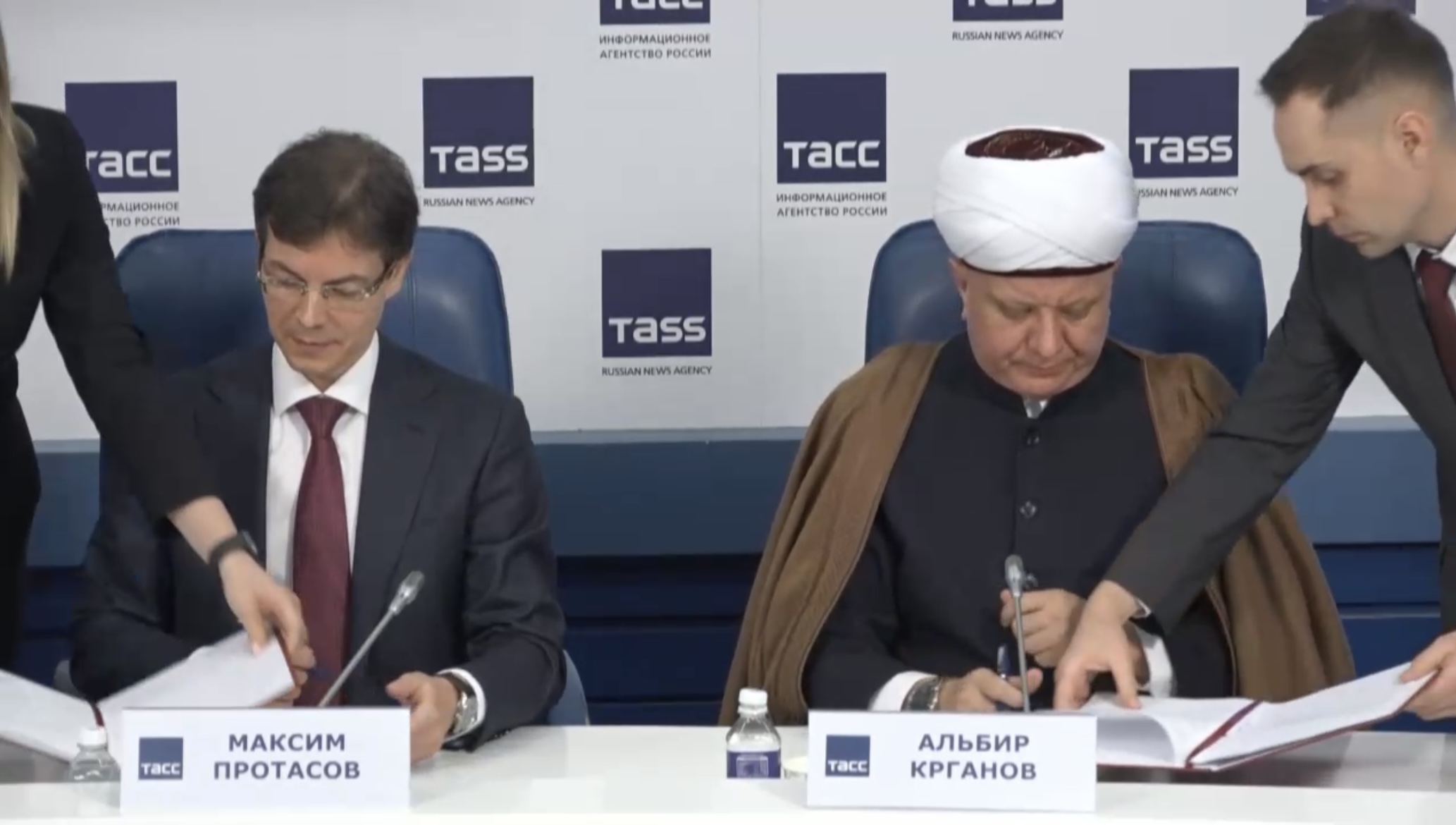
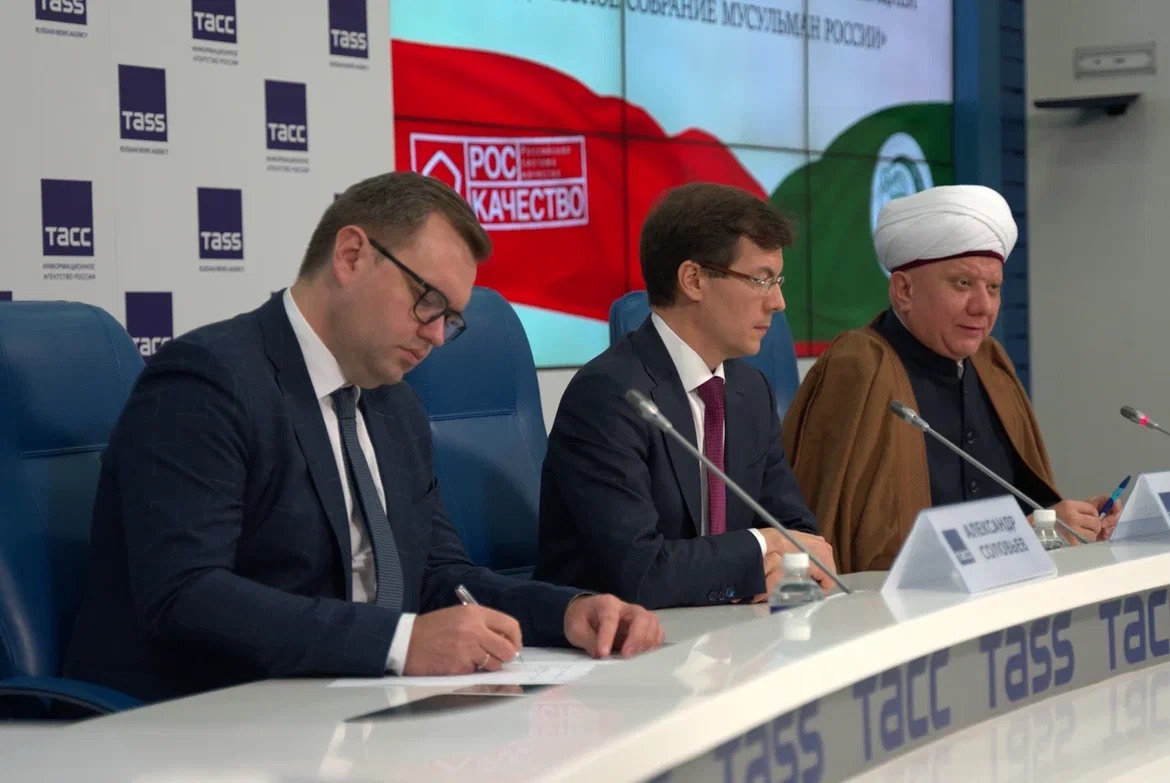
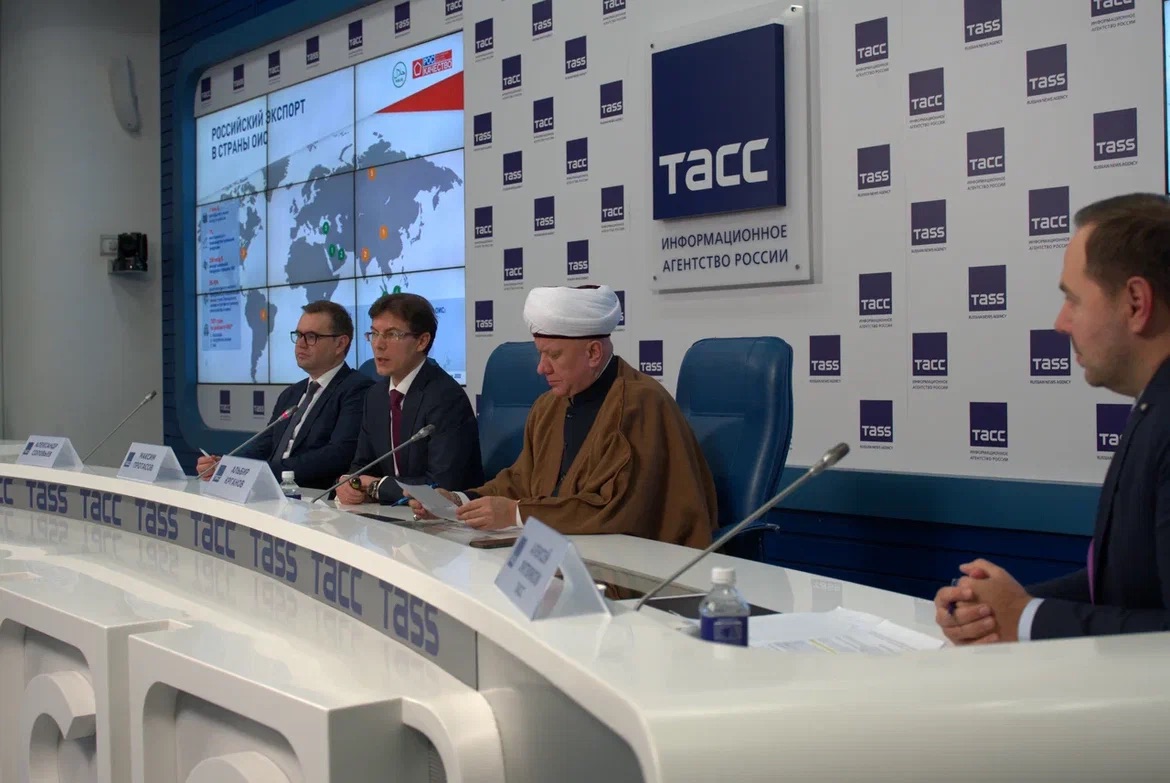
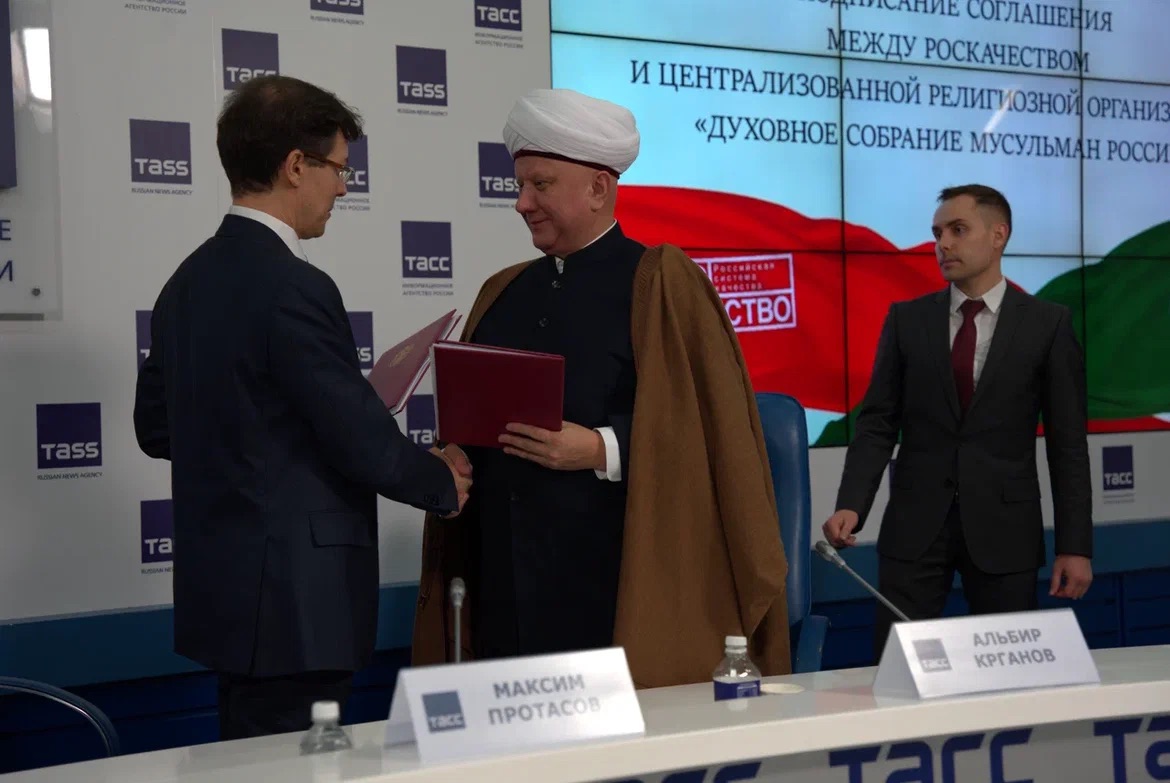
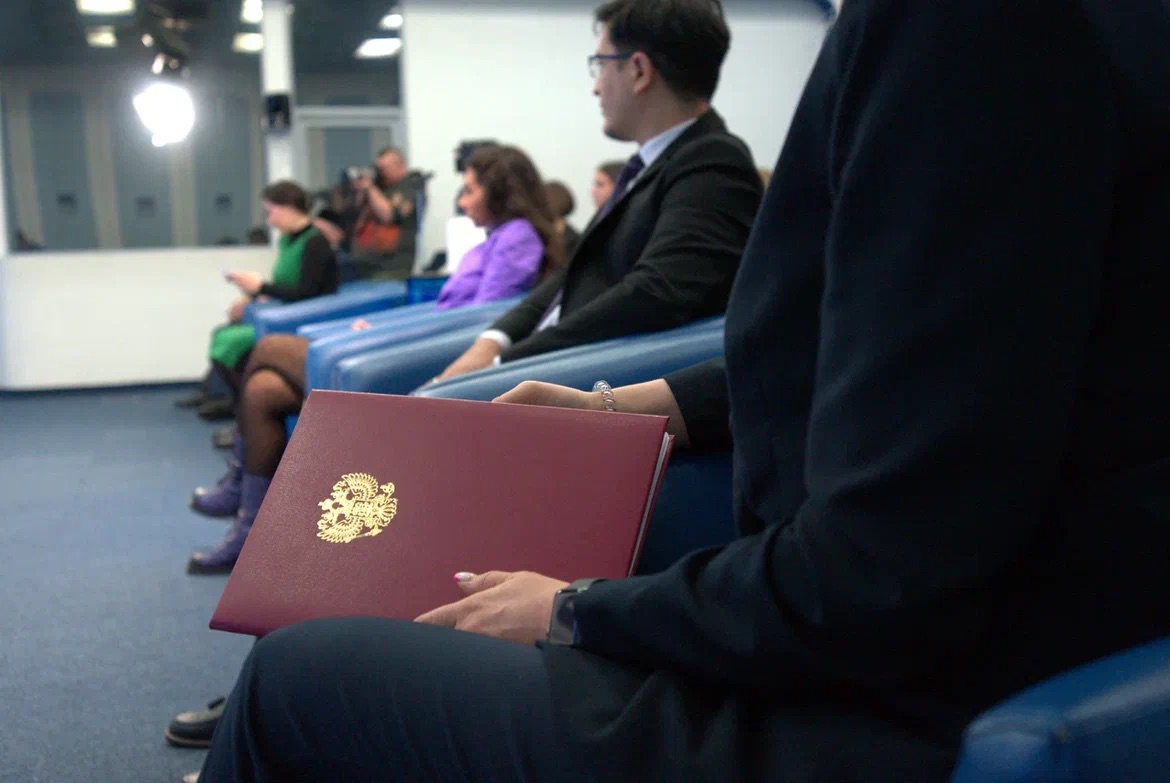
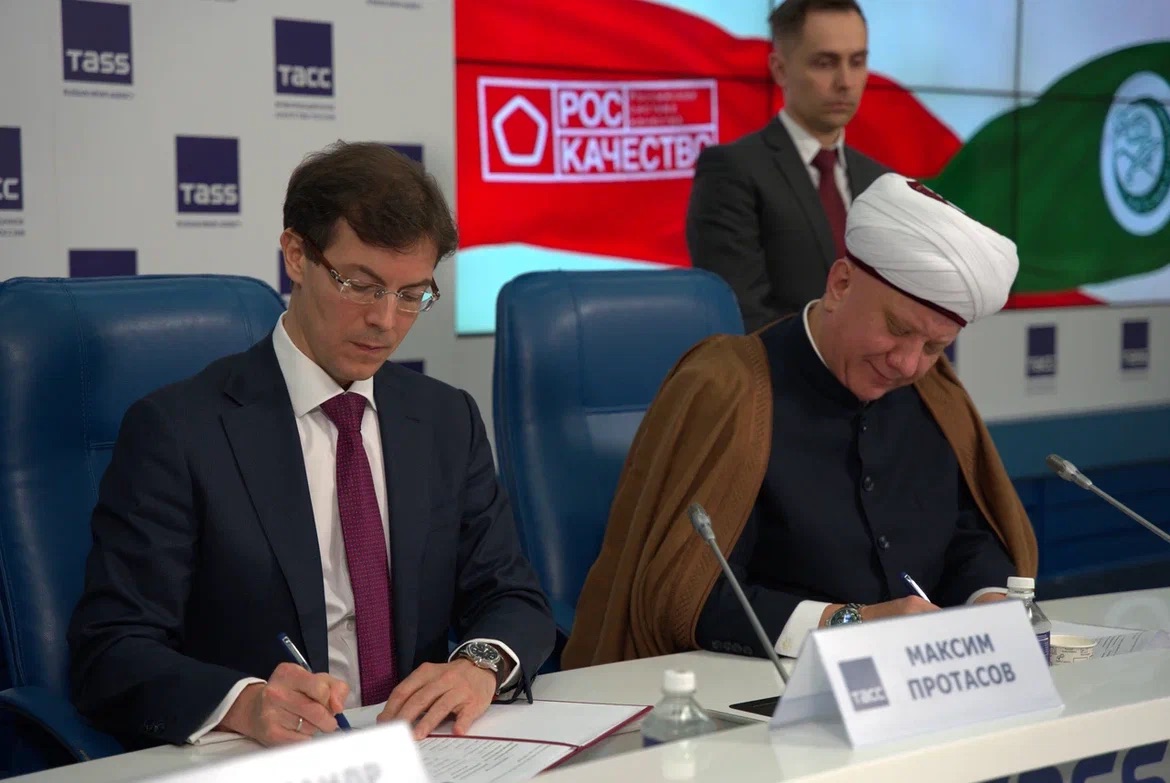
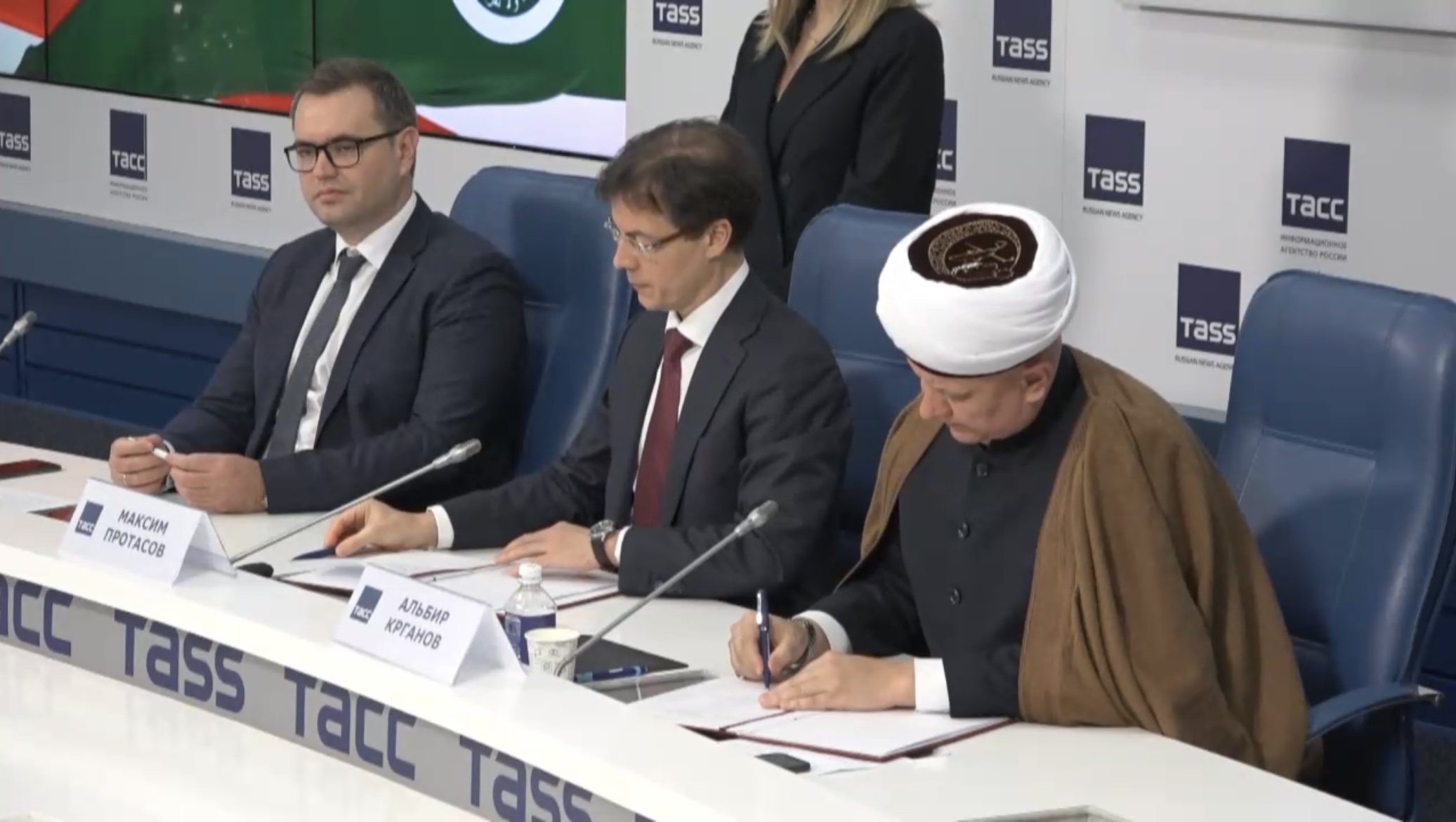
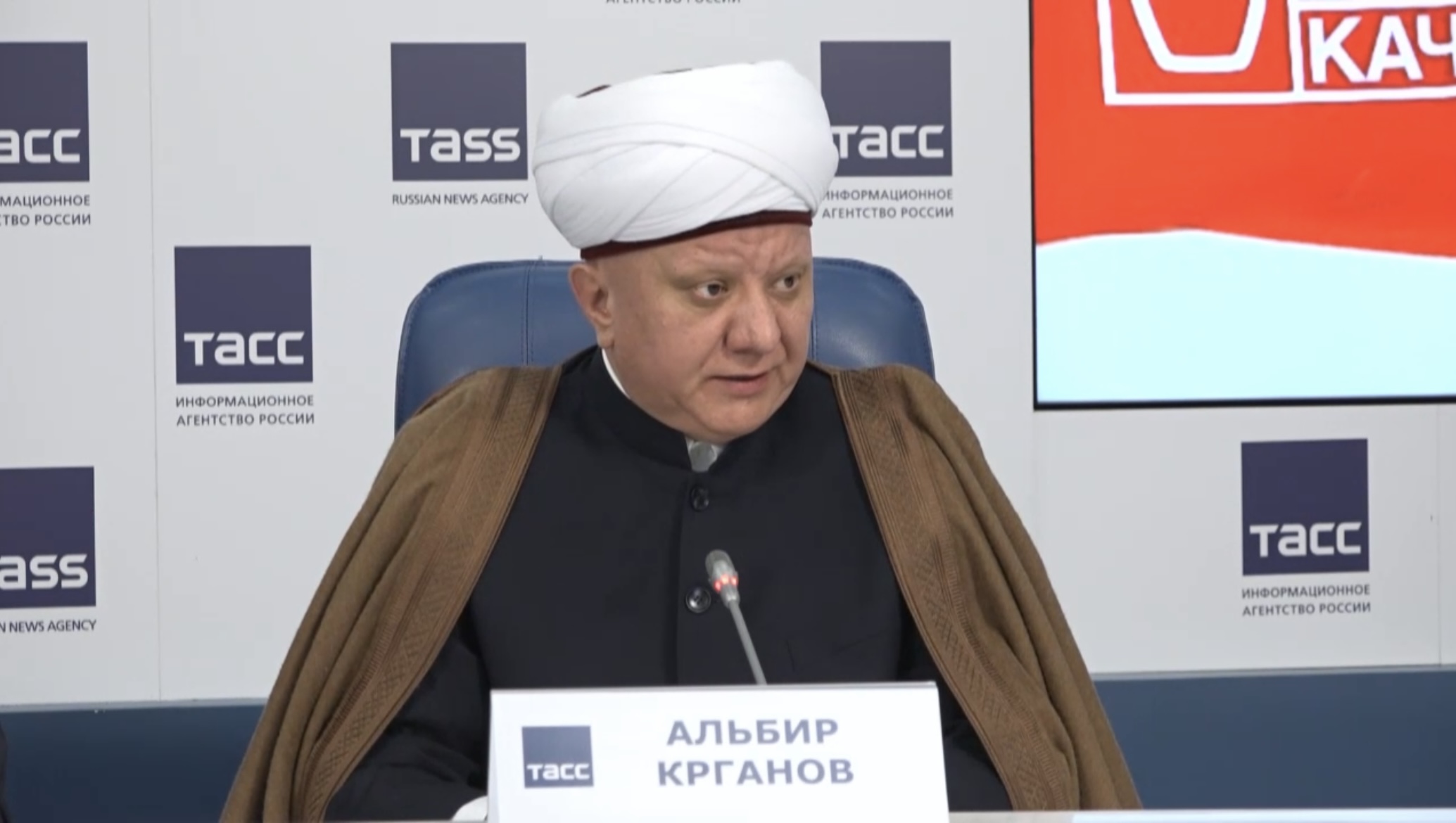
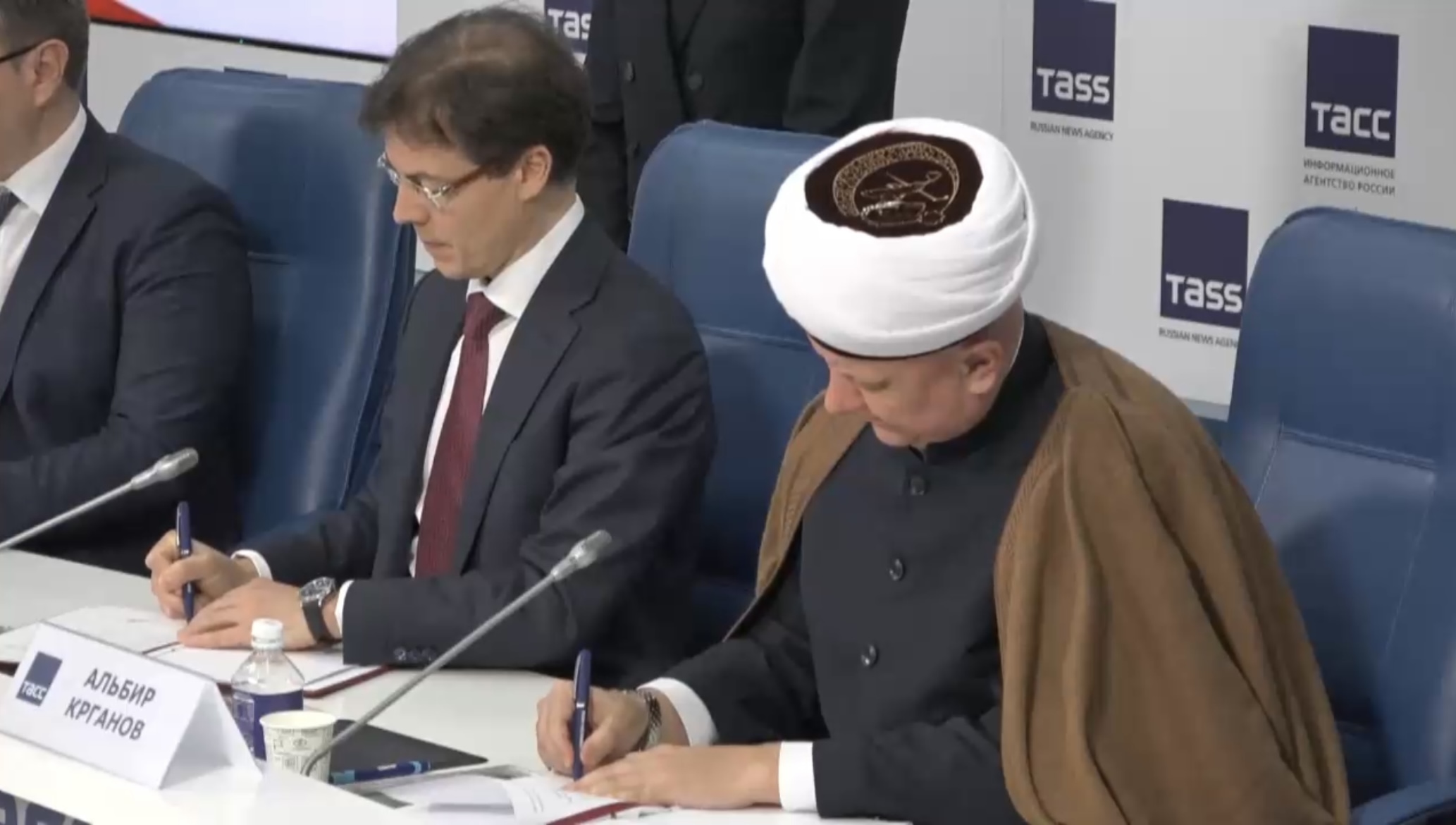
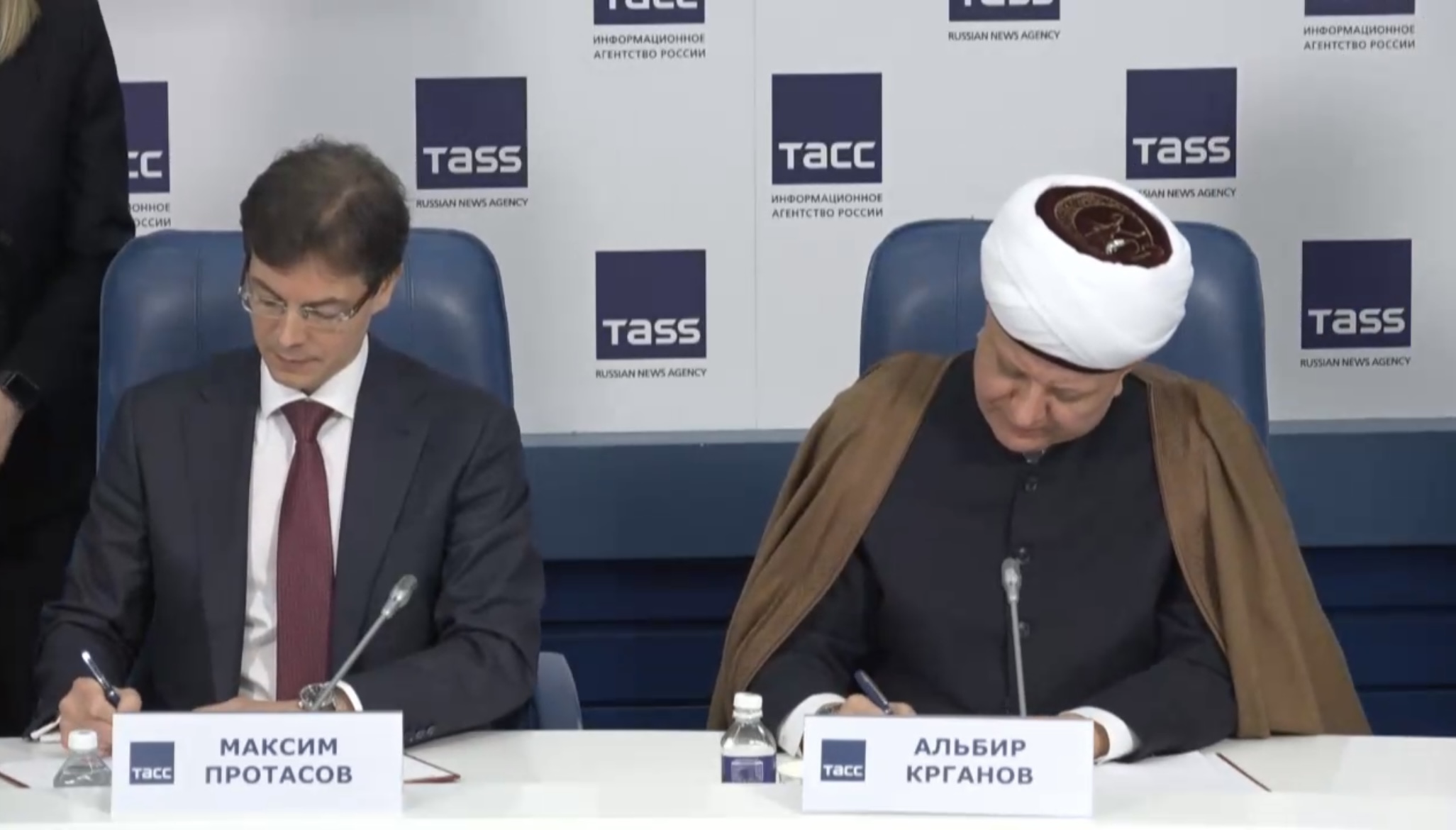
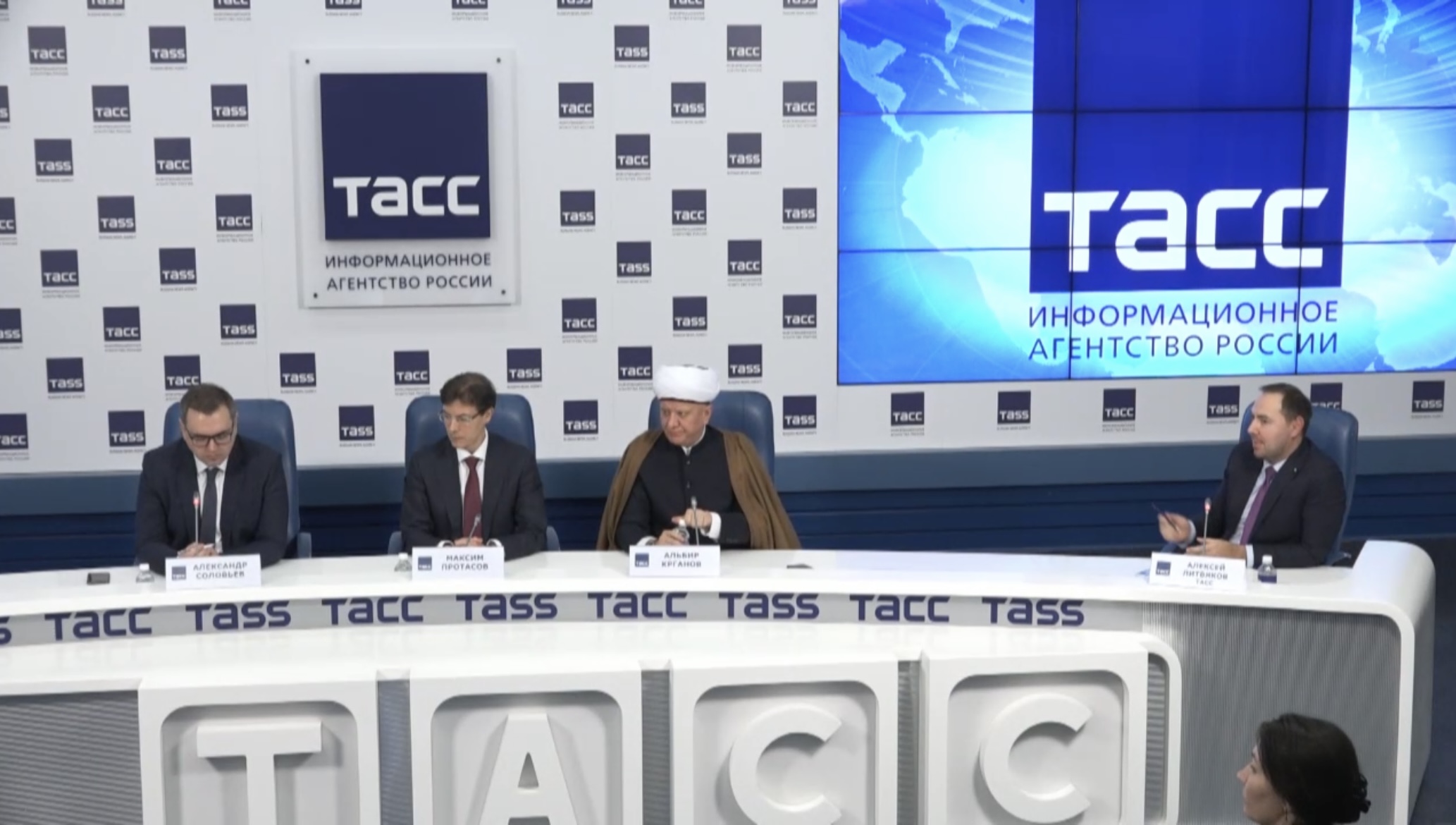
Spiritual Assembly of Muslims of Russia represented by mufti Albir hazrat Krganov and Autonomous Non-Commercial Organization “Russian Quality System” (Roskachestvo) represented by its head Maxim Protasov signed the Agreement on cooperation for the development of market of halal products and services in Russia. One of the main areas of joint activity under the Agreement is accreditation of certification agencies according to the halal standard on a state level, training of relevant specialists, monitoring of compliance of halal goods production in accordance with Islamic law.
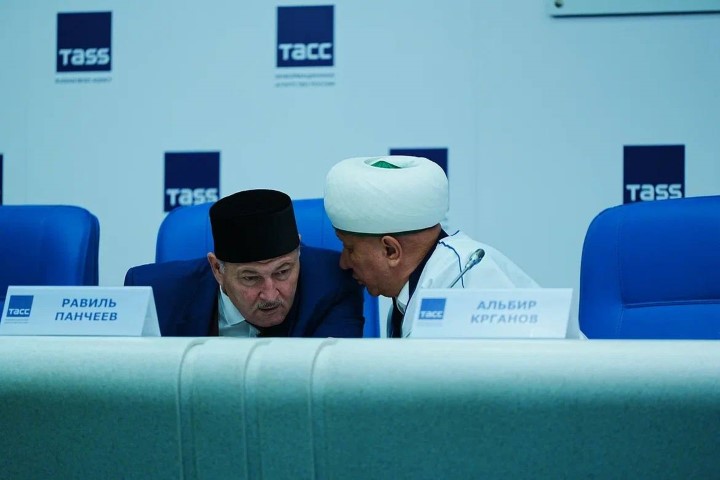
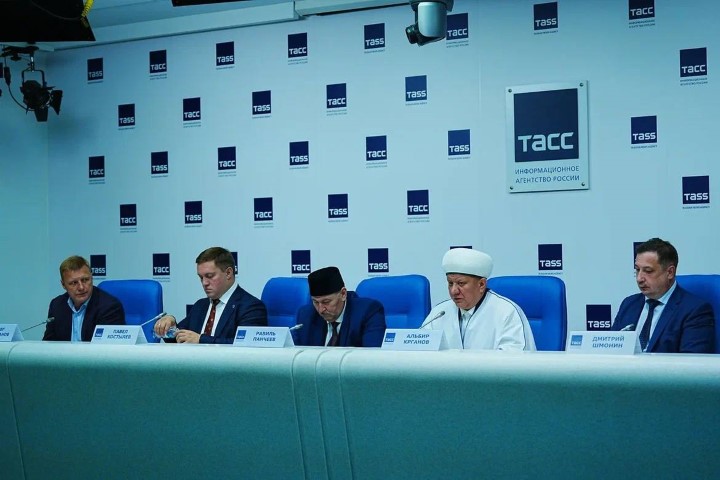
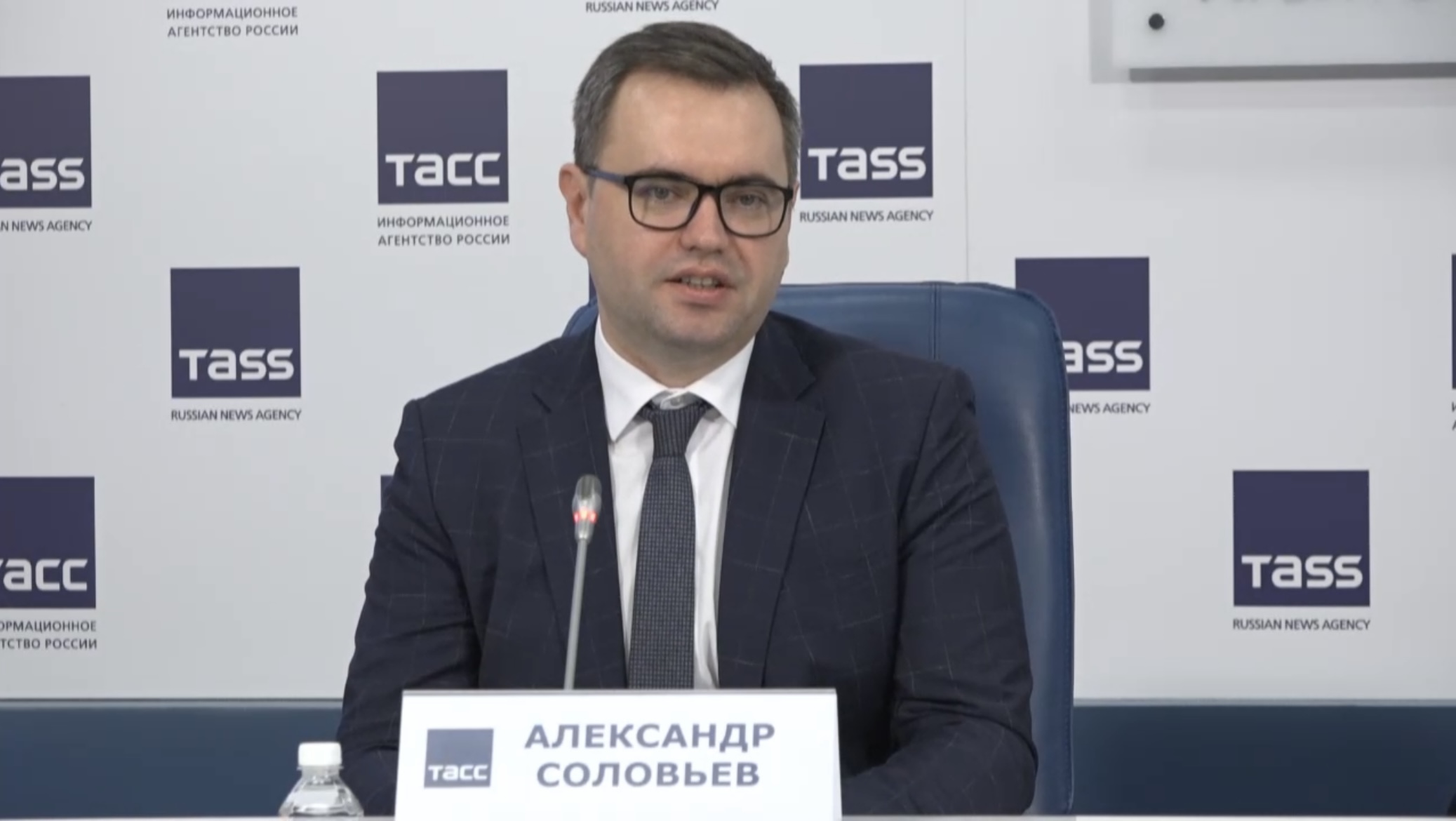
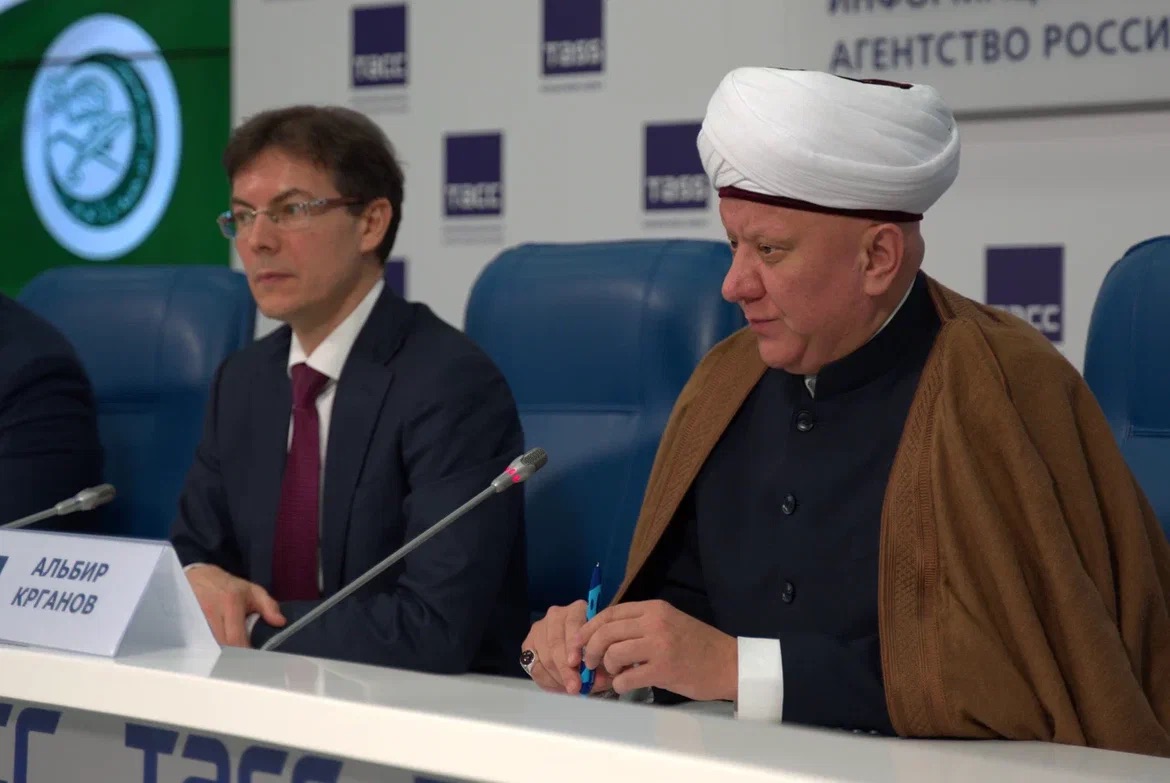
The signing of the agreement took place during a press conference held on December 14 in Moscow at the TASS press center with the participation of the head of Russian Quality System (Roskachestvo) Maxim Protasov, the head of Spiritual Assembly of Muslims of Russia, mufti of Moscow Albir hazrat Krganov and the deputy head of the Federal Accreditation Service (RusAccreditation) Alexander Solovyov.
The head of Roskachestvo Maxim Protasov noted: “Now there is something that stops this market from active development both in Russia and abroad. This factor is the lack of infrastructure that causes consumer distrust. We are absolutely sure that through building the right infrastructure, through expanding the shelves for halal products, through clear and fair labeling it is possible to double the current 1.5% share of halal products in our country in three years. we are talking about the domestic market,” he said.
Speaking about the supply of Russian halal products to the foreign markets, Protasov said that the work done by Federal Technical Regulation and Metrology Agency (Rosstandart) with the RusAccreditation, Roskachestvo, the Ministry of Agriculture and representatives of Muslim religious organizations should lead to a significant increase in the share of domestic products in the Middle East market, as well as in the markets of Asian countries. “I am absolutely sure that systematic work on inclusion in international organizations and standardization, which is done by Rosstandart, agreements being signed by RusAccreditation, and the recognition of our certificates and standards on the global market, should lead to an increase in the supply of Russian halal products by at least 2.5 times,” said the head of Roskachestvo.
He also said that within the framework of the Halal Competence Center of Roskachestvo, there will be created a subordinate certification body with a branch network in Russia: “Now the documents for its creation are ready. It will be called “Roskachestvo. Halal”. We are confident that this body will be able to issue the first certificates in the first quarter of next year,” said Maxim Protasov.
The head of the Spiritual Assembly of Muslims of Russia, mufti of Moscow Albir hazrat Krganov noted in his turn that in current situation, when Russian economy pays more attention to the countries of the East and Asia, the topic of production and export of halal products from Russia has become relevant. However, there was no sufficient overall coordination in the sphere of halal among the Muslim structures of the country. According to Albir hazrat, the number of halal products and the demand in other countries for it is growing day by day. Foreign partners ask for a uniform Russian label of compliance with the criteria, which are to be determined by the standard. This will have a significant positive income on the image of Russia in the international level in this area.
“We may consider this moment to be a historical one for our country. The production of halal products has received attention from government bodies. By signing this agreement, we are planning to improve the certification of bodies and organizations that will be able to certify halal products in their turn. In addition, we are sure that the certification of manufacturers according to the halal standard will allow us to raise the authority and confidence in Russian products in international trade markets,” said mufti.
A new structure has appeared within Roskachestvo most recently - the National Competence Center in the sphere of halal products and services, headed by Marat Nizamov, Deputy Chairman of the Project Technical Committee 704 “Halal Products and Services” under Rosstandart.
Albir hazrat emphasized “This center also has competence in technology, in Sharia law. It will provide support and assistance to all halal manufacturers in this regard, will help in the sale of halal products, in building relationships with consumers, with foreign countries. Also, manufacturers of halal products in Russia may receive other preferences under the recommendation of this center”.
“Many countries of the Islamic world have state authorities regulating halal products with the advice of specialists in Islamic law. It’s not that the state authority takes this sphere for itself, on the contrary, it will provide support in the development of the halal industry. The religious component of this sphere will be provided by religious organizations, but at the same time, the halal committees of the regions will have to raise their level of competence and responsibility,” said Albir hazrat. That is why the Spiritual Assembly of Muslims of Russia, at the request of its centralized partner Muslim organizations of Russia, decided to initiate the creation of this structure. With the participation of state institutions and with a systematic approach to the topic of halal, there will be much more advantages than disadvantages.
In his speech, another participant in the press conference, Deputy Head of the Federal Accreditation Service (RusAccreditation) Alexander Solovyov, said that the national halal accreditation system in Russia could be launched in 2023 based on the three national standards that are currently being developed.
“We must develop our own Russian unified standards. Now, at the final stage, we are developing and agreeing on the main three national standards, and based on them we will be able to launch our national halal accreditation system next year. Thus a national system will begin to form, and in the event of further negotiations we can show it as an example that we comply with these requirements," said Alexander Solovyov.
Solovyov noted that the volume of the global halal market is huge, and Russian exporting companies see a large growth potential in this direction. But each country is different in terms of halal requirements, and, according to him, domestic exporters, when supplying their products to any country, solve the issues of certification and conformity assessment. “In order for Russian certificates to be recognized in foreign countries, it is necessary to build relations with each country or association separately,” he said.
“When another country allows its products to the market, first of all it looks at how the internal system of quality control and confirmation of the relevant requirements is arranged. And here, indeed, we need to build our own system, because now we have about 40 systems of voluntary certification, and there is no unified system and a guarantor-supervisor among them who can say that they indeed all meet the high halal requirements and are under supervision,” the deputy head of the Federal Accreditation Service concluded.
At the end of the event, the mufti once again emphasized: “I would like to make it clear that the fact that Roskachestvo signs an agreement with Spiritual Assembly of Muslims of Russia does not mean that some kind of monopoly of our organization is being introduced in this area and the agreement clearly states this. In addition, the Federal Antimonopoly Service of Russia (FAS) supervises the market. On the contrary, we are fully open to cooperation; the doors of the center are open to the halal committees of the spiritual administrations of the Muslims of our country. Many muftiats and colleagues supported us and reacted to this decision with a deep understanding of the need for changes and standardization in this sphere.”


https://dsmr.ru/en/#sigProIdc00c5bfa8b
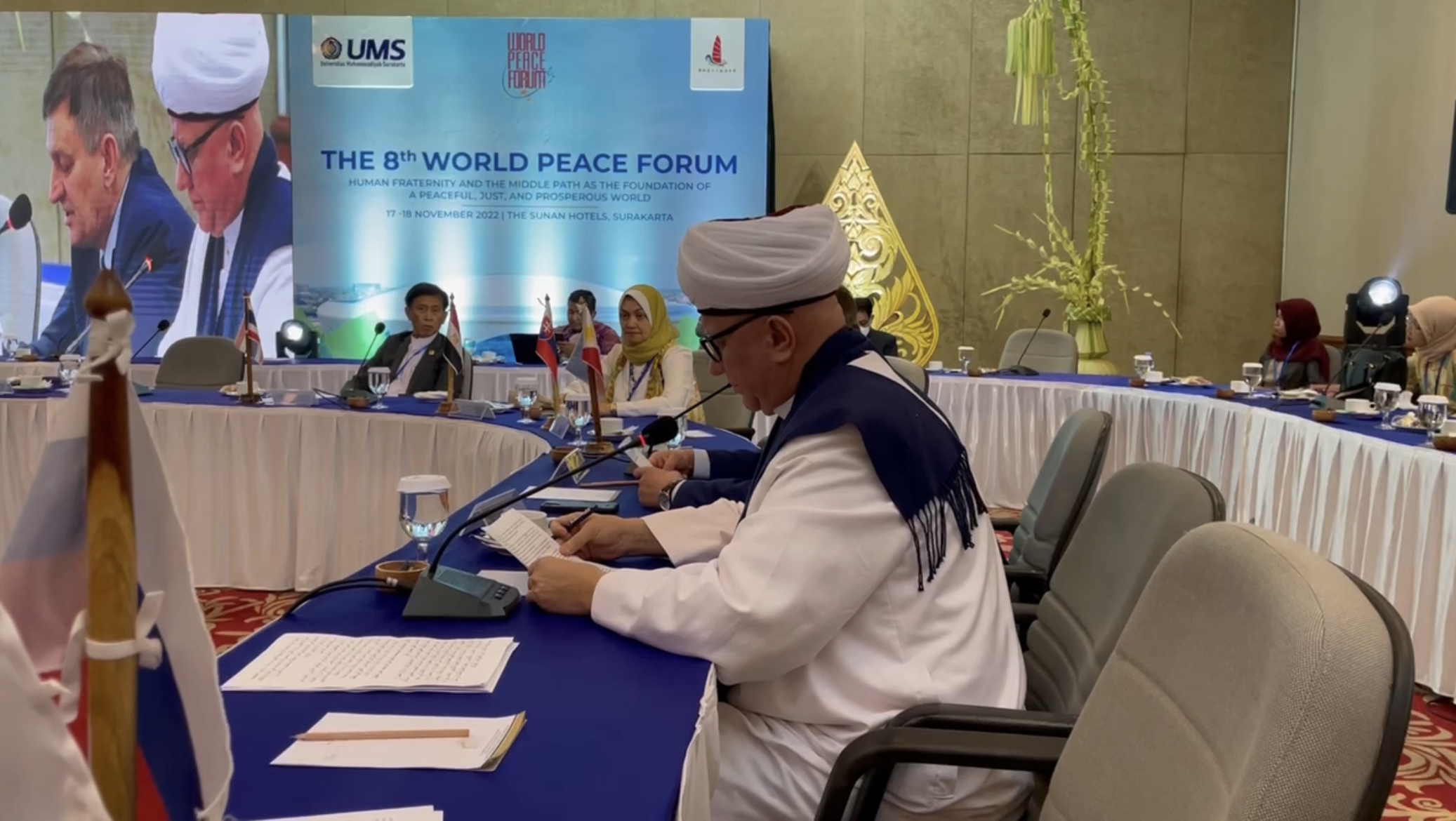
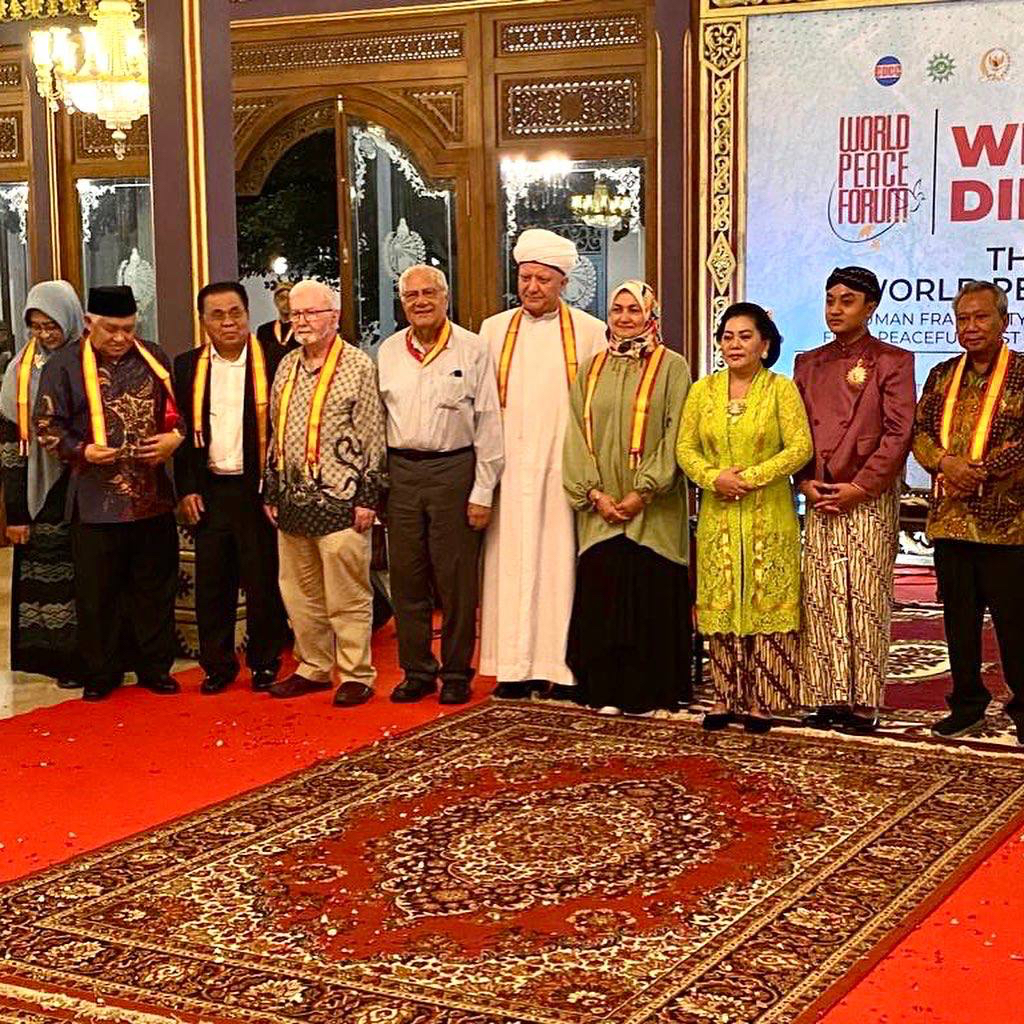
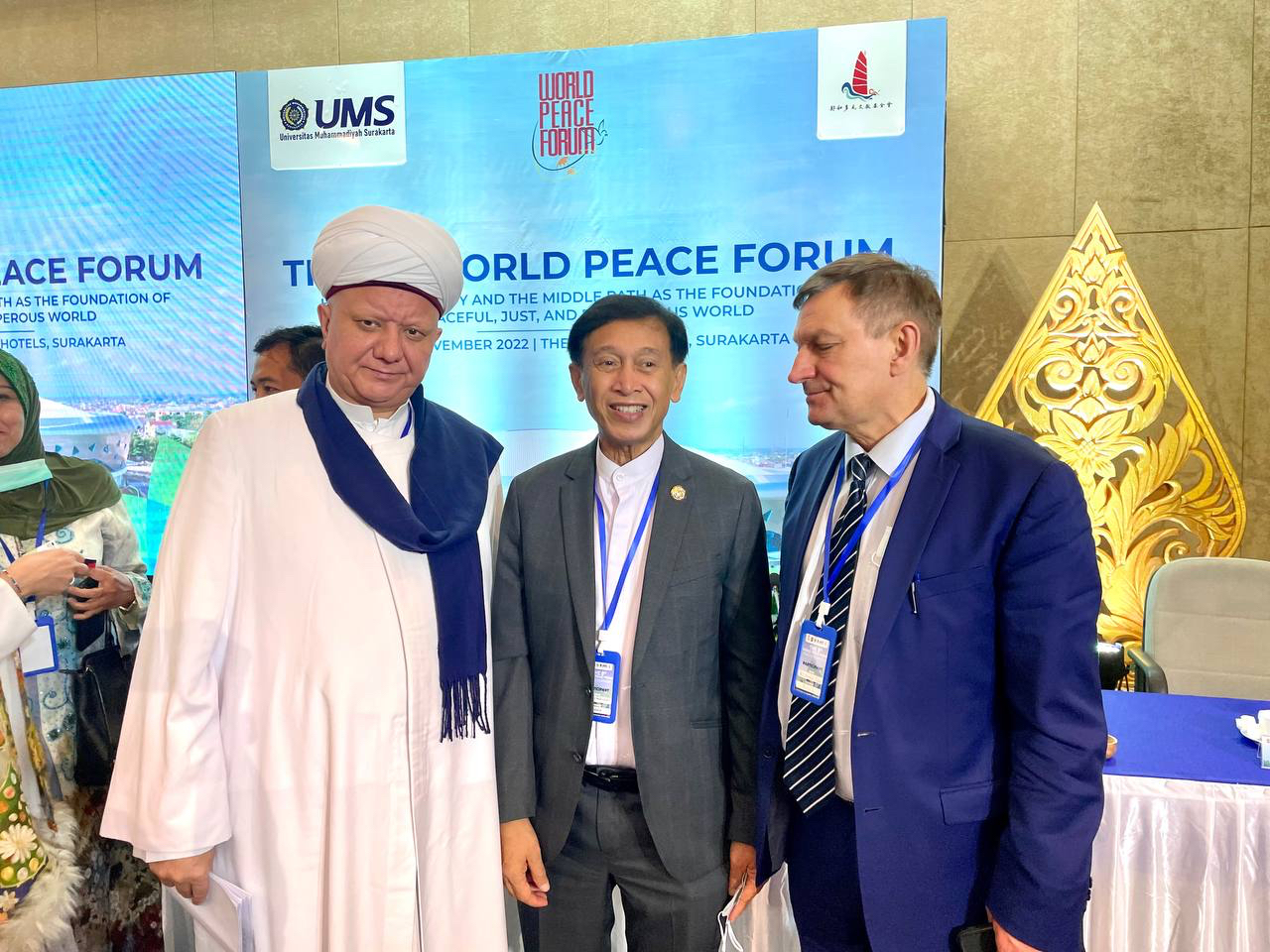
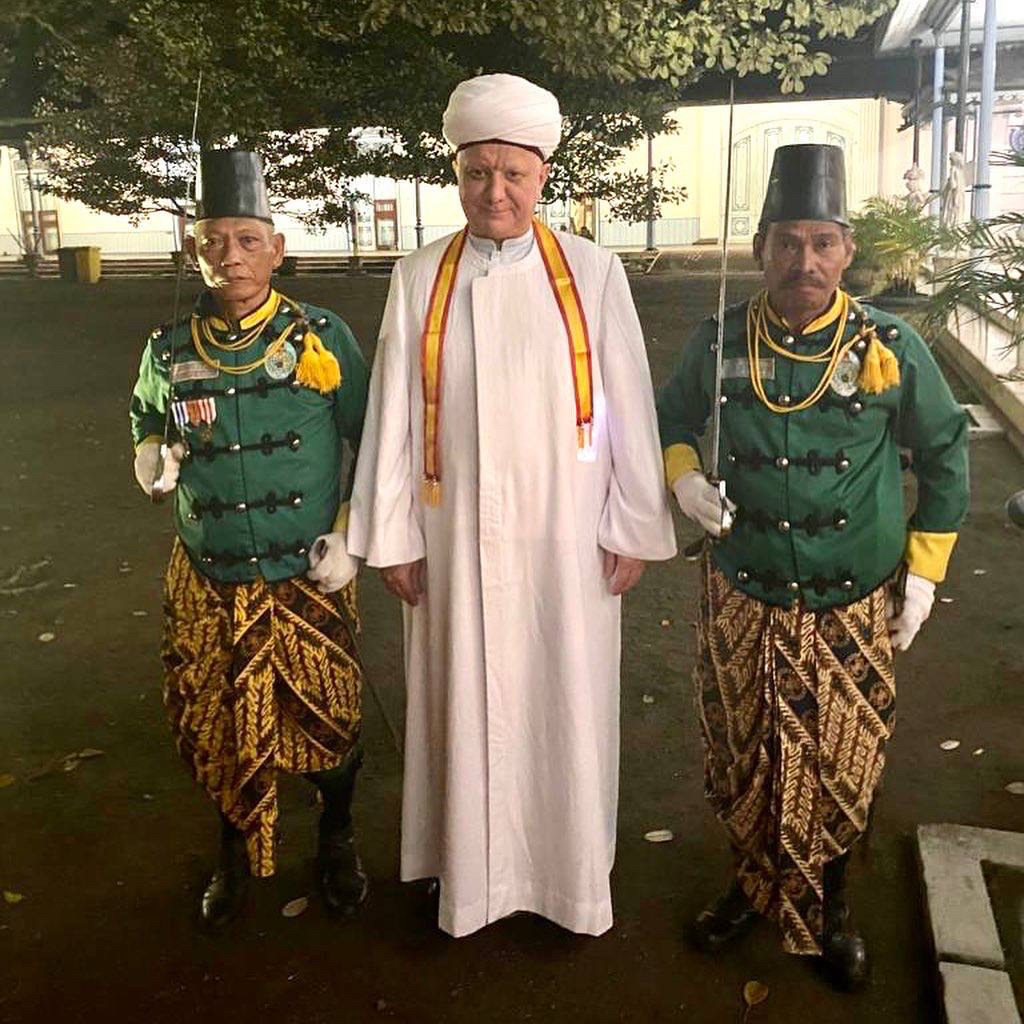
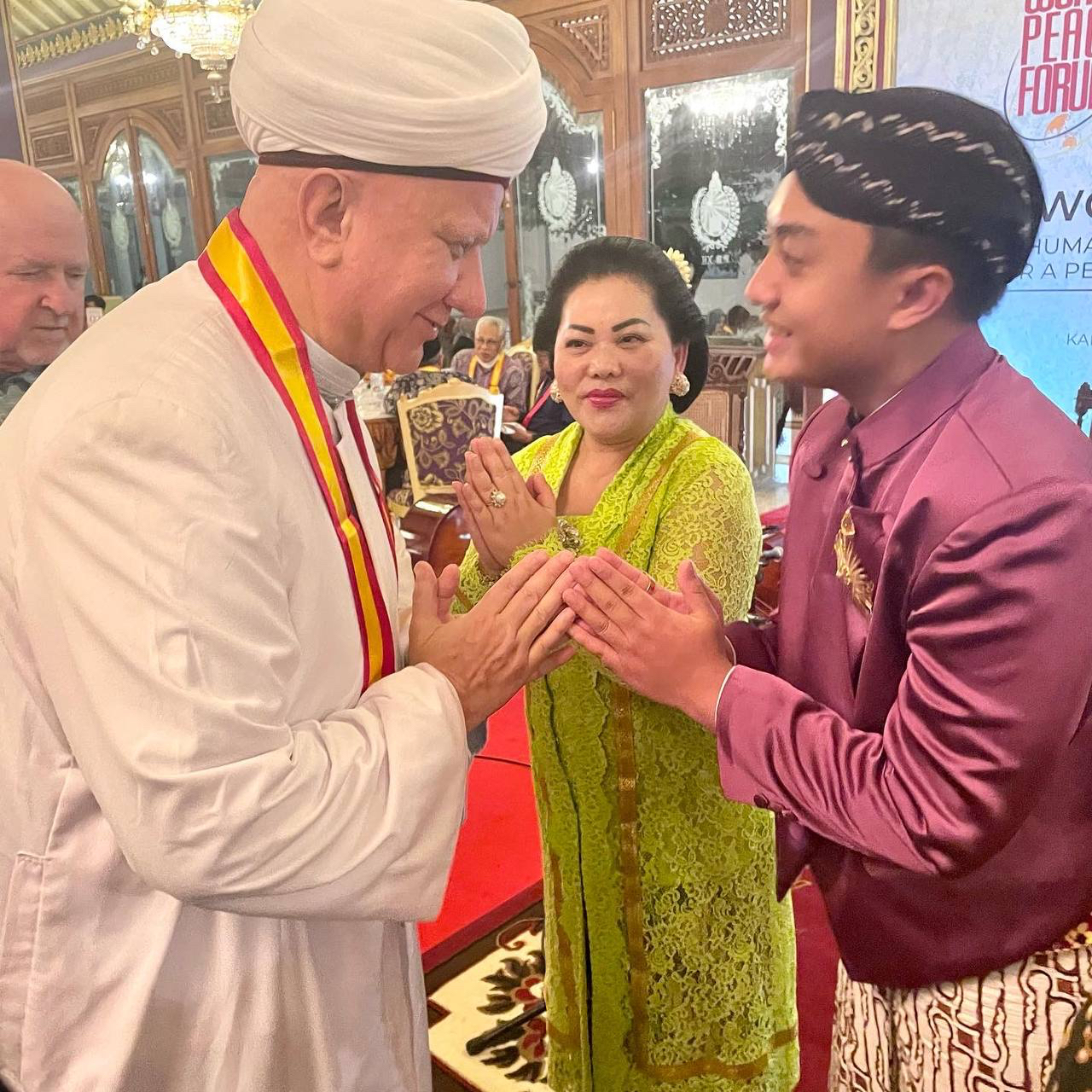
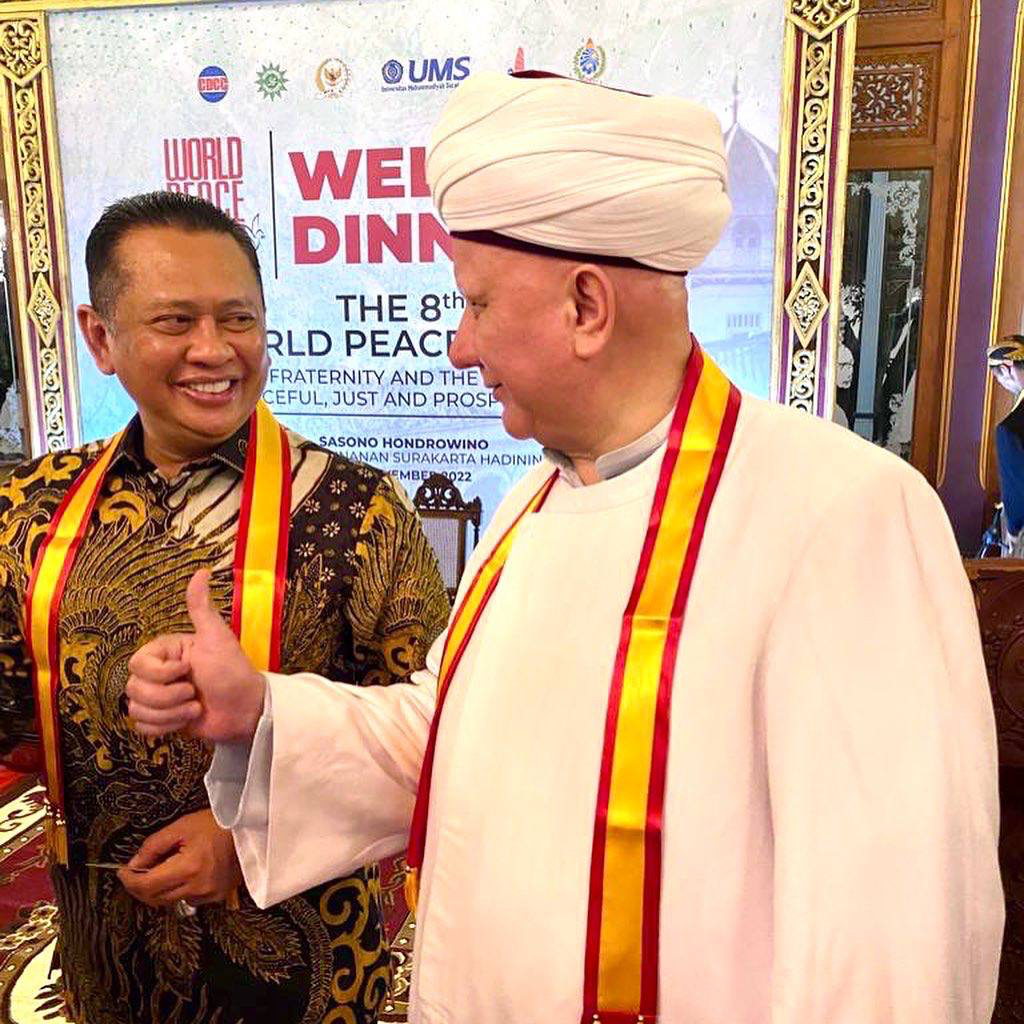
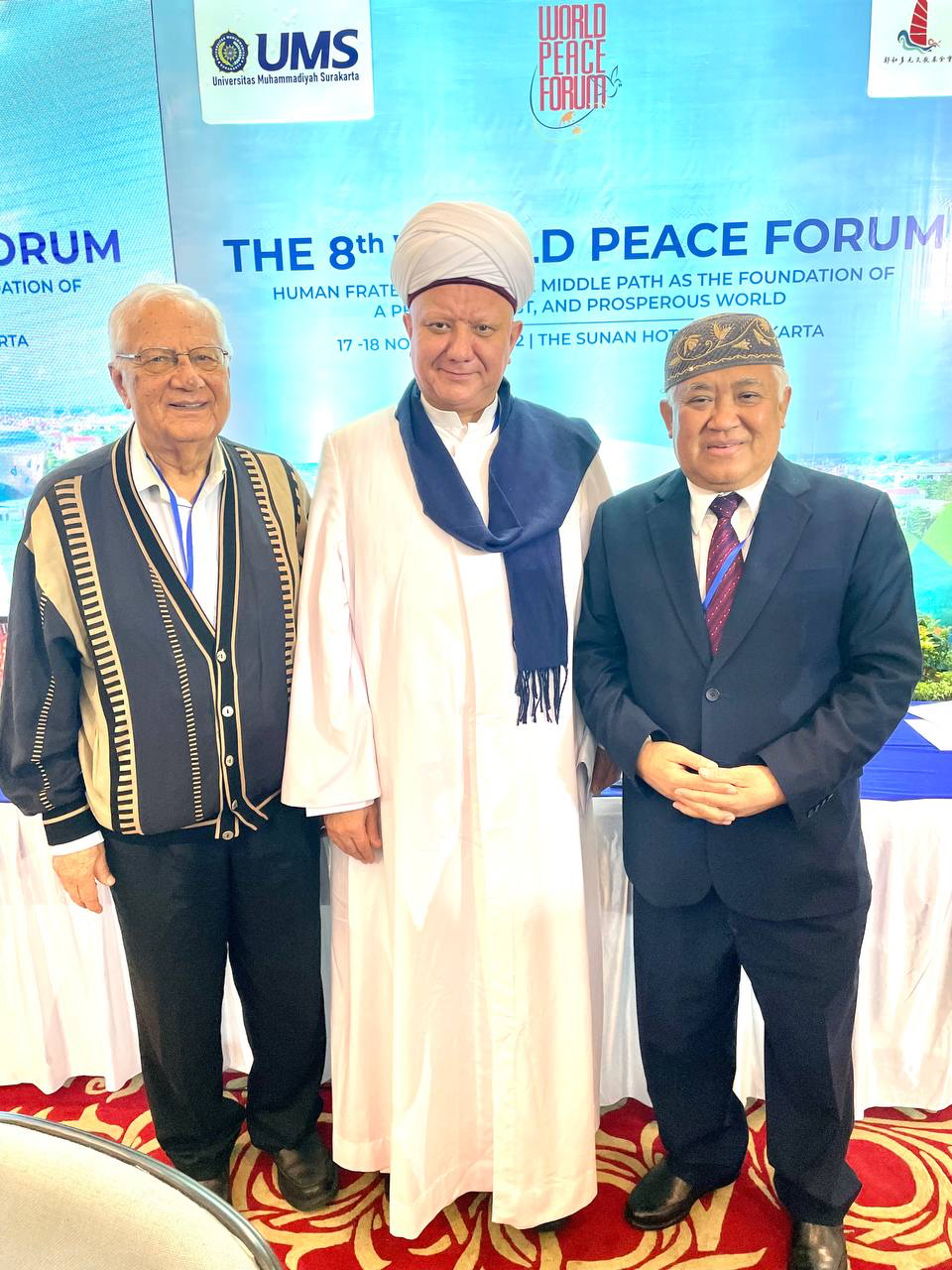
November 16-17, 2022
In the name of Allah the Merciful and Gracious! Esteemed organizers and participants of this international conference, Mr. Sirajuddin Syamsuddin and Dr. Muhammad bin Abdul Karim Issa, let me greet all of you on behalf of the Muslims of Russia represented by the Spiritual Assembly of Muslims of Russia and the Group of Strategic Vision “Russia - Islamic World.”
The conference agenda is extremely topical, and the list of participants reflects the great peacekeeping role and potential of religions urging the countries towards dialogue. I thank the Indonesian authorities and religious communities for organizing this high-level forum.
We share everyone’s concern about the turbulence and growing conflict potential around the world, the aggravation of old problems and the emergence of new ones. For the sake of peace and the preservation of humanity, pride and arrogance must not hinder compromise. Arrogance is a trait only befitting God! The Holy Qur’an testifies that attempts by the godless to impose their will were the underlying cause of the disappearance of entire nations. The Creator himself warns that such an attitude leads to decay and destruction. Manipulation in the global economy should not affect the rising cost of living in the world.
According to UN experts, about 1.2 billion people in the world live in “multidimensional poverty.” This means that they receive less than one dollar and ninety cents per day per person, often have no running water in the house, and have no access to medical care and education. Based on UN data, the African member-states of the Organization of Islamic Cooperation are starving; a humanitarian disaster is unfolding in Afghanistan, where families sell their children for 500 dollars to buy firewood and flour to survive the winter! We must tell the world about this!
In this context, I draw your attention to Russia’s firm desire to export grain and fertilizer to the countries in need, and most of it at no cost to them, which was announced by President Putin to the President of Indonesia.
Next, I would like to suggest that the World Islamic League and other religious institutions should more closely monitor and respond to the general growth of Islamophobia and religiophobia in the world. Additionally, Muslims in the West are being pushed to adhere to the so-called “Orwellian policy,” which is a modernized and ludicrous interpretation of Islam set forth by secular experts.
Along with religious values, we must also protect traditional human values, such as the union of a man and a woman in marriage and respect for human rights as defined by Islam.
The other day the President of Russia signed a decree on the Fundamentals of State Policy to preserve and strengthen traditional Russian spiritual and moral values. These values include life, dignity, human rights and freedoms, patriotism, servicing one’s Homeland, humanism, historical memory, and a strong family.
A separate paragraph describes the role of religions: Christianity, Islam, Judaism, and Buddhism. Expressing my sincere respect to all of you, I hope that during our forum ways to solve these issues will be discussed and outlined.
Thank you for your attention!



https://dsmr.ru/en/#sigProId0524af5858
YouTubeR ErrorChannel ID:UCP1dhR_czJ1f38b1LDFP8dw not found
